
Advanced Automotive Fluid Power Engineering
Automotive Component Fatigue Testing Machine Actuators: The Absolute Benchmark of Durability
An authoritative engineering analysis of ultra high frequency servo hydraulic actuators, zero friction hydrostatic bearing dynamics, multi axis structural testing, and closed loop fluid power integration in modern automotive laboratory environments.

The Mechanical Proving Ground of Global Automotive Engineering
The global automotive industry is undergoing a monumental paradigm shift. The rapid transition toward electric vehicle platforms, coupled with aggressive lightweighting strategies to maximize battery range, has placed unprecedented mechanical demands on automotive chassis and suspension components. Electric vehicles generate instantaneous, massive torque while carrying significantly heavier battery payloads compared to traditional internal combustion engine vehicles. Every control arm, steering knuckle, subframe assembly, and elastomeric bushing must be engineered to endure millions of high stress cycles over a projected vehicle lifespan of hundreds of thousands of miles. Before any of these critical components can be integrated into a production vehicle, they must survive the absolute most brutal, unforgiving environment on earth: the structural and fatigue testing laboratory. The indispensable, immensely powerful mechanical heart driving this relentless destructive scientific process is the automotive component fatigue testing machine actuator cylinder.
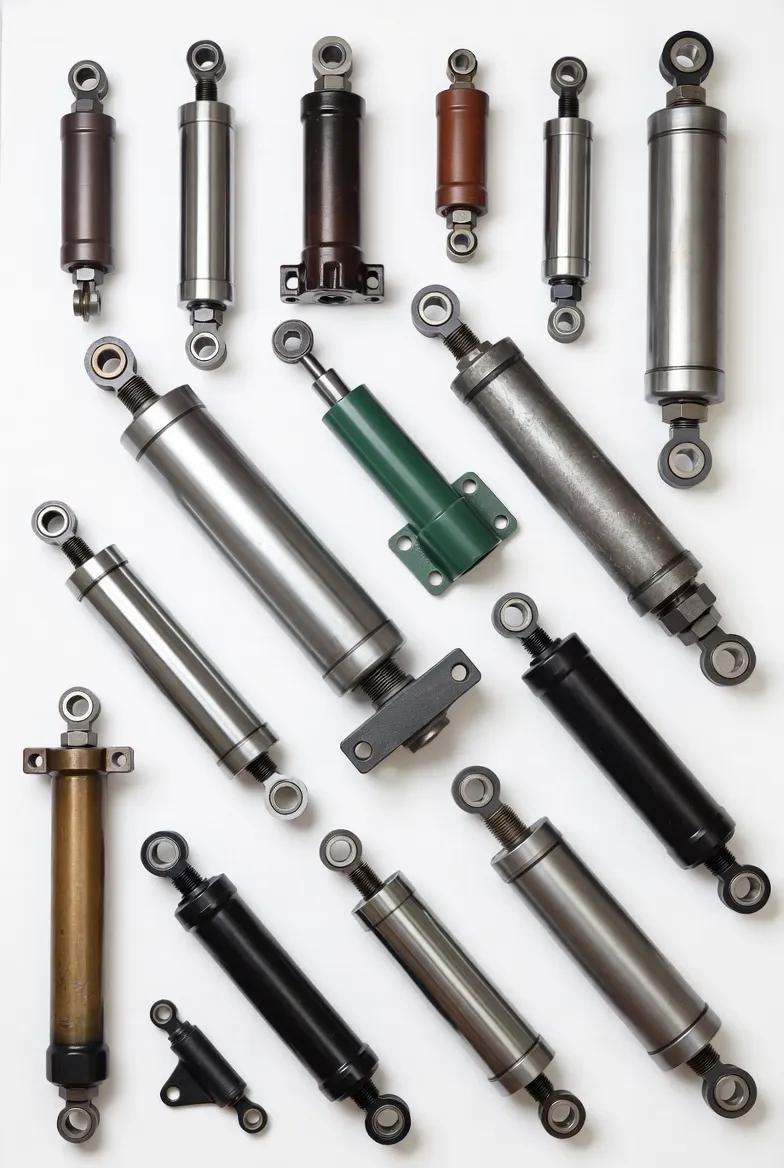
Automotive fatigue testing hydraulic cylinders are an entirely distinct class of fluid power components. While a conventional hydraulic cylinder utilized in construction or agriculture is designed purely for slow, brute force earthmoving, a servo hydraulic testing actuator must perform as a hyper responsive, ultra precision scientific instrument. When automotive engineers simulate a lifetime of pothole impacts, cornering G forces, and emergency braking loads on a suspension strut, the hydraulic actuator imparting those forces must oscillate at incredibly high frequencies, often exceeding one hundred Hertz. It must be capable of applying tens of thousands of pounds of crushing or pulling force while simultaneously maintaining a mathematically perfect, programmable waveform without any mechanical shuddering, hydraulic pulsation, or phase lag. A single micro fluctuation in hydraulic pressure or a momentary stick slip hesitation would instantly corrupt the highly sensitive load cell data, rendering months of scientific evaluation useless and potentially allowing a lethally defective component to enter the consumer market.
From a highly authoritative fluid power engineering perspective aligned with stringent international automotive testing methodologies such as SAE, ISO, and proprietary OEM standards, designing these extreme precision actuators demands absolute perfection across multiple advanced engineering disciplines. These actuators must translate massive internal hydrostatic pressures into flawlessly smooth, lightning fast kinetic motion. They require profound expertise in specialized low friction metallurgy, highly responsive electro hydraulic servo valving, zero leakage dynamic sealing architectures, and sophisticated multi axis control software. This comprehensive technical analysis explores the highly sophisticated mechanical geometry, the advanced materials science required to contain extreme cyclic pressures, and the absolute closed loop fluid power dynamics that define world class automotive component fatigue testing machine actuator cylinders.
Kinematic Architecture of High Frequency Fatigue Actuation
Driving the immense pulling, pushing, and vibrating forces of a structural testing machine requires a highly refined interplay of dual acting hydraulic geometry, extreme structural rigidity, and flawless micro flow management.
Hydrostatic Bearings and Zero Friction Guidance
Standard hydraulic cylinders utilize traditional elastomeric wear bands and contact seals that generate inherent mechanical friction. In a high frequency fatigue testing environment, this friction creates a massive hysteresis loop, introducing unacceptable errors into the load cell force measurements and generating catastrophic heat at high oscillation speeds. To achieve the absolute pinnacle of fluid power precision, elite automotive testing servo cylinders eliminate physical metal to metal contact entirely by utilizing hydrostatic bearings. High pressure hydraulic fluid is actively forced through precisely calibrated micro capillaries into the microscopic clearance gap between the piston rod and the cylinder head. This creates a highly pressurized, continuously flowing fluid film that suspends the heavy piston rod entirely in oil. Because there is zero physical contact and zero seal drag, the actuator operates with virtually zero mechanical friction, allowing for the flawless reproduction of high frequency road load data profiles.
Symmetrical Double Ended Rod Dynamics
Conventional single rod hydraulic cylinders present an asymmetrical volume differential between the extension and retraction chambers, leading to vastly different speed and force profiles depending on the direction of travel. This asymmetry is completely unacceptable for simulating sinusoidal or random road vibration waves on an automotive component. Fatigue testing actuators are engineered as double ended rod cylinders. The piston rod protrudes through both ends of the cylinder barrel, ensuring that the internal fluid volume and the effective piston surface area are mathematically identical in both the tension and compression chambers. This symmetrical architecture guarantees that the hydraulic actuator delivers exactly the same velocity, acceleration, and force output whether it is pulling or pushing the test specimen, resulting in a perfectly balanced dynamic response.

Containing Extreme Cyclic Pressures: Aerospace Grade Metallurgy
The fundamental engineering challenge in designing structural and fatigue testing fluid power systems is the management of extreme, repetitive internal hydrostatic pressure. High capacity actuators utilized in multi axis automotive spindle testing or full vehicle road simulators are routinely required to generate dynamic loads exceeding hundreds of kilonewtons. Operating at these massive force thresholds generates immense outward radial pressures that would instantly burst conventional carbon steel tubing. Furthermore, fatigue testing cylinders are subjected to the most punishing environment imaginable: billions of high frequency cyclic stress reversals. The cylinder must rapidly oscillate between extreme tension and extreme compression up to hundreds of times per second to simulate real world vibrational stress on components.
The profound paradox of a fatigue testing machine is that it must possess the power to physically destroy forged steel automotive components without ever succumbing to metal fatigue itself. To safely contain these massive internal pressures and resist catastrophic fatigue failure over decades of continuous laboratory use, the barrels of fatigue testing actuators are forged from ultra high yield strength, seamless aerospace grade alloy steels. These heavy walled forged billets undergo a highly specialized deep hole boring process followed by multi stage micro honing. This manufacturing technique ensures the interior cylinder wall achieves a mirror like finish with an incredibly tight geometric tolerance, crucial for maintaining the hydrostatic fluid film and preventing pressure blowby. The exterior of the piston rod is heavily induction hardened and undergoes an advanced precision laser cladding or hard chroming process, creating a diamond hard armor that resists scoring even under intense lateral side loads generated during multi axis suspension testing.

Polymer Seal Architecture for Extreme High Frequency Oscillation
In specific testing architectures that do not utilize full hydrostatic bearings, managing seal friction and heat generation during high frequency cyclic testing is an overwhelming engineering hurdle. Standard hydraulic seals fabricated from nitrile or vulcanized rubber will rapidly overheat, extrude, melt, and shred when subjected to high speed, short stroke oscillations under immense pressure. Elite materials testing hydraulic cylinders utilize a highly specialized composite sealing architecture. The primary pressure barriers are constructed from proprietary energized Polytetrafluoroethylene blends. These specialized polymer chains possess extreme extrusion resistance and an incredibly low coefficient of friction. This advanced seal chemistry completely prevents thermal breakdown and ensures flawless dynamic containment even during relentless twenty four hour endurance test cycles.
Electro Hydraulic Servo Control and Absolute Closed Loop Accuracy
The true intelligence of an automotive fatigue testing rig does not lie solely in the brute force of the cylinder, but in the sophisticated electronic orchestration that governs it. To achieve scientifically valid, repeatable results, the fluid power system must operate in a state of absolute, continuous closed loop feedback.
Ultra High Frequency Servo Valve Integration
Standard directional fluid valves are completely useless for high end automotive testing. Actuator cylinders are entirely controlled by extremely advanced, high frequency electro hydraulic servo proportional valves. To eliminate the compressibility of hydraulic fluid trapped in hoses, these precision valves are block mounted directly to the steel housing of the actuator cylinder via specialized manifolds. Driven by complex voice coil or direct drive torque motor actuators, these servo valves can reverse the flow and pressure of the hydraulic fluid hundreds of times per second. This rapid response allows the testing machine to instantly replicate complex, jagged road profiles recorded from actual test tracks directly onto the laboratory test specimen.
Closed Loop Feedback Architecture
The servo valve never operates blindly; it is part of an unyielding digital ecosystem. The entire hydraulic circuit operates within a rigid closed loop feedback architecture powered by an advanced PID digital controller. High precision Linear Variable Differential Transformers are integrated directly inside the hollow center of the cylinder piston rod to measure displacement with micron level accuracy. Simultaneously, fatigue rated extreme resolution load cells constantly measure the applied mechanical force. This telemetry is streamed back to the central digital signal processor at rates exceeding ten kilohertz. If the processor detects that the cylinder is lagging behind the programmed waveform by a fraction of a millisecond, it instantly sends an electrical correction signal to the servo valve, throttling the fluid flow to maintain perfect adherence to the targeted scientific testing parameters.
Real World Applications in Automotive Testing Laboratories
Automotive component fatigue testing machine actuator cylinders are rarely deployed in isolation. They are typically configured in complex, multi axis arrays to simulate the chaotic three dimensional forces a vehicle experiences on the road. This multi actuator approach requires sophisticated cross channel compensation software, as the movement of one hydraulic cylinder will inadvertently induce forces into the other connected cylinders across the test rig frame.
- ✔️
Multi Axis Spindle and Suspension Kinematics: To evaluate a complete MacPherson strut or double wishbone suspension assembly, testing laboratories utilize multi axial rigs. Multiple servo hydraulic actuators are connected to a simulated wheel hub. These cylinders operate simultaneously to replicate vertical pothole impacts, lateral cornering forces, and longitudinal braking dive forces. The actuators must endure extreme side loading and twisting moments, necessitating heavy duty swivel joints and spherical rod end bearings with zero backlash tolerances.
- ✔️
Elastomeric Bushing and Motor Mount Characterization: The rubber and polyurethane bushings that isolate the vehicle cabin from road noise are highly sensitive to frequency and temperature. Testing these components requires hydraulic actuators capable of delivering exceptionally small displacement strokes at extremely high frequencies. Hydrostatic bearing cylinders are mandatory here, as even the slightest friction would mask the true dynamic stiffness and damping properties of the elastomeric automotive component being evaluated.
- ✔️
EV Battery Enclosure Vibration Tables: The heavy lithium ion battery packs of modern electric vehicles must survive years of continuous road vibration without suffering structural fractures that could lead to catastrophic thermal runaway. Large scale multi axis shaker tables, powered by massive arrays of synchronized fatigue testing cylinders, simulate the relentless vibration of cobblestone roads and off road tracks, validating the ultimate durability of the EV battery structural enclosure.

The Digital Transition: Smart Testing Laboratories and Predictive Maintenance
The modern automotive research and development industry is rapidly transitioning towards fully digital, highly automated laboratory environments. The traditional mechanical structural testing cylinder is evolving from a passive force generating component into a highly intelligent, sensor driven node integrated deeply into global digital twin simulation networks.
Next generation smart testing cylinders are being equipped with embedded, extreme resolution internal fluid condition monitors and vibration signature analyzers. These smart cylinders continuously feed real time telemetry directly to the laboratory management software software. By analyzing the pressure decay curves, servo valve error signals, and micro vibration signatures over millions of test cycles, artificial intelligence algorithms can accurately predict internal seal wear or hydrostatic bearing degradation. The system can automatically alert calibration engineers to replace degrading fluid power components during scheduled laboratory downtime rather than suffering a catastrophic hydraulic failure in the middle of a crucial, expensive multi month automotive durability test. This transition to predictive AI driven maintenance dramatically lowers operational risks, minimizes costly laboratory downtime, and ensures absolute equipment reliability, preserving the integrity of automotive research worldwide.

Conclusion: The Ultimate Standard of Automotive Structural Validation
Automotive component fatigue testing machine actuator cylinders are indisputably the most critical fluid power components in the realm of vehicular research, development, and industrial quality assurance. By perfectly combining extreme heavy duty aerospace grade metallurgy, uncompromising closed loop servo hydraulic precision, and friction free hydrostatic bearing technologies, these highly advanced actuators ensure that automotive engineers can twist, crush, and fatigue chassis components with absolute, undeniable scientific accuracy. For global automotive manufacturers, tier one suppliers, and elite research institutions, mastering top tier fluid power and smart localized actuation systems is the fundamental cornerstone to establishing engineering excellence, ensuring the structural safety of tomorrow’s electric and autonomous vehicles, and securing maximum reliability in the highly demanding field of automotive mobility.