
Fluid Power Diagnostics Masterclass
How Hydraulic Fluid Contamination Destroys Your Cylinders
An authoritative engineering blueprint detailing particulate abrasion, hydrostatic bypass, thermodynamic fluid degradation, and the advanced preventative maintenance protocols required to protect your fluid power network.

The Invisible Enemy Within the Machine
In the highly rigorous disciplines of heavy equipment manufacturing, commercial construction, deep underground mining, and massive scale agricultural harvesting, fluid power systems represent the undisputed pinnacle of controlled kinetic force. Hydraulic linear actuators convert the immense hydrostatic pressure of synthetic fluid into unrelenting physical motion capable of manipulating hundreds of tons of material. However, the entirety of this mechanical power relies absolutely on the microscopic purity of the fluid medium transmitting that energy. When equipment operators ask why their machinery is losing lifting power or experiencing sudden catastrophic seal blowouts, the root cause is rarely a structural manufacturing defect. In over seventy percent of documented industrial failures, the definitive culprit is hydraulic fluid contamination. Understanding how hydraulic fluid contamination destroys your cylinders is the most vital diagnostic capability a maintenance engineer can possess. To explore the absolute highest industry standards for fluid power components, visiting our premium hydraulic cylinders platform is a mandatory first step.
A hydraulic cylinder is a precision machined pressure vessel. The clearance gaps between the internal solid steel piston and the micro honed barrel wall are measured in fractions of a millimeter. The elastomeric polyurethane seals that bridge this gap are designed to glide effortlessly on a microscopic film of pure synthetic oil. When foreign contaminants invade this closed loop ecosystem, the delicate tribological balance is violently disrupted. Contamination does not merely dirty the oil; it weaponizes the fluid. Silica sand, rust flakes, water droplets, and entrained air bubbles transform the lifeblood of the machine into a highly abrasive, chemically corrosive, and thermodynamically unstable slurry that systematically dismantles the actuator from the inside out.
From an authoritative engineering perspective evaluated against international ISO cleanliness standards, managing fluid purity is not a secondary maintenance task; it is the primary directive of fluid power engineering. This comprehensive technical guide will meticulously dissect the physics of particulate abrasion, the electrochemical devastation caused by water ingress, the thermodynamic anomalies triggered by fluid aeration, and the advanced preventative maintenance protocols required to permanently safeguard your heavy machinery against catastrophic hydrostatic failure.
Vector 1: Particulate Contamination and the Liquid Sandpaper Effect
Solid particulate matter is the most common and physically destructive form of hydraulic fluid contamination. When hard debris enters the fluid stream, it triggers a chain reaction of mechanical devastation known as three body abrasive wear.
Seal Imbedding and Degradation
Microscopic particles of dirt, silica sand, or metal shavings are frequently drawn into the cylinder past a degraded external wiper seal on the head gland. Once inside the pressure vessel, these hard particles are forced by thousands of PSI of fluid pressure directly into the clearance gap between the piston and the barrel. Because the polyurethane piston seals are softer than the steel barrel, the debris embeds itself directly into the polymer matrix. The seal effectively captures the dirt, instantly transforming its smooth sealing lip into a piece of high velocity liquid sandpaper. This embedded grit aggressively tears at the opposing steel surfaces during every single stroke.
Metallurgical Scoring
As the contaminated piston seal drags back and forth, the embedded silica or metal fragments carve deep, longitudinal scratches into the mirror finished interior wall of the cylinder barrel. This phenomenon is known as scoring. Once the steel barrel is scored, the actuator is terminally compromised. Even if a maintenance technician flushes the fluid and installs a brand new seal kit, the new rubber cannot bridge the deep gouges carved into the steel. High pressure fluid will seamlessly bypass the new seals by flowing through these carved channels, resulting in a total loss of load holding capacity. In highly abrasive environments, massive Excavator Hydraulic Cylinders must utilize extreme duty brass scraper rings to physically shear dirt off the rod before it can penetrate the system.

Vector 2: Water Ingress and Electrochemical Devastation
While solid particles cause mechanical destruction, water contamination introduces severe chemical and electrochemical failure modes. Water can enter a hydraulic network through atmospheric condensation inside the main fluid reservoir or through direct rain exposure past compromised rod seals.
Oxidation and Internal Rust
The interior of a hydraulic cylinder barrel is crafted from raw, unplated carbon steel. It relies entirely on the continuous coating of pure hydraulic oil to prevent oxidation. When water mixes with the hydraulic fluid, it breaches this protective film. The water attacks the steel, causing rapid internal rust. As iron oxide forms, it expands and flakes off the barrel wall, instantly generating massive amounts of abrasive particulate contamination from within the cylinder itself. This internal rust destroys the seals and rapidly binds the moving components. For equipment constantly exposed to the elements, such as Dump Truck Hydraulic Cylinders, maintaining specialized water absorbing filters in the return lines is absolutely critical.
Polymer Hydrolysis
Beyond rusting the steel, water chemically attacks the polyurethane seals through a process called hydrolysis. When standard polyurethane is exposed to water in conjunction with elevated operating temperatures, the water molecules break down the polymer chains. The seals rapidly lose their high tensile strength, becoming soft, mushy, and gel like. A hydrolyzed seal cannot withstand internal hydrostatic pressure and will instantly extrude through the clearance gaps, resulting in catastrophic fluid leakage and machine failure. Preventing hydrolysis demands absolute fluid purity and strict temperature regulation.

Vector 3: Air Entrainment and Thermodynamic Explosions
Hydraulic systems rely on the fundamental principle that liquids are incompressible. When atmospheric air is drawn into the fluid power network, the system loses its mechanical rigidity, leading to violent, unpredictable behavior.
Spongy Operation and Loss of Control
Air typically enters the system through a microscopic vacuum leak on the pump suction line. This air becomes thoroughly mixed into the oil, creating a highly aerated, spongy fluid. When this aerated oil is pumped into the cylinder, the actuator loses its ability to hold a load rigidly. The compressed air acts like a mechanical spring, causing the cylinder to bounce, shudder, and drift downward under weight. For precision material handling equipment like Forklift Hydraulic Cylinders, this uncontrollable bouncing is incredibly dangerous and prevents accurate payload placement.
The Micro-Diesel Effect
The most destructive consequence of air contamination is a thermodynamic phenomenon known as the diesel effect. As the hydraulic cylinder encounters a heavy load, system pressure spikes to thousands of PSI in milliseconds. When a highly compressible trapped air bubble is suddenly subjected to this massive hydrostatic compression, the rapid contraction generates astronomical localized heat, causing the internal temperature of the bubble to instantly spike over two thousand degrees Fahrenheit. This immense heat actually ignites the surrounding oil vapor, perfectly mimicking a diesel engine ignition. These micro explosions burn the oil, creating black carbon soot, scorching the steel barrel, and instantly melting the synthetic piston seals.
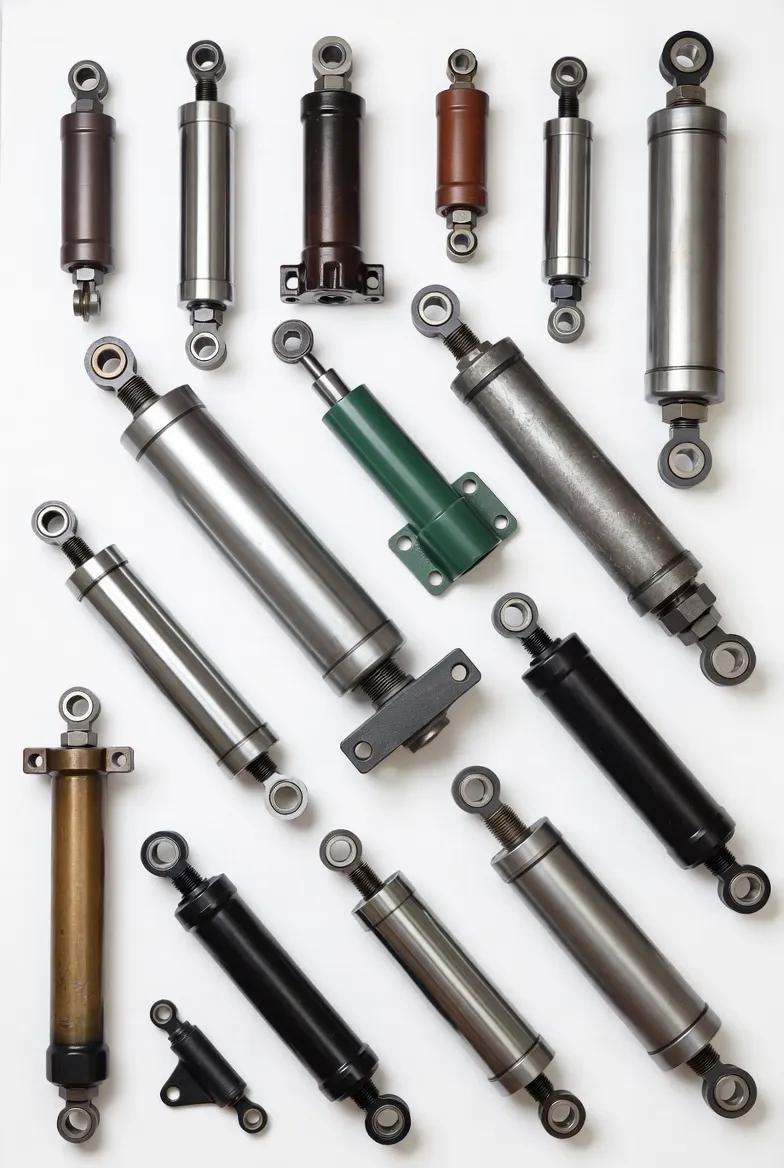
Diagnostic Symptoms of Fluid Power Degradation
Contamination destroys cylinders progressively. By identifying the diagnostic symptoms early, maintenance engineers can intervene before catastrophic structural failure occurs, saving thousands of dollars in replacement costs.
- ✔️
Thermal Hot Spots: If fluid is bypassing a scored internal piston seal, the friction of the fluid squeezing through the tiny gap generates immense heat. If you use an infrared thermal camera and observe a glaring, localized hot spot directly over the piston location on the barrel, it definitively confirms internal leakage caused by particulate scoring.
- ✔️
Fluid Discoloration and Odor: Pure hydraulic fluid should be relatively clear or lightly tinted. If the fluid in the reservoir appears milky or cloudy, it is heavily emulsified with water. If the fluid is pitch black and smells distinctly of burnt carbon, the system is suffering from severe aeration and the thermodynamic diesel effect. Both scenarios require immediate fluid flushing.
- ✔️
Uncontrolled Cylinder Drift: When an actuator is commanded to stop, it should lock rigidly. If the payload slowly drops over several minutes without operator input, the fluid is bleeding backward. In high elevation safety equipment, such as Aerial Work Vehicle Hydraulic Cylinders, even a millimeter of drift is unacceptable, demanding immediate diagnostic teardown to inspect for seal extrusion or particulate grooving.


Conclusion: Guarding the Lifeblood of the Machine
Understanding how hydraulic fluid contamination destroys your cylinders is the most powerful preventative maintenance tool an engineer can wield. A hydraulic cylinder is an incredibly robust mechanical structure, capable of surviving immense kinetic shocks and lifting hundreds of tons, but it is utterly defenseless against microscopic chemical and particulate attacks from within. By acknowledging the liquid sandpaper effect of silica ingestion, the devastating electrochemical rust caused by water ingress, and the violent thermodynamic explosions triggered by fluid aeration, fleet managers can execute decisive, proactive filtration strategies. Deploying advanced kidney loop filtration, sealing reservoir breathers, and utilizing rigorous fluid sampling ensures your synthetic oil remains pristine. This level of dedication guarantees that whether you are operating precision logistics equipment or heavy duty Agricultural Hydraulic Cylinders in unforgiving field conditions, your fluid power network will deliver uncompromising, unyielding, and safe kinetic force. If your machinery is suffering from contamination issues and requires expert diagnostic support or replacement actuators, our engineering team is ready to intervene.