
Fluid Power Mechanical Design & Manufacturing
What Are the Pros and Cons of Welded vs. Flanged Cylinder Construction?
A definitive structural and manufacturing comparison of permanent fusion and mechanically clamped pressure vessel designs, exploring compactness, serviceability, pressure capacity, and total lifecycle cost for industrial and mobile hydraulic cylinders.

The Fundamental Divergence in Pressure Vessel Architecture
In the demanding world of hydraulic cylinder engineering, the choice between welded and flanged cylinder construction is a pivotal design decision that determines an actuator’s mechanical performance, serviceability, and lifecycle cost. These two architectures represent fundamentally different approaches to creating a pressure vessel capable of containing thousands of pounds per square inch of hydraulic pressure while converting fluid power into linear mechanical force. The welded cylinder is a permanent, monolithic assembly where the base cap is fused to the barrel through automated circumferential welding, creating a compact, rigid, and inherently leak-resistant structure. The flanged cylinder, most commonly exemplified by the classic tie rod design, is a modular, mechanically clamped assembly that relies on external high-tensile steel rods and precisely torqued nuts to compress the end caps against the barrel and static seals. Understanding the true pros and cons of each design is not a theoretical exercise but a practical engineering competency that directly impacts machine uptime, spare parts strategy, and maintenance labor costs.
The engineering trade-off between these two concepts is a classic battle between compact robustness and accessible serviceability. A welded cylinder, with its smooth, cylindrical profile, is the undisputed champion for mobile equipment applications where space is at a premium and the environment is harsh. Its monocoque body naturally sheds mud and debris, and it contains pressure without the risk of a tie rod tensile failure. However, this robust construction comes at a cost: it is difficult to disassemble, often requiring a specialized hydraulic breakout bench for a full rebuild. In stark contrast, a flanged, tie rod cylinder is the icon of industrial factory automation. It is bulkier and requires a larger installation footprint, but it can be completely disassembled on the factory floor using standard hand tools, allowing for rapid, on-site seal replacement that minimizes expensive production downtime. This distinction, and its impact on the familiar NFPA standard, is a subject we explore further in our guide on the difference between tie rod and welded hydraulic cylinders.
This authoritative technical guide will exhaustively dissect the pros and cons of welded versus flanged cylinder construction. We will analyze the structural implications of permanent weld fusion versus mechanical clamping under shock loading, the compactness benefits for mobile chassis integration, and the profound difference in repair and maintenance procedures. We will also examine the specific application niches where each design is dominant, from the largest mining excavators to the most precise plastic injection molding machines. A professional manufacturer like EverPower-Huachang HYDRAULIC produces both, matching the architecture to the machine’s mission with precision engineering and verified quality.
The Advantages and Disadvantages of Welded Cylinder Construction
The monolithic welded body architecture is the dominant design in heavy mobile equipment, offering a combination of compactness, structural rigidity, and environmental resilience.
Superior Compactness and Spatial Efficiency
The most immediate advantage of a welded cylinder is its highly compact, space-efficient envelope. Without the bulky square end caps and the external protruding tie rods of a flanged design, the welded body is a sleek, cylindrical package. The ports and mounting clevises are fused directly to the barrel, and the base cap is a simple, dished forged component that becomes one with the barrel. This allows engineers to fit a massive amount of force density into the incredibly tight and confined mechanical spaces of mobile equipment, such as the articulation joints of a skid-steer loader or the narrow boom structure of an excavator. For the OEM design engineer, this reduced space claim is a crucial advantage, simplifying the structural design of the machine’s chassis. The weight savings of using a smaller, denser cylinder, without the parasitic mass of tie rods, also contributes to improved vehicle fuel efficiency and stability.
Exceptional Shock and Vibration Resistance
The true structural genius of the welded cylinder lies in its resistance to mechanical shock and hydrostatic fatigue. In a tie rod cylinder, every pressure cycle places the external rods under a tensile stress, attempting to pull them apart. A violent shock load, like a bucket striking rock, can instantaneously stretch these rods, permanently losing the critical clamping preload and causing the static O-rings to blow out. This failure mode is physically impossible in a welded cylinder. The base cap, fused to the barrel by a full-penetration weld, cannot separate. The entire structure absorbs and distributes hydrostatic shockwaves and severe lateral vibrations through its monolithic body without the stress concentration points of threads and tie rods. This is why welded cylinders are the only viable choice for the brutal, continuous impact environment of a hydraulic excavator. Their long-term structural durability directly reduces the manufacturer’s warranty claims and the end-user’s fleet operating costs.

The Trade-Offs: Serviceability and Repair Economics
The core disadvantage of the welded construction is the direct byproduct of its strength: it is permanently sealed and is significantly more difficult to service than a flanged design.
?The Challenge of Welded Cylinder Rebuilding
A full rebuild of a welded cylinder is a major industrial operation, not a field repair. Because the cap is fused, the rod and piston assembly must be extracted through the head gland. The gland itself is threaded into the barrel with a high-strength thread-locking compound and torqued to several thousand foot-pounds at the factory. Breaking this joint loose requires the entire cylinder to be removed from the machine and secured in a specialized hydraulic breakout bench. This piece of equipment uses its own massive hydraulic cylinder to generate the colossal torque needed to unscrew the gland without damaging the barrel. This is generally beyond the capability of a field maintenance crew and necessitates outsourcing the repair to a dedicated, well-equipped fluid power machine shop. The process is therefore logistically complex, more time-consuming, and inherently more expensive than a tie rod cylinder rebuild, which can often be performed by a technician on the factory floor. The downtime for a welded cylinder rebuild is measured in days, not hours.
?The Flanged/Tie Rod Advantage: Field-Serviceable Design
The primary, compelling advantage of a flanged, tie rod cylinder is its field-serviceable design. This is the attribute that has made it the dominant standard for industrial automation across North America. When a rod seal begins to leak on a critical transfer line, a technician can frequently dismantle the cylinder right on the machine without even unbolting the barrel from its mounts. By simply removing the four tie rod nuts at the head end, the entire head gland can be slid off the rod. The rod and piston assembly can remain in the barrel. The technician can then replace the rod seal, wiper, and gland O-rings, and reassemble the cylinder in a matter of hours, often during a short production break. For a full guide on this specific procedure, please refer to our article on how to repair a leaking hydraulic cylinder rod seal. This speed of repair, made possible by the clamped construction, is a massive economic advantage in high-volume manufacturing where machine uptime is the primary performance metric.

Manufacturing Complexity, Spare Parts, and Total Cost of Ownership
The choice between a welded and flanged construction has profound implications for the manufacturing supply chain, the standardization of spare parts, and the long-term total cost of ownership.
Manufacturing Processes and Supply Chain Implications
The manufacturing philosophy behind each design is fundamentally different. A welded cylinder is often a custom-engineered assembly, designed for a specific OEM machine platform. Its ports, clevises, and trunnion mounts are integrated into the weldment, and the components are not necessarily interchangeable with other manufacturers. This creates a sole-source or limited-source spare parts situation. In contrast, a flanged tie rod cylinder is the product of a modular manufacturing system. The end caps, pistons, and seal kits of a standard NFPA or ISO cylinder are identical and interchangeable across a wide number of manufacturers. This modularity creates a competitive, global market for replacement seals and components. A plant manager can source a proven, drop-in replacement cylinder from a local hydraulic distributor’s stock, a level of supply chain flexibility that is impossible with a custom welded, application-specific cylinder. This is a key reason why procurement professionals value the NFPA standard, as described in our article on what certifications should a quality hydraulic cylinder have.
Total Cost of Ownership: Uptime vs. Robustness
The total cost of ownership calculation for each design is an equation of uptime, repair cost, and initial service life. For a steel mill or a transfer line, the absolute priority is minimizing the Mean Time To Repair (MTTR). The tie rod cylinder wins this metric decisively because of its rapid, on-site field serviceability. The cost of lost production from a single hour of downtime can dwarf the entire purchase price of the cylinder. For a large mining excavator in a remote location, however, the dominant cost is the unscheduled failure of a massive, difficult-to-access cylinder. The welded cylinder wins this metric because its inherent structural robustness and shock resistance result in a longer initial service life and a lower probability of a sudden, catastrophic failure that requires a major logistical recovery. The “right” answer is entirely determined by the specific operational context. A professional application engineer at a manufacturer like EverPower-Huachang HYDRAULIC helps the customer navigate this complex trade-off.
The Hybrid Solution: Threaded Flange and Removable Cap Designs
The design space is not limited to a binary choice. There is a sophisticated hybrid: the larger heavy-duty mill-type cylinder. This cylinder often uses a thick-walled barrel and a heavy-duty threaded base cap that is not welded but is secured with a massive, precision-machined thread and an O-ring seal. The head end uses a bolted, removable flange. This design offers a compelling compromise: the robust, shock-resistant structure of a thick-walled barrel with a full-strength threaded end, combined with the ability to completely disassemble both ends for a full piston and rod extraction during a scheduled rebuild. This allows for the best of both worlds: it is structurally robust, yet serviceable at a major scheduled maintenance event. This design philosophy is the standard for the most demanding heavy industrial environments, like steel mill and forging press cylinders. Understanding the full hierarchy of these design options is what distinguishes a true hydraulic engineering expert, and it is the service provided by a manufacturer with a deep and diverse product portfolio.
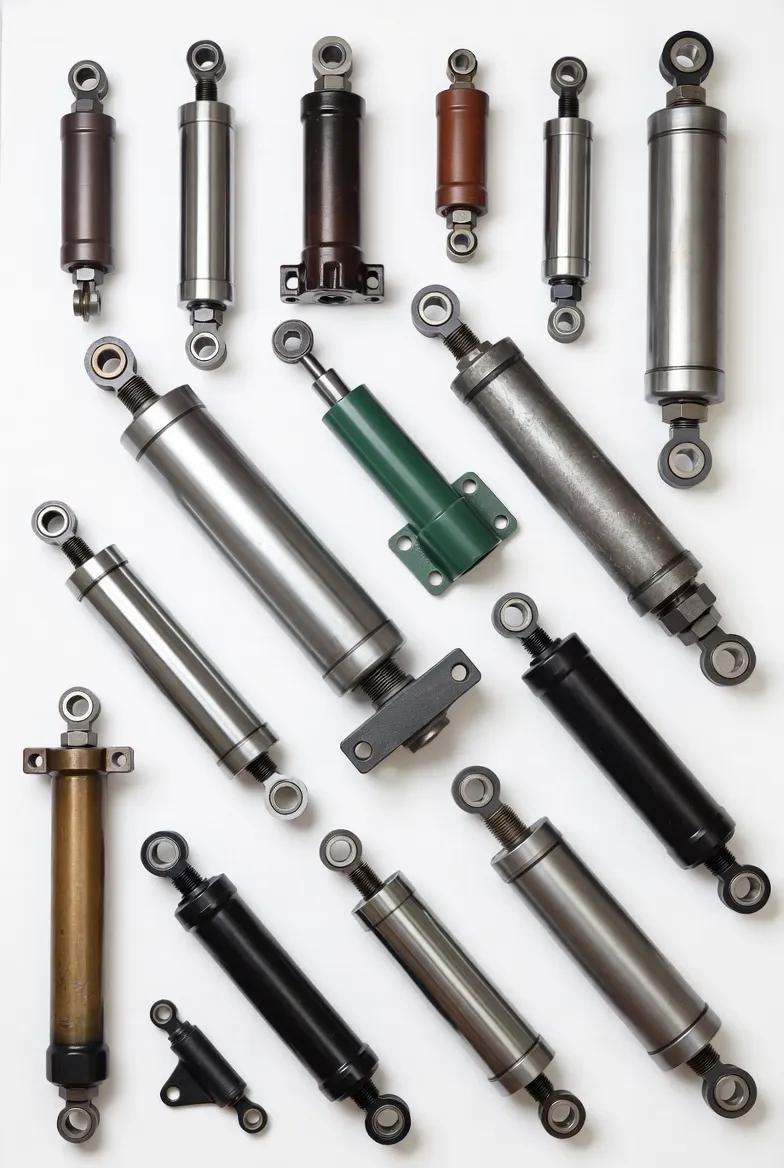
A Strategic Choice Based on Engineering Mission
The decision between a welded and a flanged cylinder is a strategic engineering choice that should be driven by a clear-eyed analysis of the machine’s operational mission, its maintenance philosophy, and its global supply chain requirements.
- ?
Choose a Welded Cylinder When: The application is on mobile equipment with severe space constraints and continuous exposure to mud, dirt, and debris. The cylinder will be subjected to violent shock loading and high-cycle hydrostatic fatigue. The maintenance philosophy is based on a preventive schedule of exchanging complete assemblies rather than performing in-situ rebuilds. The expected initial service life is the highest priority. This is the default choice for excavators, bulldozers, agricultural harvesters, and marine deck equipment. The compact, sealed, and supremely robust architecture is perfectly suited to the task.
- ?
Choose a Flanged/Tie Rod Cylinder When: The application is in a climate-controlled industrial factory environment, such as on a machine tool, a plastic injection molding machine, or an automated assembly line. The environment is clean, and shock loads are a controlled or rare exception. The absolute operational priority is rapid, on-site serviceability to minimize expensive production downtime. The procurement strategy values a competitive, standard-part supply chain where a replacement cylinder can be sourced from local supplier inventory. The equipment is likely destined for the North American market, where NFPA interchangeability is a major asset.
- ⚙️
Choose a Removable-Flange Heavy-Duty Cylinder When: The application demands the structural robustness of a thick-walled barrel for the most extreme pressures and forces, such as in a steel mill, a large forging press, or a dam gate. The cylinder must be fully serviceable at a major scheduled maintenance outage, but it does not require the rapid, on-site rebuilt capability of a standard tie rod cylinder. The maintenance strategy accepts a major, pre-planned rebuild process with specialist tooling and personnel, but the design benefits from the ability to completely re-hone the barrel and replace the piston and rod assembly.

Conclusion: The Right Architecture for the Right Mission
The pros and cons of welded versus flanged cylinder construction define a classic engineering trade-off that has been validated over decades of industrial and mobile equipment design. There is no universal “best” design; there is only the correct design for a specific, well-defined operational mission. The welded cylinder triumphs in the harsh, confined, and structurally brutal world of mobile machinery, where its compact robustness and unmatched shock resistance provide the longest service life with the lowest risk of catastrophic structural failure. The flanged, tie rod cylinder dominates the world of industrial automation, where its modular, field-serviceable architecture directly minimizes the crippling cost of production downtime.
The Role of the Professional Cylinder Manufacturer
This critical design decision should not be made by the end