
Advanced Mining Fluid Power
Rock Drill Feed Cylinders: The Driving Force in Underground Excavation
An authoritative engineering analysis of hydraulic feed mechanisms, percussion drilling fluid dynamics, and extreme environment durability in modern mining equipment.

Penetrating the Hardest Rock on Earth
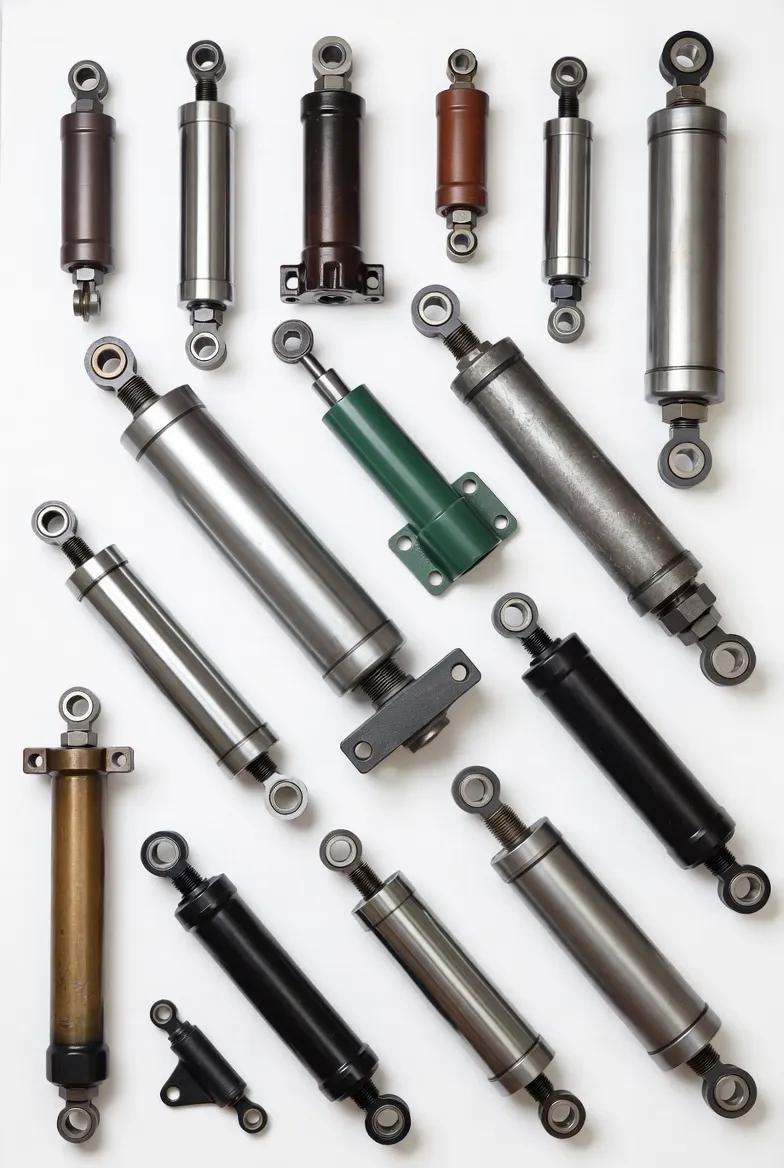
The global mining industry relies on the relentless extraction of precious metals and industrial minerals from deep within the earth crust. Achieving this requires specialized heavy-duty machinery capable of fracturing solid granite, basalt, and quartz. At the cutting edge of this excavation process is the hydraulic rock drill, also known as a drifter. However, the drifter cannot operate independently; it must be continuously and precisely pushed against the rock face to transfer its percussive energy effectively. This highly critical task is executed by rock drill feed cylinders. These specialized hydraulic actuators provide the exact amount of thrust required to maximize drilling penetration rates while protecting the expensive drilling consumables from premature failure.
A failure in the feed cylinder mechanism immediately halts tunnel advancement, resulting in thousands of dollars in lost productivity per hour. Unlike standard construction equipment hydraulics, mining equipment cylinders operate in a subterranean environment characterized by constant high-frequency vibration, abrasive rock slurry, and highly acidic groundwater. Designing a hydraulic feed cylinder that can survive thousands of operational hours under these punishing conditions requires a profound understanding of metallurgy, advanced sealing technologies, and complex fluid dynamics. This comprehensive engineering guide explores the technical imperatives and intelligent innovations defining modern underground drilling fluid power systems.
The Physics of Feed Pressure Optimization
The operation of a rock drill feed cylinder is a delicate balancing act. It is not merely about applying maximum force; it is about applying the optimal force to match the geological hardness of the rock formation.
Under-Feeding Dynamics
If the hydraulic feed cylinder applies too little pressure, the drill bit will bounce off the rock face. This causes the immense percussive shockwaves generated by the drifter to reflect back up the drill string. This reflected energy rapidly destroys the internal pistons of the drifter and causes the threaded drill rods to snap. The feed cylinder must maintain constant, rigid contact with the stone.
Over-Feeding Consequences
Conversely, if the feed cylinder exerts too much forward thrust, the rotational torque of the drill bit will be overwhelmed by friction. The drill string will stall and become jammed in the rock formation. Advanced proportional hydraulic valves constantly monitor rotation pressure and automatically adjust the feed cylinder extension speed to prevent jamming, ensuring a continuous and highly efficient drilling cycle.

Surviving Subterranean Corrosion and Abrasion
Underground mining presents one of the most hostile equipment environments conceivable. Feed cylinders mounted on drilling jumbos and longhole production rigs are continuously subjected to a barrage of destructive elements. The primary threat is the combination of abrasive rock dust and highly corrosive mine water. When groundwater mixes with blasted rock, it frequently forms a highly acidic slurry that rapidly degrades standard industrial metals.
If standard chrome-plated steel were utilized, the acidic slurry would penetrate micro-cracks in the chrome, causing the underlying steel to oxidize. This leads to deep pitting and flaking on the cylinder rod. Once the rod surface is compromised, it acts like a file, tearing apart the internal polyurethane pressure seals and causing massive hydraulic fluid leaks. To combat this, elite mining cylinder manufacturers rely on advanced metallurgical solutions.
Advanced Laser Cladding and Sealing Architecture
Modern heavy-duty mining actuators utilize exotic surface treatments such as laser-clad nickel alloys or specialized nitrocarburizing. These treatments create an armor-like, corrosion-proof barrier that is completely impervious to acidic mine water. Furthermore, the sealing system is heavily reinforced. Primary pressure seals are backed by robust bronze-filled PTFE wear bands to absorb severe side loads caused by drill string deviations. Externally, highly aggressive double-lip wiper seals forcefully shear away baked-on rock slurry before the rod retracts, preserving perfect fluid integrity inside the barrel.

Safety Mechanics and Structural Rigidity
From an authoritative EEAT engineering perspective, the safety of subterranean operators is paramount. A drilling jumbo features massive booms weighing several tons. The hydraulic systems must default to a state of absolute security in the event of a hose rupture or power failure.
Load-Holding Counterbalance Valves
To entirely negate the risk of equipment free-fall, high-quality rock drill feed cylinders and associated boom cylinders are equipped with internally integrated counterbalance valves. If a high-pressure hydraulic hose is severed by falling rock, the fluid attempts to exit the cylinder rapidly. The counterbalance valve detects this sudden pressure drop and mechanically locks shut in a fraction of a second, safely freezing the heavy feed beam in mid-air and protecting the operators below.
Internal Cushioning Dynamics
When the feed cylinder rapidly retracts the heavy drifter after completing a hole, hitting the end of the mechanical stroke at full speed would generate a kinetic shockwave capable of tearing the cylinder mounts from the feed rail. Built-in hydraulic cushions progressively restrict fluid exit during the final millimeters of the stroke, ensuring a smooth, controlled deceleration that drastically extends the structural lifespan of the entire drilling assembly.
Maintenance Strategies for Maximizing Equipment Uptime
The financial viability of a mining operation relies heavily on maximizing the uptime of its capital equipment. Extracting a broken drilling rig from a deep underground decline for hydraulic repairs is extraordinarily time-consuming and expensive. Therefore, executing stringent preventative maintenance on underground drilling fluid power systems is an absolute necessity.
- ✔️
Rigorous Fluid Contamination Control: Hydraulic fluid is the lifeblood of the rock drill feed cylinder. In a dusty mine environment, contamination is inevitable without strict controls. Microscopic rock particles act as a grinding paste inside the cylinder barrel, rapidly destroying seals. Utilizing high-efficiency ISO-rated filtration systems and conducting routine fluid analysis is critical to detect and eliminate particulate matter before internal scoring occurs.
- ✔️
Visual Rod and Gland Inspections: Maintenance technicians must perform rigorous daily visual checks of the cylinder rods. Any weeping fluid around the gland nut is an early warning sign of primary seal degradation. Addressing these micro-leaks promptly prevents massive hydraulic oil spills in the mine, ensuring environmental compliance and continuous rig operation.
- ✔️
Mounting Trunnion Lubrication: Feed cylinders are subjected to intense high-frequency vibrations from the drifter. The mounting points must be heavily lubricated to absorb these vibrations and prevent fatigue cracking in the cylinder welds. Proper greasing protocols significantly extend the structural life of the heavy-duty mining actuators.

The Digital Transition: Smart Mining and Automated Drilling Rigs
The mining industry is rapidly embracing the digital age, moving away from manual operations toward autonomous, tele-remote controlled excavation. The rock drill feed cylinder is evolving from a passive mechanical component into a highly intelligent, sensor-driven node within the Industrial Internet of Things (IIoT).
Next-generation hydraulic mining equipment is being equipped with internally embedded linear position sensors and pressure transducers. These smart cylinders continuously feed real-time telemetry directly to the drilling rig programmable logic controller (PLC). This allows the computer to execute fully automated drilling patterns with millimeter precision, optimizing feed rates flawlessly based on real-time rock hardness data. Furthermore, by analyzing the pressure decay curves over time, artificial intelligence algorithms can accurately predict internal seal wear, alerting maintenance teams to replace degrading components during scheduled shift changes. This transition to predictive AI-driven maintenance dramatically lowers operational costs and ensures peak efficiency across the entire mining fleet.

Conclusion: Engineering the Future of Deep Excavation
Rock drill feed cylinders are the robust foundation of subterranean mining productivity. By seamlessly integrating advanced metallurgical corrosion resistance, uncompromising safety mechanisms, and cutting-edge IoT smart technology, these hydraulic actuators ensure that automated drilling rigs operate with maximum penetration rates and structural safety. For mining companies and heavy equipment manufacturers, investing in superior underground drilling fluid power systems is a foundational strategy for securing a highly reliable, safe, and immensely profitable excavation operation in the world’s most demanding environments.