Arm Cylinder for Doosan Small Excavator DH55G
介绍:
The arm cylinder is a specially designed hydraulic cylinder that provides linear motion and power to the arm of various machinery, such as excavators, cranes, and robotic arms. The arm cylinder plays a crucial role in hydraulic systems, allowing additional tools or attachments to move and be controlled effectively. These cylinders not only enable smooth motion but also withstand heavy loads, ensuring efficient operation and reliability of the machinery under various working conditions.
定义与解释:
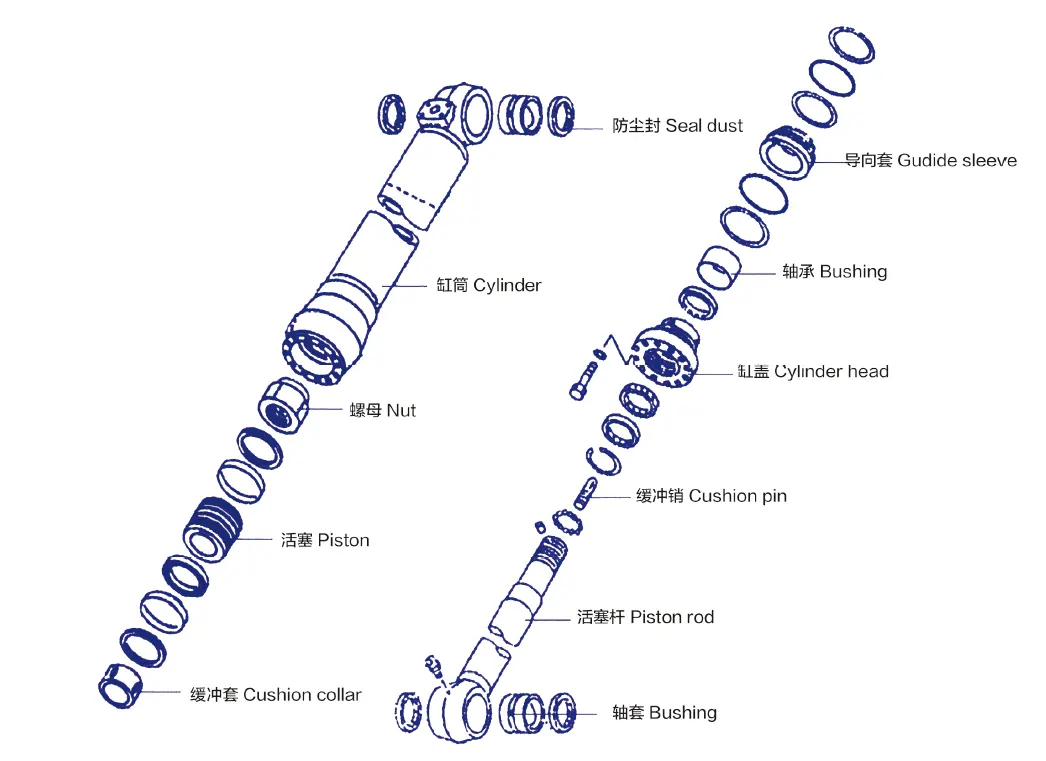
The arm cylinder, also known as the boom cylinder, is an essential component in hydraulic systems. It consists of a cylinder barrel, piston, rod, and various seals. The cylinder barrel houses the piston, which moves back and forth within the cylinder to provide linear motion. The rod connects the piston to the arm or boom of the machinery, transferring the force generated by the hydraulic fluid to perform tasks such as digging, lifting, and material handling. The seals prevent leakage and maintain the necessary pressure for efficient operation.

特征:
- 高效传动: The arm cylinder provides powerful linear motion and force, ensuring high-performance operation of the machinery arm in various operations.
- 精确控制: 通过液压系统,机械臂油缸可实现精确的运动控制,使所连接工具的操作更加灵活和准确。
- 超强耐用性: Arm cylinders are typically made of high-strength materials, providing excellent wear and corrosion resistance for prolonged use in harsh environments.
- 多功能适应性: These cylinders can be widely applied to various machinery equipment, including excavators, cranes, and robotic arms, catering to different work requirements.
- 易于维护: Designed with ease of maintenance and replacement in mind, arm cylinders facilitate regular inspection and upkeep, reducing equipment downtime.


应用:
- 施工工程: 在挖掘机和起重机中,臂油缸控制铲斗或动臂的运动,从而方便土方工程、物料搬运和结构安装。
- 制造业: In automated production lines, the arm cylinder enables the motion of robotic arms for processes such as assembly, welding, and material handling, enhancing production efficiency and precision.
- 农业机械: In agricultural equipment like harvesters and seeders, the arm cylinder controls the movement of the operating arms, performing tasks such as seeding, fertilizing, and harvesting.
- 矿业: 在采矿设备中,动臂油缸控制采矿机械的动臂运动,便于矿石的开采和运输。
- 物流和运输: 在叉车和搬运机器人中,机械臂油缸控制货叉的升降和移动,从而实现物料的搬运和堆垛。
设计考虑因素和选择标准:
设计考虑因素:
- 承重能力: The arm cylinder should be designed to withstand the maximum load expected during operation to ensure safety and prevent failure.
- 密封: Proper selection of seals, such as piston seals and rod seals, is crucial to maintain hydraulic fluid integrity and prevent leakage.
- 耐用性: The materials used in the arm cylinder should possess excellent wear resistance and corrosion resistance to withstand challenging operating conditions.
- 安全: Safety features, such as pressure relief valves and mechanical locks, should be incorporated into the design to prevent accidents and ensure operator protection.
- 可维护性: Designing the arm cylinder for easy maintenance and repair reduces downtime and enhances the overall lifespan of the hydraulic system.


密封和润滑:
The arm cylinder utilizes various sealing components, such as piston seals and rod seals, made from wear-resistant materials like polyurethane and nitrile rubber. The cylinder barrel and threaded ends undergo meticulous surface treatments to enhance wear resistance. Regular lubrication with the appropriate hydraulic oil is essential to ensure smooth operation and prevent premature wear of the seals and other moving parts.
维护和预防措施:
- Regularly inspect the arm cylinder for signs of leakage, wear, or damage.
- Replace worn-out seals and components promptly to prevent system failure.
- Keep the hydraulic system clean to avoid contamination and maintain optimal performance.
- Monitor and adjust hydraulic fluid levels as recommended by the manufacturer.
- Follow proper installation procedures to ensure the arm cylinder functions correctly.


安装指南:
1. Ensure the machinery is powered off and the hydraulic system is depressurized.
2. Position the arm cylinder in the correct orientation, aligning the rod with the arm or boom attachment point.
3. Securely attach the cylinder to the machinery using appropriate mounting brackets and bolts.
4. Connect the hydraulic hoses or lines to the cylinder’s inlet and outlet ports, following the manufacturer’s specifications.
5. Double-check all connections for leaks or loose fittings before pressurizing the hydraulic system.
6. Gradually increase the pressure and test the operation of the arm cylinder, ensuring smooth and accurate motion.


安全考虑因素和环境因素:
When working with arm cylinders, it is crucial to prioritize safety measures. Operators should receive proper training on equipment operation and safety protocols. Additionally, regular inspection and maintenance of the hydraulic system can help identify potential safety hazards and prevent accidents. Environmental factors, such as temperature and fluid compatibility, should also be taken into account to ensure optimal performance and longevity of the arm cylinder.
故障诊断及常见问题:
1. Leaks: Inspect seals, connections, and fittings for signs of leakage. Replace worn or damaged components as necessary.
2. Slow or Inconsistent Movement: Check hydraulic fluid levels, filter condition, and system pressure. Clean or replace filters and adjust pressure if needed.
3. Excessive Noise or Vibration: Inspect mounting brackets, bolts, and attachments for looseness or damage. Tighten or replace components as necessary.
4. Cylinder Drift: Check for internal leaks or worn seals. Replace seals and ensure proper sealing to prevent drift.
5. Overheating: Verify proper hydraulic fluid levels and flow. Check for clogged filters or excessive system pressure. Address any issues accordingly.
Remember to organize the article logically, use subheadings for easy navigation, incorporate relevant images or charts for enhanced understanding, and ensure content clarity, conciseness, and suitability for readers with varying levels of technical knowledge.
作者:lyl