
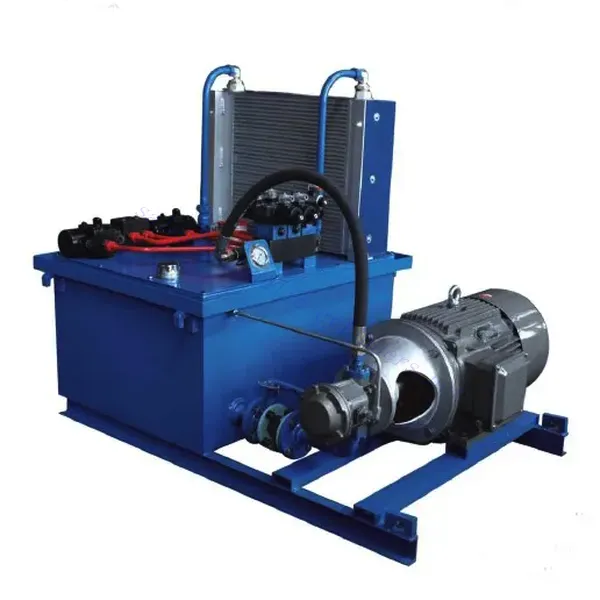
升降机液压系统
升降机液压系统

Hydraulic systems for lifters are a state-of-the-art solution designed to optimize the performance of lifting equipment in various industries. This advanced system provides superior power, control, and reliability, ensuring smooth and precise lifting operations. Below, we will discuss the main characteristics of the lift hydraulic system, the use of methods, maintenance requirements, and other essential aspects.
升降机液压系统参数:
Motor Power:30KW
Oil Tank:300L
System Pressure:23Mpa
System Flow:56L/min
定制液压系统型号描述:

油罐结构:

油罐清洗盖:

定制液压系统:
(1)垂直液压系统

(2)水平液压系统

(3)侧装式液压系统
侧装式液压泵站,即油泵装置,水平安装在独立的油箱上,侧装式可配备备用泵,主要用于容量为 250 升、功率为 7.5 千瓦以上的大型储油罐系统。


升降机液压系统 特点:
- Powerful Lifting Capability:
- High Force Output: The hydraulic system provides tremendous power, lifting heavy loads efficiently and safely.
- Controlled Lifting Speed: The system allows precise lifting speed control, allowing the operator to adjust the speed to ensure a smooth and controlled lifting operation.
- 用途广泛:
- Adaptability: The hydraulic system of the lift can be integrated into various lifting equipment, such as scissor lifts, car lifts, material handling systems, and hydraulic jacks.
- Load Capacity: The system is designed to handle different load capacities, from light to heavy-duty applications, to meet various lifting requirements.
- Safety and Stability:
- Safe Load Handling: The hydraulic system provides stable and fast load handling, minimizing the risk of accidents or load transfer during lifting operations.
- Overload Protection: Many hydraulic lifts have safety features such as overload protection valves that prevent the system from exceeding its lifting capacity and ensure safe and reliable operation.
液压系统的主要组成部分有哪些?
A hydraulic system comprises several vital components that generate, control, and transmit hydraulic power. The main features of a hydraulic system include:
- 液压油:
- The hydraulic fluid, often oil-based, is the medium for transmitting power in the system. It provides lubrication, heat dissipation, and sealing properties.
- 液压泵:
- The hydraulic pump is responsible for converting mechanical power into hydraulic power. It generates flow and pressure to move the hydraulic fluid through the system.
- 水库:
- The reservoir, also known as the hydraulic tank, stores the hydraulic fluid. It provides a pool of liquid to compensate for volume changes due to temperature variations and acts as a settling point for contaminants.
- Hydraulic Motor or Actuator:
- The hydraulic motor or actuator converts hydraulic energy back into mechanical energy. It receives pressurized fluid from the pump and uses it to generate rotary or linear motion, enabling the system to perform work.
- 控制阀:
- Control valves regulate the flow and pressure of hydraulic fluid within the system. These valves direct the fluid to specific actuators, allowing precise control over the movement and speed of hydraulic components.
- 液压缸:
- Hydraulic cylinders are mechanical devices that convert fluid power into linear motion. They consist of a cylindrical barrel, a piston, and a rod. When pressurized fluid is directed into the cylinder, it extends or retracts the piston, creating linear force.
- 液压管路和软管:
- Hydraulic lines and hoses transport the pressurized hydraulic fluid between various system components. They are designed to withstand high pressures and are usually made of reinforced rubber or steel.
- Accumulator:
- An accumulator stores hydraulic energy in the form of pressurized fluid. It helps maintain system pressure, absorb shocks, and provide additional power when required.
- 筛选条件:
- Hydraulic filters remove contaminants from the hydraulic fluid, such as dirt, debris, and particles. They prevent damage to components and maintain the cleanliness and performance of the system.
- Pressure Relief Valve:
- The pressure relief valve protects the hydraulic system from excessive pressure by diverting excess fluid back to the reservoir. It ensures the system operates within safe pressure limits.
- Heat Exchanger:
- In some hydraulic systems, a heat exchanger is used to manage the temperature of the hydraulic fluid. It helps dissipate excess heat and maintain the fluid within the optimal operating range.
工厂的能力和产能:
(1) 装配
我们拥有一流的自主研发装配平台。液压油缸生产车间拥有 4 条半自动提升油缸装配线和 1 条全自动倾斜油缸装配线,设计年生产能力 100 万支。特种油缸车间配备了各种规格的半自动清洗装配系统,设计年生产能力 20 万只,并配备了知名数控加工设备、加工中心、高精度油缸加工专用设备、机器人焊接机、自动清洗机、油缸自动装配机、自动喷漆生产线等。现有关键设备 300 多台(套)。设备资源的优化配置和高效利用,保证了产品的精度要求,满足了产品的高质量需求。


(2) 机加工
加工车间配备了定制的斜轨车削中心、加工中心、高速珩磨机、焊接机器人及其他相关设备,可加工最大内径 400 毫米、最大长度 6 米的气缸管。

(3) 焊接

(4) 油漆和涂料
配备中小型圆筒自动水性漆喷涂线,实现机器人自动上下料和自动喷涂,设计产能为每班 4000 件;
我们还拥有一条由动力链驱动的大型油缸半自动喷漆生产线,设计产能为每班 60 箱。


(5) 测试
我们拥有一流的检验设施和试验台,确保气缸的性能符合要求。

我们是业内领先的液压系统制造商之一,能够提供全面的液压系统解决方案,并提供相应的配套服务。 农用齿轮箱凭借卓越的产品质量和售后服务,我们的产品远销世界各地,赢得了良好的声誉。我们欢迎国内外客户与我们联系洽谈业务、交流信息,并 与我们合作!
液压缸应用:

 ZH
ZH  EN
EN  PT
PT  ES
ES  DE
DE  FR
FR  IT
IT  AR
AR  RU
RU  KO
KO  KA
KA  BG
BG  CS
CS  DA
DA  EL
EL  ET
ET  FI
FI  HU
HU  ID
ID  LT
LT  LV
LV  NB
NB  NL
NL  PL
PL  RO
RO  SK
SK  SL
SL  SV
SV  TR
TR  UK
UK