
Advanced Fluid Power Diagnostics
What Causes Hydraulic Cylinder Creep?
An authoritative engineering blueprint detailing the physics of hydrostatic bypass, internal seal degradation, valve spool wear, and the definitive diagnostic protocols required to eliminate unintended actuator drift in heavy machinery.

The Hidden Danger of Unintended Motion
In the rigorous disciplines of commercial earthmoving, automated manufacturing, and large scale agricultural production, fluid power systems are trusted to execute commands with absolute precision. When an operator moves a joystick to neutral, the hydraulic cylinder is expected to achieve a state of perfect hydrostatic lock, paralyzing the payload exactly where it stands. However, one of the most pervasive and dangerous phenomena in fluid power engineering is hydraulic cylinder creep. This occurs when an actuator slowly, almost imperceptibly, drifts from its locked position without any operator input. To explore the absolute highest industry standards for fluid power components designed to resist this phenomenon, visiting our premium hydraulic cylinders platform provides an essential engineering baseline.
Cylinder creep, also known as cylinder drift, is not merely a nuisance; it is a profound safety hazard. If a massive steel boom slowly descends while technicians are working beneath it, or if a loaded cargo platform sags during transit, the consequences can be catastrophic. The fundamental physics behind this movement always trace back to a singular issue: pressurized hydraulic fluid is escaping from where it should be securely trapped. Because liquids are mechanically incompressible, a cylinder cannot physically move unless fluid vacates the load-holding chamber.
From an authoritative engineering perspective evaluated against international ISO diagnostic standards, locating the exact source of this fluid bypass requires a meticulous process of elimination. The leak may be occurring internally across the piston, externally through a compromised fitting, or miles away inside a degraded directional control valve. This comprehensive technical blueprint will dissect the thermodynamic and mechanical root causes of hydraulic cylinder creep, explore the vulnerabilities of polymer sealing architectures, and provide the definitive troubleshooting protocols required to restore absolute kinetic stability to your heavy machinery.
Internal Fluid Bypass: The Piston Seal Failure
The most common assumption when a cylinder begins to drift is that the internal piston seals have failed. While not always the culprit, it is the most critical mechanical boundary within the actuator.
Polymer Degradation
The piston divides the cylinder barrel into two distinct pressure zones. Heavy duty polyurethane or PTFE composite seals sit in machined grooves on the piston, preventing high pressure fluid from leaking into the low pressure chamber. Over millions of cycles, these seals face immense tribological friction. If abrasive silica dust enters the fluid, it acts as liquid sandpaper, scoring the seals. Additionally, extreme thermodynamic heat can bake the polymers, causing them to harden, crack, and lose their elastomeric memory. Once the seal degrades, high pressure oil easily bypasses the piston, causing the cylinder to creep under load. This is a frequent issue in heavy duty Excavator Hydraulic Cylinders operating in highly abrasive, high temperature environments.
Barrel Expansion and Ballooning
Sometimes the seal is perfectly fine, but the steel barrel itself has failed. If a machine is subjected to violent kinetic shock loads that exceed the maximum pressure rating of the cylinder, the internal hydrostatic pressure can cause the steel barrel to undergo plastic deformation. The barrel physically expands outward, creating a ballooned section. When the piston travels into this expanded zone, the seals can no longer bridge the widened clearance gap, resulting in instantaneous, massive fluid bypass and sudden load drop. High quality actuators combat this by utilizing exceptionally thick, high yield carbon steel tubing.

Systemic Vulnerabilities: The Directional Control Valve
Engineers frequently tear apart a drifting cylinder only to find the internal seals are immaculate. In these cases, the root cause of the creep is located further up the hydraulic circuit, typically within the directional control valve.
Spool Valve Clearance Issues
Standard directional control valves utilize a sliding steel spool within a cast iron body. Because the spool must physically move, there is an intentional, microscopic clearance gap between the spool and the valve body. By definition, spool valves are not zero leak components. Over time, fluid contamination acts as a lapping compound, widening this clearance gap. When the valve is placed in neutral, the weight of the payload forces fluid out of the cylinder, backward through the hydraulic lines, and across this worn spool gap, returning to the reservoir. This continuous bleeding causes the cylinder to slowly creep downward.
The Necessity of Load Holding Valves
To combat inherent spool valve leakage, critical safety equipment must employ specialized load holding architectures. Pilot operated check valves (PO Checks) or counterbalance valves are plumbed directly into the cylinder barrel. Unlike spool valves, these components utilize a machined poppet that seats flawlessly against a steel edge, creating an absolute zero leak boundary. They mechanically trap the fluid inside the cylinder until the operator intentionally applies pilot pressure to open them. For elevating human personnel, Aerial Work Vehicle Hydraulic Cylinders are strictly mandated to utilize these integrated counterbalance manifolds to permanently eliminate the risk of life threatening downward drift.

External Factors: Fluid State and Temperature
Mechanical wear is not the only cause of cylinder drift. The thermodynamic state of the synthetic hydraulic fluid itself can create the illusion of a leak, causing severe kinematic instability.
Thermal Contraction
Hydraulic oil expands when heated and contracts when cooled. If a machine operates under heavy load, the fluid temperature will spike. When the operator parks the machine and locks the cylinder, the trapped fluid begins to cool and thermally contract. As the fluid volume shrinks, the piston moves backward to compensate for the lost volume. This is not a physical leak, but rather a thermodynamic shift. Once the fluid reaches ambient temperature, the creeping will completely stop.
Fluid Aeration and Sponginess
Liquids are incompressible, but gases are not. If atmospheric air is sucked into the hydraulic pump due to a degraded suction line, it mixes into the fluid stream, creating aeration. When an aerated cylinder is locked under a heavy load, the trapped air bubbles slowly compress under the weight. This causes the payload to bounce and drift downward. In massive vertical lifting applications, such as Forklift Hydraulic Cylinders, aerated fluid completely destroys the rigid stability required to safely place heavy pallets into high warehouse racking.
External Hemorrhaging
The most obvious cause of creep is an external leak. If high pressure fluid is physically weeping out of the rod gland, a cracked weld on the base cap, or a loose hydraulic hose fitting, the cylinder is actively losing volume. External leaks are dangerous not only because they cause drift, but because they pose a severe environmental and fire hazard. Massive Dump Truck Hydraulic Cylinders rely on absolutely flawless external welds to ensure tons of aggregate remain safely elevated during dumping procedures.
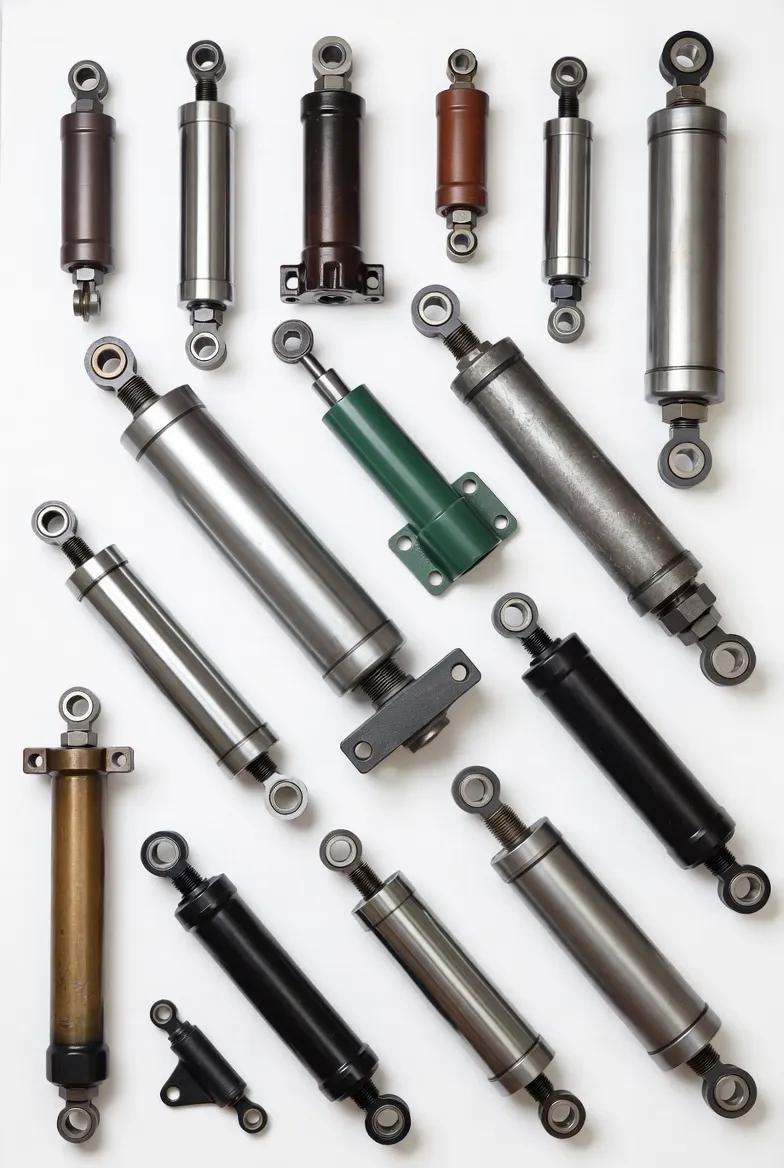
Executing the Diagnostic Protocol
Do not simply replace the cylinder because it is drifting. A professional maintenance engineer will execute a systematic diagnostic isolation test to determine whether the cylinder or the control valve is the true failure point.
- ✔️
The Port Blocking Test: Elevate the payload and secure it mechanically. Disconnect the hydraulic hoses from the cylinder ports and install high pressure steel caps directly onto the cylinder fittings. Remove the mechanical support, allowing the load to rest entirely on the capped cylinder. If the cylinder continues to creep downward, you have definitively proven that fluid is bypassing the internal piston seals. The cylinder must be rebuilt.
- ✔️
Valve Isolation: If the cylinder holds the load perfectly rigid while the ports are capped, the internal seals are flawless. The drift is being caused by fluid bleeding backward through a worn directional control valve spool or a failing load holding manifold. Rebuild or replace the valve matrix. This precise diagnostic isolation prevents wasting thousands of dollars on unnecessary cylinder replacements, a common pitfall when maintaining large fleets of Agricultural Hydraulic Cylinders.


Conclusion: Restoring Absolute Kinematic Control
Hydraulic cylinder creep is a dangerous manifestation of compromised hydrostatic integrity. A fluid power system is only as strong as its weakest elastomeric boundary or its most worn valve spool. By executing ruthless, data driven diagnostic isolations, maintenance professionals can pinpoint the exact failure vector—whether it is a shredded polyurethane piston seal, severe fluid aeration, thermal contraction, or a hemorrhaging control valve. Transforming your maintenance strategy from reactive component swapping to intelligent, empirical troubleshooting ensures your heavy machinery performs with absolute, unyielding, and safe kinetic force. Do not allow your payloads to drift. If your fleet is suffering from uncontrollable cylinder creep, severe seal degradation, or complex hydrostatic anomalies, our specialized engineering team stands ready to deliver the ultimate diagnostic solution and provide access to world class replacement actuators.