
Advanced Fluid Power Engineering
Tie-Rod vs. Welded Body Hydraulic Cylinders: A Comprehensive Comparison
An authoritative engineering blueprint detailing the metallurgical structures, hydrostatic pressure capabilities, environmental survivability, and the definitive decision matrix for selecting the ultimate linear actuator for your machinery.

The Foundational Decision in Fluid Power Architecture
Within the highly demanding fields of heavy manufacturing, mobile construction, large scale agriculture, and automated industrial processing, the ability to generate reliable, immense linear force is paramount. Hydraulic cylinders represent the physical muscles of these advanced machines, translating the intense hydrostatic pressure of synthetic fluids into perfectly controlled kinetic energy. However, when design engineers lay out the blueprints for a new piece of equipment, they are immediately confronted with a foundational architectural decision: should the system utilize Tie-Rod Hydraulic Cylinders or Welded Body Hydraulic Cylinders? This choice is far from arbitrary. The manufacturing methodology of the actuator dictates its ultimate performance limits, its spatial footprint, its maintenance lifecycle, and its ability to survive in hostile environments. For professionals seeking the highest quality components for either architectural path, exploring our premium hydraulic cylinders platform is an essential first step in the procurement process.
The fluid power industry is strictly divided between these two dominant manufacturing styles. Tie-rod designs have been the backbone of American industrial manufacturing for decades, relying on external high strength steel rods to clamp the assembly together. Conversely, welded body designs abandon external hardware, utilizing robotic orbital welding to fuse the end caps directly to the steel barrel, creating a monolithic, smooth profile. Both designs possess profound engineering advantages and distinct vulnerabilities. Misapplying a tie-rod cylinder in a brutal outdoor earthmoving application will result in rapid component failure, just as overspecifying a heavy welded cylinder in a clean, low pressure factory environment represents a massive waste of capital expenditure.
Evaluating these technologies requires a deep dive into metallurgical stress distribution, fluid dynamics, and operational maintenance protocols. This comprehensive technical manual will meticulously dissect the architecture of both Tie-Rod and Welded Body Hydraulic Cylinders. We will explore their specific pros and cons, analyze their pressure ratings and physical dimensions, and provide a definitive engineering decision matrix to ensure you select the absolute perfect fluid power actuator for your specific industrial application.
The Architecture of Tie-Rod Hydraulic Cylinders
Tie-rod hydraulic cylinders are the traditional powerhouse of indoor industrial automation. Their design is characterized by external threaded rods that physically hold the pressure vessel together.
Mechanical Assembly and NFPA Standards
In a tie-rod cylinder, the main steel barrel is not welded to the end caps. Instead, thick, square cast iron or machined steel end caps are placed over the ends of the tubular barrel. Four or more high-tensile steel rods (the tie rods) are run along the outside of the barrel, passing through the corners of the end caps. Large nuts are then torqued down on these rods, compressing the end caps against the barrel to create a tight hydrostatic seal. One of the greatest engineering triumphs of this design is its adherence to the National Fluid Power Association (NFPA) standards. This standardization means that a tie-rod cylinder from one manufacturer can often be directly swapped with a cylinder from another manufacturer without altering the machine mounting geometry, making replacement incredibly streamlined for factory maintenance teams.
Ultimate Serviceability
The primary advantage of the tie-rod configuration is unparalleled serviceability. Because the components are simply clamped together, a maintenance technician can quickly unbolt the external tie-rods using standard hand tools directly on the factory floor. The cylinder easily pulls apart, allowing immediate access to the internal piston seals, rod seals, and wear bands. Once the elastomers are replaced, the cylinder is bolted back together, torqued to specification, and put immediately back into service. In continuous duty industrial applications like automated stamping presses or plastic injection molding machines, minimizing downtime is critical. This ease of repair is precisely why logistics equipment, such as heavy duty Forklift Hydraulic Cylinders operating in controlled warehouses, often favor easily serviceable architectures to keep fleets operational.

Tie-Rod Cylinders: Pros, Cons, and Limitations
While highly favored in the manufacturing sector, the tie-rod design introduces several geometric and structural limitations that make it unsuitable for extreme, hostile environments.
- ✔️
The Spatial Footprint Problem: Tie-rod cylinders are physically bulky. The square end caps extend significantly beyond the diameter of the central barrel, and the external rods consume valuable clearance space. In mobile machinery where every inch of chassis geometry is carefully optimized, these bulky profiles simply will not fit. Furthermore, the external rods act as magnets for debris. In outdoor applications, mud, rocks, and agricultural vines easily become entangled in the exposed hardware, leading to rapid component degradation.
- ✔️
Pressure Limitations and Rod Stretch: Standard tie-rod cylinders are generally limited to operating pressures of around two thousand five hundred to three thousand PSI. While custom versions can handle more, extreme pressures cause a unique vulnerability: tie-rod stretch. When subjected to immense internal hydrostatic spikes, the long steel rods can physically stretch by microscopic amounts. This stretch instantly relieves the clamping force on the end caps, causing the high pressure seals to extrude and violently blow out hydraulic oil.
- ✔️
Best Use Cases: Due to these limitations, tie-rod architectures are best reserved for indoor, climate-controlled environments such as automated assembly lines, injection molding presses, and indoor material handling. They are generally avoided in heavy earthmoving or rough terrain applications.

The Architecture of Welded Body Hydraulic Cylinders
Welded body cylinders represent the absolute pinnacle of ruggedized fluid power design. They are engineered to survive in environments where standard actuators would instantly shatter.
Monolithic Steel Construction
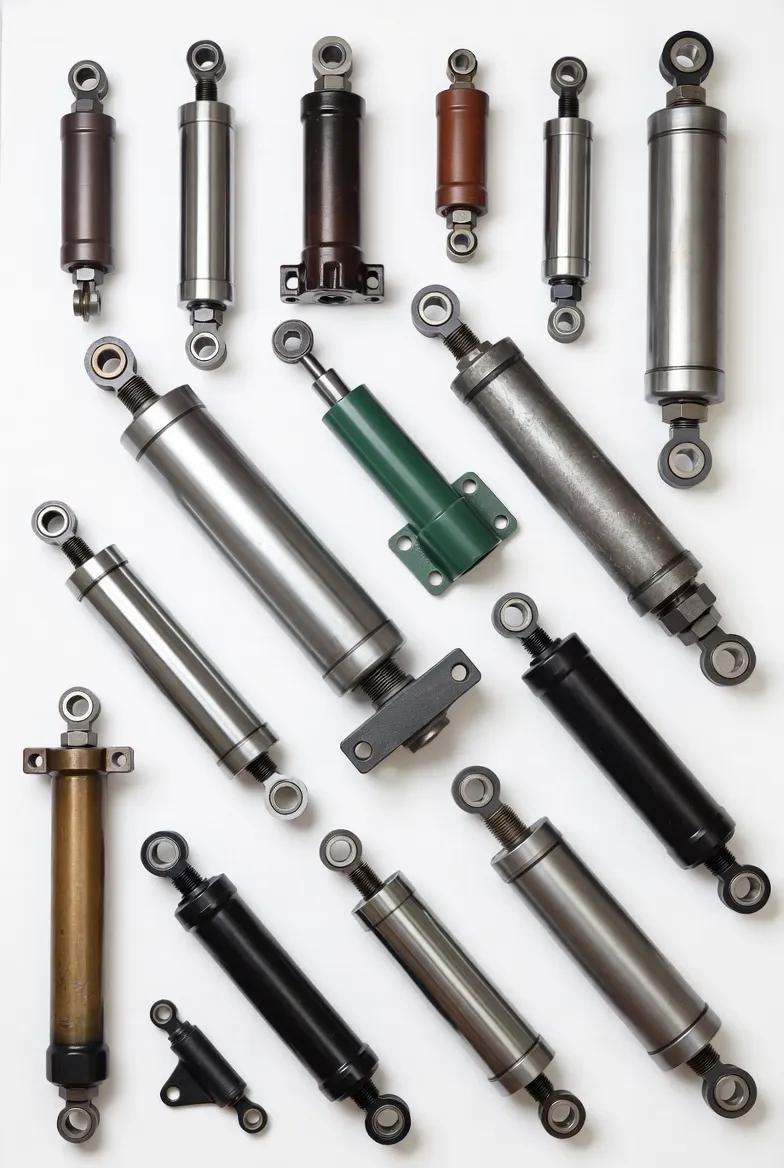
In a welded body cylinder, the bulky external tie rods and square end caps are completely eliminated. The base cap, the hydraulic ports, and often the trunnion mounting brackets are permanently fused directly to the thick, high yield steel barrel using automated robotic orbital welding. This creates a smooth, monolithic exterior profile. The front head gland, which allows the rod to pass through, is typically internally threaded and screwed directly into the barrel, keeping the outer diameter entirely flush. This sleek, snag-free design is utterly impervious to mud, vines, and debris.
Extreme Pressure and Survival
Because the base is permanently welded and there are no external rods to stretch, welded cylinders can withstand astonishing internal hydrostatic pressures. They routinely operate at five thousand PSI and can survive violent kinetic shock spikes that would instantly destroy a tie-rod assembly. This absolute structural invulnerability is the defining reason why massive Excavator Hydraulic Cylinders rely exclusively on welded body designs to smash through solid granite without suffering catastrophic metal fatigue.
Welded Body Cylinders: Pros, Cons, and Applications
While welded cylinders offer unyielding strength and a perfectly optimized spatial footprint, they introduce a significant challenge regarding maintenance.
- ✔️
The Maintenance Trade-off: The primary disadvantage of a welded cylinder is the difficulty of repair. Because the end cap is permanently welded, the entire internal piston assembly must be extracted through the front head gland. The threaded head gland is often installed with immense torque and specialized locking agents. Disassembling a large welded cylinder in the field is nearly impossible; it typically requires removal from the machine and transportation to a dedicated hydraulic repair facility equipped with massive teardown benches. This increases maintenance downtime compared to tie-rod designs.
- ✔️
Customization and Load Holding: Welded cylinders are incredibly versatile during the design phase. Engineers can easily weld complex counterbalance safety valves directly onto the steel barrel. These safety valves permanently lock the fluid inside the cylinder, preventing load drops if a hose bursts. This critical safety architecture is an absolute mandate for components like Aerial Work Vehicle Hydraulic Cylinders, ensuring that human personnel platforms remain safely suspended in the sky without any risk of downward drift.
- ✔️
Mobile Dominance: Due to their compact size, extreme pressure tolerance, and ability to shed debris, welded body cylinders are the exclusive choice for mobile machinery. Whether it is a massive loader or Agricultural Hydraulic Cylinders dragging heavy plows through abrasive mud, welded architecture ensures survival where tie-rods would instantly fail.

The Engineering Decision Matrix: Making the Right Choice
Procurement managers and design engineers must ruthlessly evaluate their project parameters to select the correct cylinder architecture. Specifying the wrong type leads to massive capital waste and frequent catastrophic downtime.
When to Choose Tie-Rod Cylinders
Select tie-rod cylinders if your application is indoors, stationary, and operates in a relatively clean environment. If rapid, on-site maintenance is your highest priority to prevent expensive factory downtime, tie-rods are unbeatable. They are perfect for automated manufacturing, injection molding, and factory presses where spatial dimensions are not severely restricted and operating pressures remain below 3,000 PSI.
When to Choose Welded Body Cylinders
Select welded body cylinders if you are designing mobile machinery, earthmoving equipment, or vehicles operating in harsh, outdoor environments. If the machine requires maximum force density in a tight spatial footprint, or operates at extreme pressures exceeding 4,000 PSI, welded architecture is mandatory. Furthermore, if you require multi-stage telescopic functionality, such as Dump Truck Hydraulic Cylinders, the monolithic welded design is the only viable engineering pathway.

Conclusion: Architecting the Ultimate Kinetic Solution
The debate between tie-rod and welded body hydraulic cylinders is not a matter of which technology is universally superior, but rather which mechanical architecture perfectly aligns with your specific engineering objectives. Tie-rod designs offer unparalleled serviceability and NFPA standardization, making them the absolute champions of indoor, continuous-duty industrial automation. Welded body cylinders discard external hardware to provide monolithic strength, extreme pressure tolerance, and sleek spatial geometry, cementing their dominance in the brutal, high-impact world of mobile construction and heavy agriculture. By understanding the profound structural, thermodynamic, and maintenance differences between these two designs, engineers can confidently architect machinery that performs with flawless, unyielding reliability. Ensure your equipment is outfitted with the exact mechanical muscle required for survival. If you require expert guidance on specifying extreme duty fluid power components or custom actuator design, our elite engineering team is standing by to deliver the ultimate mechanical advantage.