
Expert Fluid Power Diagnostics
A Senior Mechanic Secret: 5 Tips to Quickly Identify Internal vs. External Hydraulic Cylinder Leaks
An authoritative and comprehensive field guide detailing the thermodynamic, auditory, and mechanical testing protocols required to diagnose fluid power loss, prevent catastrophic drift, and restore absolute machine reliability.

The Hidden Culprit Behind Power Loss and Machine Drift
In the relentless, high-stakes environments of commercial earthmoving, deep subterranean mining, large scale agricultural production, and automated industrial manufacturing, fluid power systems are the undisputed lifelines of mechanical force. When a heavy equipment operator engages a control valve, they expect an immediate, powerful, and unwavering response from the machine. However, one of the most frustrating and potentially dangerous issues a mechanic will encounter on the job site is a gradual loss of lifting power or unintended actuator drift. The machine simply refuses to hold its payload. When this occurs, the diagnostic clock starts ticking. Every hour of machine downtime translates to massive financial hemorrhaging. Knowing exactly how to identify internal versus external hydraulic cylinder leaks is not just a useful skill; it is an absolute necessity for any professional fluid power technician. To explore the highest industry standards for precision-engineered, leak-resistant components, visiting our premium hydraulic cylinders platform provides an essential technical foundation.
The fundamental principle of a hydraulic system relies entirely on the incompressibility of synthetic fluids tightly contained within a sealed thermodynamic envelope. If that fluid escapes its designated high-pressure chamber, the mechanical force dissipates instantly. The challenge lies in the fact that fluid can escape in two entirely different ways. An external leak is obvious—it bleeds synthetic oil onto the machine chassis and the ground, creating environmental hazards and visible messes. An internal leak, however, is a silent, invisible assassin of productivity. The fluid bypasses the internal piston seals, moving from the high-pressure zone to the low-pressure zone without ever leaving the steel barrel. To the untrained eye, the cylinder looks perfectly fine, yet the machine slowly sags under the weight of gravity.
Drawing upon decades of field experience and evaluated against stringent international ISO diagnostic standards, this comprehensive technical blueprint will reveal the closely guarded secrets of senior heavy machinery mechanics. We will meticulously dissect the physics of fluid bypass, explore thermodynamic heat generation caused by internal friction, analyze auditory diagnostic techniques, and provide you with five definitive, actionable tips to quickly and accurately isolate the exact source of your hydraulic failure. Mastering these protocols will ensure your equipment returns to peak operational efficiency with minimal downtime.
Tip 1: The Comprehensive Visual Assessment Protocol
Before dismantling any lines or utilizing advanced diagnostic tools, a senior mechanic always begins with a meticulous visual inspection. External leaks leave a distinct forensic trail that tells a story of seal degradation.

Analyzing the Head Gland and Wiper Seal
The most frequent site of an external leak is the dynamic boundary where the polished chrome rod exits the steel barrel, known as the head gland. Look closely at the wiper seal. A healthy cylinder should have a rod that appears slightly lubricated but never dripping. If you observe a thick accumulation of dirt and grime forming a ring around the rod, this indicates that the primary rod seal is weeping fluid. The escaping oil acts as a magnet for abrasive environmental dust. Over time, this mixture creates a highly abrasive lapping compound that severely scores the chrome plating, ensuring total seal failure. This type of environmental degradation is especially prevalent in heavy-duty Excavator Hydraulic Cylinders operating in dense mud and silica sand.
Evaluating Static Seals and Welds
Not all external leaks occur at the moving rod. Mechanics must thoroughly inspect the static boundaries. Examine the base cap where it is welded to the barrel. A microscopic hairline crack in the robotic orbital weld can emit a high-pressure mist of fluid that is difficult to spot when the machine is turned off. Wipe the entire cylinder down with a specialized industrial degreaser, dry it completely, and run the machine under maximum load. A fresh, shiny trail of synthetic oil will quickly pinpoint a compromised static O-ring, a loose high-pressure hydraulic fitting, or a fractured weldment. If the exterior remains completely dry, yet the payload continues to drop, you have definitively ruled out an external leak and must pivot your diagnostics internally.
Tip 2: Executing the Controlled Drop Test (Drift Measurement)
When external forensics yield no results, the mechanic must prove the existence of an internal leak. The most fundamental mechanical verification is the controlled drop test, which measures the rate of hydrostatic bypass across the internal piston seals.
Setting the Kinematic Baseline
To perform this test safely, extend the cylinder to lift a known, heavy payload to a designated height. Once elevated, return the directional control valves to the absolute neutral, closed position, effectively locking the fluid inside the cylinder. Shut down the primary diesel engine or electric motor to eliminate pump vibrations. Using a precision machinist ruler or a dial indicator, measure the exact length of the exposed chrome rod. Mark this baseline position with a piece of high-visibility tape on the barrel. The cylinder is now under immense static pressure, fighting the gravitational force of the payload.
Measuring the Hydrostatic Drift
Allow the machine to sit untouched for a designated time period—typically thirty to sixty minutes. Return to the machine and remeasure the exposed rod length. If the rod has retracted and the payload has dropped, fluid is unequivocally escaping the high-pressure chamber. Since you have already ruled out external leaks, the oil is slipping past the internal polyurethane piston seals and migrating into the low-pressure side of the barrel. This internal bypass destroys the rigidity of the system. In critical life-safety applications, such as Aerial Work Vehicle Hydraulic Cylinders, even a fraction of an inch of drift is deemed an absolute failure, demanding immediate actuator replacement to prevent a lethal free-fall scenario.

Tip 3: Thermodynamic Heat Signature Analysis
One of the most advanced and highly guarded secrets among senior fluid power technicians is the application of thermodynamics. Energy cannot be destroyed; when high-pressure fluid bypasses a damaged seal, that mechanical energy instantly converts into localized heat.
The Friction of Fluid Bypass
Imagine three thousand pounds of pressurized fluid squeezing through a microscopic scratch on the steel barrel wall or a tiny tear in the piston’s Teflon seal. The extreme friction generated by this high-velocity fluid bypass creates a distinct, localized thermal hotspot. A healthy cylinder operating normally will have a relatively uniform temperature profile across its steel barrel. A cylinder suffering from a severe internal leak will exhibit a massive temperature spike directly over the piston’s location when held under pressure.
Using an Infrared Thermometer
To execute this diagnostic, the mechanic extends the cylinder to the end of its stroke and continues to hold the control valve open, forcing the hydraulic pump to push oil over the main relief valve. While the system is dead-headed and under maximum hydrostatic pressure, the mechanic utilizes a digital infrared thermometer or a thermal imaging camera to slowly scan the exterior of the cylinder barrel. If a sharp, isolated temperature increase is detected precisely at the internal piston band, it is absolute confirmation that high-pressure fluid is actively tearing past the seals. This technique is invaluable for diagnosing complex machinery, such as large Agricultural Hydraulic Cylinders operating in scorching summer fields where visual leaks are obscured by dust.
Safety and Thermal Limits
Mechanics must exercise extreme caution during this test. The heat generated by internal bypassing can escalate rapidly, potentially exceeding the thermal degradation limits of the remaining healthy seals. The test should be conducted briefly—only long enough to register the thermal signature—before returning the machine to neutral to allow the synthetic oil to cool through the main reservoir heat exchanger.
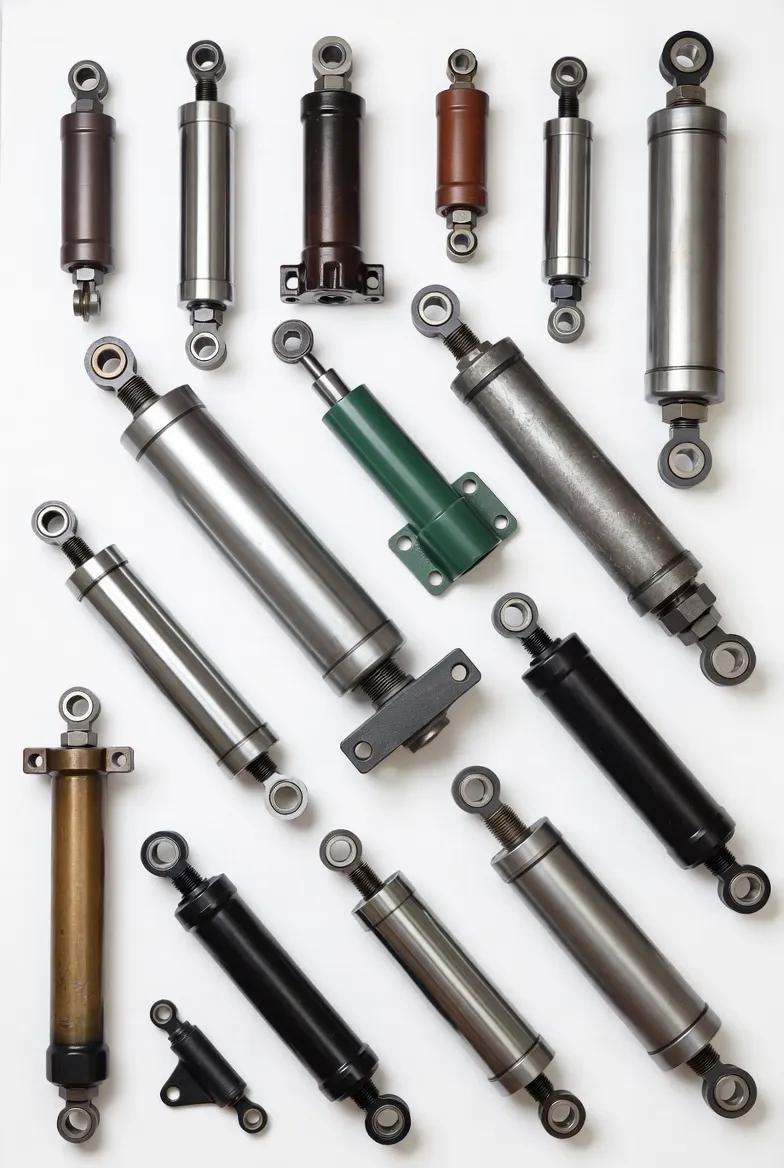
Tip 4: Acoustic Diagnostics (The Sound of Failure)
Fluid mechanics not only generate heat; they generate highly specific auditory frequencies. A seasoned mechanic relies heavily on their ears to diagnose internal hydrostatic integrity.
- ✔️
The Hiss of High-Pressure Bypass: When a massive volume of hydraulic oil attempts to force its way through a highly restricted, compromised seal boundary, it creates a distinct, high-pitched hissing or squealing noise. This is the acoustic manifestation of fluid turbulence and cavitation. A healthy cylinder operating under load will emit a low, smooth hum. A cylinder with a blown internal piston seal will scream under pressure.
- ✔️
Utilizing a Mechanic Stethoscope: Because heavy industrial environments are incredibly loud with diesel engine noise, mechanics use a specialized automotive stethoscope to isolate the sound. By placing the metal probe directly against the steel barrel near the piston’s location and dead-heading the cylinder against a heavy load, the mechanic can listen precisely for the turbulent hiss. This auditory confirmation is crucial when diagnosing equipment like high-reach Forklift Hydraulic Cylinders, where removing the mast for visual inspection is a labor-intensive, multi-day ordeal.

Tip 5: The Ultimate Proof—The Hose Isolation Technique
The most frustrating diagnostic scenario occurs when a cylinder drifts, but the mechanic cannot determine if the internal piston seal is leaking, or if the fluid is actually bleeding backward through a worn directional control valve located miles away on the chassis. The Isolation Method provides the definitive answer.
Severing the Kinematic Link
To definitively isolate the cylinder from the rest of the machine’s hydraulic circuit, the mechanic must physically remove the variable of the control valve. First, the payload is lifted and firmly secured with massive mechanical steel blocking to ensure it cannot drop during the test. Once safely blocked, the mechanic completely unscrews and removes the hydraulic hoses from the cylinder’s ports. Next, high-pressure, heavy-duty steel caps are threaded directly onto the cylinder’s inlet and outlet fittings, perfectly sealing the fluid inside the barrel independently of the machine’s plumbing.
With the cylinder capped, the mechanical blocking is carefully removed, transferring the immense weight of the payload back onto the capped cylinder. If the cylinder continues to drift downward, the fluid is unequivocally bypassing the internal piston seals; the cylinder is dead and must be rebuilt. If the cylinder holds the load perfectly rigid, the cylinder is completely healthy. The drift was being caused by fluid escaping back through a faulty directional control valve or a blown counterbalance manifold. This absolute verification prevents the catastrophic financial waste of replacing healthy components on massive equipment like Dump Truck Hydraulic Cylinders.

Conclusion: Elevating Your Diagnostic Mastery
The ability to quickly and accurately identify internal versus external hydraulic cylinder leaks is the hallmark of a master fluid power technician. By executing a rigorous visual inspection for external contamination, calculating kinematic drift through controlled drop tests, utilizing thermodynamic infrared scans to pinpoint friction, listening for the acoustic signatures of cavitation, and executing the definitive isolation method, mechanics can eliminate diagnostic guesswork entirely. Replacing a massive linear actuator is a highly expensive and labor-intensive operation; replacing it when the true fault lies in a fifty-dollar valve spool is an unforgivable engineering failure. Master these five secrets, and you guarantee that your heavy machinery fleet operates with unparalleled safety, absolute reliability, and maximum economic efficiency. If your organization requires expert diagnostic support, custom seal replacements, or completely new, highly ruggedized actuators engineered to survive the harshest industrial environments, our elite technical team stands ready to deliver.