
Strategic Fluid Power Procurement
OEM vs. Aftermarket Hydraulic Cylinders: Which is the Better Investment for Heavy Machinery?
An authoritative engineering and economic blueprint detailing metallurgical standards, reverse-engineering precision, lifecycle cost analysis, and the ultimate procurement matrix for fluid power linear actuators.

The Great Procurement Dilemma in Fleet Management
In the highly rigorous arenas of commercial earthmoving, deep subterranean mining, intensive agricultural production, and automated industrial manufacturing, heavy machinery relies entirely on fluid power to execute massive kinetic tasks. Hydraulic cylinders are the undisputed mechanical muscles of these operations. However, due to the extreme thermodynamic friction, severe environmental contamination, and violent kinetic shock loads they endure daily, even the most robust linear actuators will eventually reach the end of their operational lifespan. When a catastrophic seal blowout, a bent piston rod, or a ruptured steel barrel paralyzes a machine, fleet managers and engineers face an immediate, high-stakes financial decision: Should they procure an Original Equipment Manufacturer (OEM) replacement, or invest in an aftermarket hydraulic cylinder? To explore the absolute highest industry standards for precision-engineered components, establishing a technical baseline at our premium hydraulic cylinders platform is an essential prerequisite.
Historically, the debate between OEM and aftermarket parts was heavily skewed. OEM was viewed as the gold standard of absolute reliability, while aftermarket components were frequently dismissed as cheap, reverse-engineered imitations prone to premature failure. Today, driven by the proliferation of advanced CAD modeling, multi-axis CNC machining, and globalized metallurgical supply chains, that narrative has fundamentally shifted. Top-tier aftermarket manufacturers now possess the engineering bandwidth to not only replicate OEM specifications but to actively re-engineer and eliminate the inherent structural flaws found in factory originals.
Evaluated against stringent international ISO fluid power fabrication and QA standards, this comprehensive technical blueprint will serve as your ultimate procurement guide. We will meticulously dissect the metallurgical, economic, and logistical realities of both OEM and aftermarket hydraulic cylinders. By analyzing lead times, warranty structures, seal architectures, and total lifecycle costs, this guide will empower you to make data-driven decisions that maximize the uptime of your heavy machinery fleet while fiercely protecting your operational capital.
The OEM Hydraulic Cylinder: The Baseline of Predictability
Original Equipment Manufacturer (OEM) cylinders are produced either directly by the heavy machinery brand or by an exclusive third-party contractor operating under their exact blueprints. They represent the baseline standard of performance.
The Assurance of Perfect Integration
The primary advantage of purchasing an OEM cylinder is the absolute guarantee of form, fit, and function. Because it is fabricated from the exact same CAD files as the original component, the mounting trunnions, clevis pins, and fluid port threads will align flawlessly with the machine chassis. There is zero risk of spatial interference. This plug-and-play predictability is highly comforting for maintenance teams working under extreme time constraints, especially when replacing complex, multi-stage Dump Truck Hydraulic Cylinders where precise geometric alignment is critical for safe telescopic elevation.
The OEM Constraints: Cost and Flaw Replication
However, OEM components carry massive drawbacks. First is the economic premium; you are paying heavily for the brand logo, often resulting in markups of 50% to 100% over manufacturing costs. More critically, OEM cylinders replicate the *exact* original design. If the factory cylinder suffered a premature blowout due to an under-engineered wiper seal or insufficient rod thickness, buying the OEM replacement means you are purchasing the exact same engineering flaw. You are simply resetting the clock until the identical failure occurs again.

The Aftermarket Advantage: Agility and Engineering Upgrades
The aftermarket fluid power industry is vast and highly segmented. While low-tier manufacturers focus on producing cheap, inferior clones, premium aftermarket manufacturers operate as highly advanced fluid power engineering firms. They do not just copy; they improve.
Reverse Engineering and Structural Fortification
When an elite aftermarket firm receives a failed OEM cylinder, their metallurgical engineers analyze the root cause of the failure. If an Excavator Hydraulic Cylinder failed due to a bent rod, the aftermarket manufacturer will reverse-engineer the dimensions but forge the replacement rod from a superior, higher-yield chromoly steel alloy. If the OEM seals melted under high heat, the aftermarket replacement will be upgraded with high-temperature Viton or PTFE composite seals. This allows fleet managers to procure an actuator that fits exactly like the original but physically outperforms it in the field.
Supply Chain Velocity
Heavy machinery OEMs have massive, sluggish global supply chains. Procuring a replacement cylinder for a ten-year-old tractor might result in a 16-week lead time, paralyzing farm operations during a critical harvest window. Premium aftermarket manufacturers are highly agile. They stock vast libraries of common cylinder profiles, such as standardized Agricultural Hydraulic Cylinders, and can often CNC machine a custom replacement from raw billets in a matter of days. This velocity drastically reduces the most expensive hidden cost of fluid power failure: operational downtime.

The Procurement Evaluation Matrix: How to Choose
Deciding between OEM and premium aftermarket requires a ruthless assessment of economic, metallurgical, and logistical variables. Utilize this matrix to guide your capital expenditure.
Warranty Status and Legal Compliance
If the heavy machinery is brand new and actively covered under the manufacturer’s powertrain warranty, utilizing an aftermarket cylinder may void the overarching equipment guarantee. In these strict scenarios, OEM is mathematically the safest bet until the warranty expires. Furthermore, in highly regulated industries like passenger aviation or specialized life-safety lifts (e.g., Aerial Work Vehicle Hydraulic Cylinders), strict insurance compliance may legally dictate the use of OEM-certified parts.
The 70% Cost Threshold
Apply the 70% rule to your procurement strategy. Compare the cost of the premium aftermarket cylinder to the OEM quote. If the aftermarket actuator is engineered to equal or superior specifications and costs less than 70% of the OEM brand, the return on investment heavily favors the aftermarket. You retain operational capital without sacrificing hydrostatic integrity or kinetic performance.
Vetting the Aftermarket Supplier
Not all aftermarket companies are equal. Before signing a purchase order, you must interrogate the manufacturer. Demand proof of 1.5x hydrostatic pressure testing. Ask about their CNC skiving tolerances and whether they utilize induction-hardened chrome rods. A world-class aftermarket supplier will transparently provide this metallurgical data and back their products with a robust warranty. If they cannot provide data, walk away.
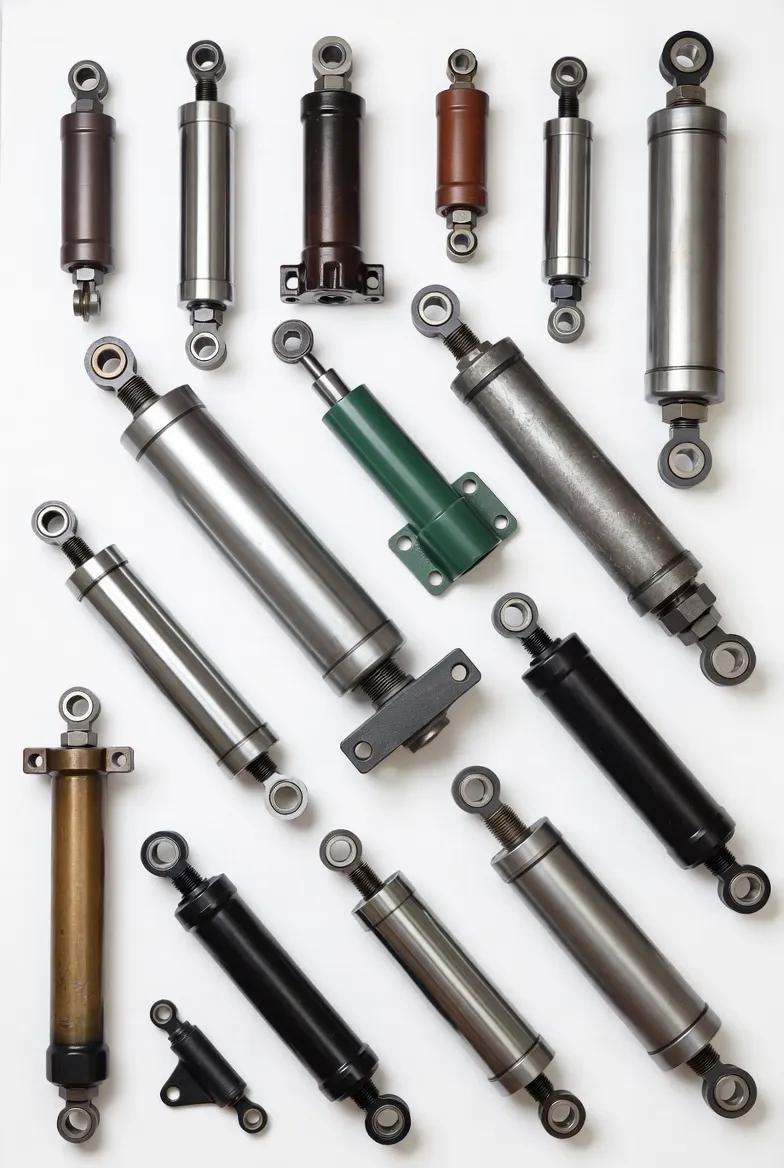
Real-World Application Logistics
To crystallize the decision-making process, we must observe how these principles apply to specific industrial environments. The nature of the machinery often dictates the procurement pathway.
- ✔️
High-Volume Logistics (Forklifts): In bustling distribution centers, fleets of forklifts perform millions of repetitive lifting cycles annually. The Forklift Hydraulic Cylinders governing the mast and tilt functions are heavily standardized. In this arena, premium aftermarket cylinders dominate. The ability to procure a highly durable, perfectly fitting aftermarket cylinder at a fraction of the OEM cost allows warehouse managers to maintain vast fleets efficiently without inflating the maintenance budget.
- ✔️
Custom Infrastructure Equipment: Conversely, consider a highly specialized tunnel-boring machine or a custom marine crane. These machines often utilize proprietary, massive-bore cylinders engineered exclusively for that specific chassis. Because the aftermarket volume for these rare components is virtually zero, you are physically tethered to the OEM. However, in these cases, contracting a specialized aftermarket fluid power shop to *rebuild* the OEM cylinder is often faster and cheaper than waiting for the original factory in Europe or Asia to forge a new one from scratch.


Conclusion: Architecting the Ultimate Kinetic Strategy
The debate between OEM and aftermarket hydraulic cylinders is no longer a simplistic choice between quality and cost. The modern premium aftermarket has evolved into a powerhouse of advanced fluid power engineering, offering components that rival—and frequently surpass—the metallurgical and thermodynamic resilience of factory originals. The correct investment depends entirely on the agility of your supply chain, the warranty status of your chassis, and the specific structural vulnerabilities you are attempting to cure. By demanding rigorous technical transparency, verifying seal architectures, and calculating the true cost of machine downtime, fleet directors can execute procurement strategies that guarantee unstoppable kinetic force while maximizing operational capital. Never compromise on the mechanical muscles of your enterprise. If your organization requires expert consultation, rapid deployment, or access to the most heavily fortified, premium replacement actuators on the global market, our elite technical engineering team stands ready to architect your ultimate fluid power solution.