
Precision Fluid Power Engineering
How to Measure a Hydraulic Cylinder for Replacement: The 5-Minute Complete Guide
An authoritative technical blueprint detailing exact caliper measurement protocols, kinematic mounting analysis, fluid port identification, and the definitive procedures to procure the perfect replacement linear actuator.

The Absolute Importance of Dimensional Accuracy
In the demanding environments of heavy commercial construction, deep subterranean mining, automated industrial manufacturing, and large scale agricultural production, fluid power equipment must operate flawlessly. When a hydraulic cylinder reaches the end of its operational lifespan due to seal degradation, rod scoring, or catastrophic kinetic impact, securing an exact replacement is absolutely critical. A hydraulic cylinder is not a generic mechanical part; it is a highly calibrated thermodynamic pressure vessel designed to fit within exact kinematic geometries. If a replacement cylinder is even a fraction of an inch out of tolerance, it will not align with the machine chassis. Forcing an improperly sized actuator into a linkage will cause severe lateral side loading, resulting in instant catastrophic failure and massive operational downtime. To establish a baseline of elite engineering standards before ordering, visiting our premium hydraulic cylinders platform is a mandatory first step.
Learning how to measure a hydraulic cylinder for replacement might seem daunting to a novice, but by following strict engineering protocols, the process is entirely straightforward. You do not need to be a hydraulic engineer to obtain the correct dimensions, but you do need precision tools. A simple tape measure is entirely inadequate for this task. You must utilize digital or dial calipers to measure the rod, bore, and pin diameters down to the thousandth of an inch. Guessing the dimensions based on visual estimation will inevitably result in procuring the wrong component, wasting thousands of dollars and paralyzing your equipment fleet.
Evaluated against stringent international ISO fluid power fabrication directives, this comprehensive technical blueprint will systematically guide you through the exact procedure of measuring a fluid power linear actuator. We will meticulously explain how to accurately determine the bore size without disassembling the unit, how to calculate the exact stroke and retracted length, how to identify critical mounting hardware, and how to verify port thread sizes. Mastering this 5-minute protocol ensures you will order the perfect replacement, restoring your heavy machinery to absolute kinetic dominance.
Step 1: Required Precision Tools and Safety Preparation
Before you attempt to measure a hydraulic cylinder, you must ensure the machinery is completely locked out and all hydrostatic pressure is relieved. Attempting to measure an actuator that is under live load is a lethal safety hazard.

Digital or Dial Calipers
This is the most critical tool in your diagnostic arsenal. You must use calipers to measure the rod diameter and the pin hole diameters. A standard tape measure cannot provide the decimal accuracy required for fluid power components. Being off by 1/16th of an inch on a mounting pin will prevent the new cylinder from installing into the machine framework.
Thread Pitch Gauge
To identify the hydraulic fluid ports, a thread pitch gauge is highly recommended. Identifying whether the port is SAE O-ring Boss, NPT, or BSPP is essential. If you order a replacement cylinder with the incorrect port threading, your existing hydraulic hoses will not connect, causing severe delays when repairing critical equipment like Excavator Hydraulic Cylinders.
Step 2: Measuring the Bore and Rod Diameters
The bore and rod diameters are the two most critical specifications of any fluid power actuator. They dictate the exact pushing and pulling force the cylinder can generate under hydrostatic pressure.
Calculating the Bore (Inside Diameter)
The bore is the inside diameter of the main steel barrel. It is the surface that the internal piston glides against. Unless you completely disassemble the cylinder, you cannot measure the inside diameter directly. To determine the bore externally, use your calipers to measure the Outside Diameter (OD) of the main barrel. Then, estimate the thickness of the steel tube wall (typically between 0.125 inches and 0.25 inches for standard applications) and subtract double that thickness from the OD. For example, if the OD is 3.5 inches and the wall thickness appears to be 0.25 inches, the internal bore is 3.0 inches. Heavy duty applications like Dump Truck Hydraulic Cylinders will have significantly thicker barrel walls to resist explosive hoop stress.
Measuring the Chrome Rod
The piston rod is the polished chrome shaft that extends and retracts. Use your digital calipers to measure the exact diameter of the rod. Do not measure near the threaded end or the mounting eye, as those sections are often machined down. Measure the smooth, chrome-plated section. The rod diameter is crucial because it dictates the column strength of the actuator. If you replace a cylinder with an undersized rod, it will suffer from Euler column buckling and snap under a heavy load.

Step 3: Stroke Length and Retracted Dimensions
The physical lengths of the cylinder dictate the geometric range of motion for the machinery. An incorrect stroke length will prevent an implement from fully extending or cause it to crash into the machine chassis upon retraction.
Pin-to-Pin Retracted Length
The retracted length is the total distance between the mounting points when the cylinder is completely collapsed. Use a tape measure to find the exact distance from the center of the base mounting pin hole to the center of the rod mounting pin hole. Always measure from the absolute center of the pin holes. Do not measure the entire steel housing from end to end. If the retracted length is too long, the cylinder will not fit into the machine brackets. This measurement is critical for compact logistics machinery like Forklift Hydraulic Cylinders, where spatial constraints are extremely tight.
Calculating the Stroke
The stroke is the total distance the piston rod can travel. There are two ways to measure this. The easiest method is to measure the extended length (pin-center to pin-center when fully pushed out) and subtract the retracted length. For example, if the extended length is 36 inches and the retracted length is 24 inches, the stroke is exactly 12 inches. Alternatively, if the cylinder is retracted, you can measure the distance from the head gland to the mounting weld on the rod end. This is vital for Aerial Work Vehicle Hydraulic Cylinders to ensure proper elevation heights are met safely.
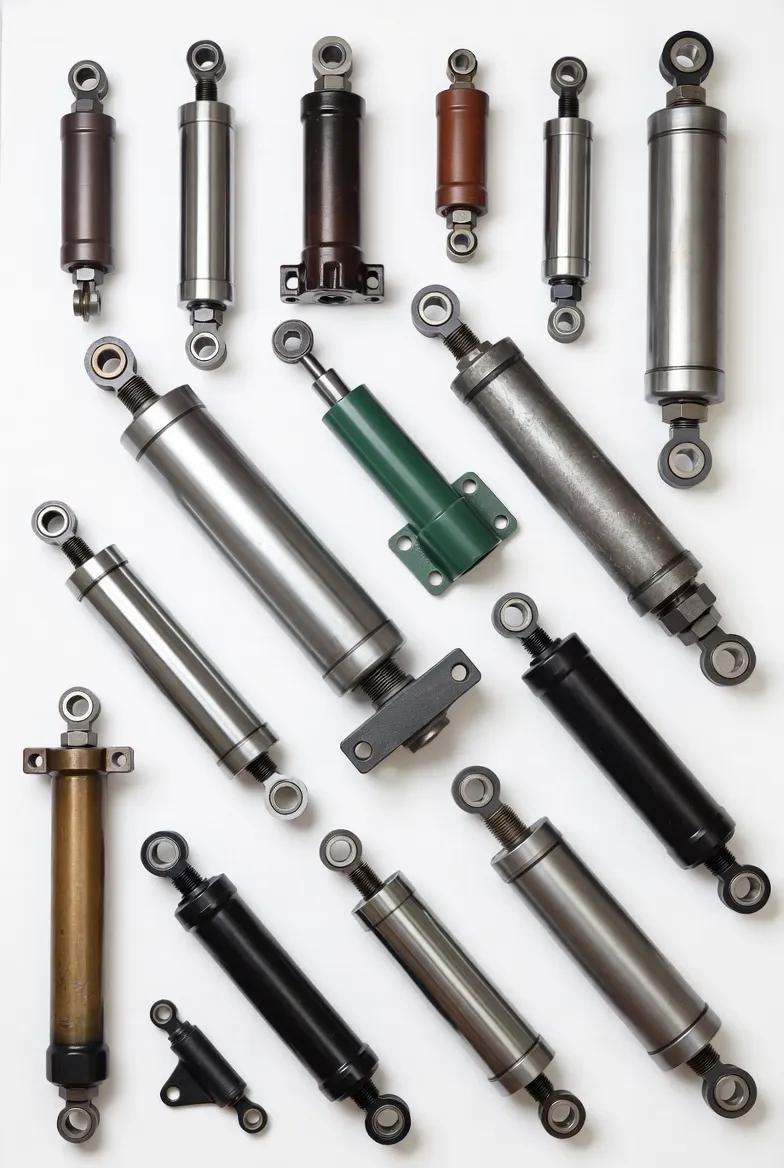
Step 4: Identifying Kinematic Mounting Hardware
A hydraulic cylinder must physically anchor to the machine. Specifying the incorrect mounting hardware will render the replacement cylinder entirely useless.
- ✔️
Determine the Mount Type: Look at both ends of the cylinder (the base and the rod end). Are they Clevis mounts (U-shaped brackets with a pin), Cross-Tubes (welded steel tubes), or Spherical Bearings? Agricultural machinery frequently utilizes clevis mounts for easy field replacement, while heavy duty construction equipment relies on advanced spherical bearings to absorb lateral side-loading and chassis flex.
- ✔️
Measure the Pin Hole Diameter: Use the internal jaws of your digital calipers to measure the exact diameter of the pin holes. This measurement is critical. If the hole is too small, the machine’s steel pin will not pass through. If the hole is too large, the cylinder will slam back and forth during operation, quickly destroying the mount.
- ✔️
Measure the Mounting Width: For a cross-tube mount, measure the overall width of the tube. For a clevis, measure the internal gap width (where the machine bracket slides in). Ensure these dimensions match your current setup perfectly, particularly when replacing specialized Agricultural Hydraulic Cylinders that must interface with standardized tractor three-point hitches.


Conclusion: Procurement with Absolute Confidence
Measuring a hydraulic cylinder for replacement is an exercise in engineering discipline. By methodically utilizing digital calipers to verify the bore, rod, and pin diameters, calculating the exact stroke and retracted lengths, and correctly identifying the kinematic mounting hardware, you eliminate the risk of procurement errors. A perfectly sized cylinder drops seamlessly into your machine chassis, restoring the immense hydrostatic power and structural integrity required for heavy industrial operations. Do not leave capital equipment maintenance to guesswork. Ensure your measurements are flawless to avoid catastrophic side-loading and extended operational paralysis. If you have recorded your dimensions and are ready to procure a world-class, heavily fortified replacement actuator built to the highest global standards, our elite technical manufacturing team stands ready to architect your ultimate fluid power solution.