
Intelligent Asset Lifecycle Optimization
Agricultural Machinery Hydraulic Cylinder Maintenance: Defending Against Dust and Mud Contamination
An authoritative engineering blueprint detailing sub-micron particulate isolation, advanced polymer excluder architectures, tribological friction defenses, and standard operating procedures for fluid power longevity in extreme tillage conditions.
The Harsh Reality of Agrarian Fluid Power Systems
In the highly rigorous disciplines of modern commercial farming, large-scale crop cultivation, and intense tillage operations, the efficiency of heavy machinery is the absolute baseline for survival. Modern tractors, combine harvesters, air seeders, and multi-row planters rely completely on fluid power systems to execute critical mechanical movements. Whether adjusting the precise depth of a massive tillage implement, folding wide planting booms for narrow road transit, or maintaining the structural equilibrium of a harvester header, the linear actuator serves as the core physical muscle. However, unlike standard automated industrial systems operating in pristine, climate-controlled factory floors, farm equipment operates in a continuous, aggressive matrix of environmental hostility. Executing comprehensive agricultural machinery hydraulic cylinder maintenance is far from a standard service recommendation; it is an absolute thermodynamic and mechanical prerequisite for preventing catastrophic machine drift and tight harvest-window paralysis.
The open fields present a brutal tribological ecosystem. Tilling dry, parched earth creates an all-enveloping cloud of micro-particulate airborne silica dust. Conversely, working in saturated, spring soil conditions transforms the ground into a sticky, cohesive clay mud mixture that builds up aggressively around every single moving joint. When an exposed steel piston rod extends into this environment, it does not simply move through clean air—it plunges directly into an abrasive slurry. Understanding the science of defending against dust and mud contamination is the ultimate variable that separates a farm implement that operates flawlessly for a decade from one that suffers premature seal failure, massive fluid power loss, and expensive hydraulic pump destruction within a single operational season.
From an authoritative fluid power engineering perspective evaluated against international ISO cleanliness standards, this comprehensive technical blueprint will map out the precise mechanics of particulate ingression. We will meticulously unpack how dust and mud cut into sealing polymers, dissect the cascading destruction of internal hydrostatic boundaries, evaluate advanced polymer excluder technologies, and outline the exact standard operating procedures required to insulate your custom fluid power assets from environmental abuse. Maintaining strict operational discipline regarding these components is the only path to maximizing heavy machinery lifespan and securing long-term agricultural production throughput.

The Tribological Anatomy of Particulate Ingression
To effectively execute agricultural hydraulic cylinder care, an engineer must understand the microscopic physical mechanics that occur when external contaminants interact with a moving linear rod boundary.
The Microscopic Oil Film Link
When a dynamic piston rod extends out of the steel head gland to complete a mechanical movement, it is intentionally coated in a microscopic, ultra-thin layer of lubricating hydraulic fluid. This fluid film is essential to reduce friction between the rod surface and the primary elastomeric seal lips. However, when operating in dry tillage conditions, airborne silica dust instantly sticks to this moist layer. As the actuator is commanded to retract, the dust-laden oil film is drawn directly backward toward the head cap seal interface. If the outer wiper seal fails to scrape this bonded dust off, the micro-particles are dragged directly past the primary rod seal, injecting abrasive grit straight into the closed fluid circuit.
The Cohesive Packing of Mud
Saturated soil operations create an entirely different mechanical threat: cohesive mud packing. When a tractor tires fling wet clay mud directly onto the extended cylinder body, the mud begins to cake and dry due to the intense radiant heat of the nearby engine and ambient sunlight. This drying action creates a hardened, solid shell of earth that completely wraps around the front head gland. When the operator commands the cylinder to retract, the rod is forced to plunge through this hardened mud barrier. The heavy mechanical resistance can easily pull the lip of a standard rubber wiper seal completely away from the rod surface, creating an open gateway for water, abrasive silt, and organic matter to flood into the internal pressure vessel.

The Cascading Destruction of Sealing Systems
Once microscopic sand and silica pass the outer defense barriers, they trigger a rapid, geometric progression of mechanical wear. This structural breakdown directly threatens the Agricultural Hydraulic Cylinder internal pressure containment boundaries, leading to total operational failure.
The outermost element of the internal sealing network is the wiper seal, which is designed exclusively to wipe away soft particles. When forced to constantly scrape dry, abrasive silica, the sharp polymer edge of the wiper suffers extreme abrasive wear. The lip dulls, rounds over, or tears. Once the wiper edge is compromised, contaminants easily penetrate deeper into the head gland, reaching the primary rod seal. The rod seal is a critical hydrostatic boundary designed to hold thousands of pounds per square inch of internal pressure. As abrasive grit becomes trapped in the sealing groove, it acts like liquid sandpaper against the moving chrome rod. The grit carves deep, microscopic longitudinal scratches into the induction-hardened chrome plating, rendering the rod surface permanently rough and abrasive.
This rod scoring creates a permanent leakage path. High-pressure synthetic fluid easily weeps out past the ruined rod seal, venting oil onto the machine chassis and creating an expensive environmental hazard. However, the destruction does not stop at the head gland. The trapped particulate grit is continuously washed into the main internal chamber of the steel cylinder barrel by the flowing hydraulic fluid. The grit reaches the moving piston assembly, where the dynamic piston seals and composite wear rings are housed. As the piston strokes back and forth, the grit scores the highly polished interior wall of the cylinder barrel, creating deep internal bypass channels.
Once the internal barrel wall and piston seals are severely scored, the actuator suffers from a phenomenon known as preventing seal damage in farm machinery breakdown, leading to extensive **internal fluid bypass**. High-pressure fluid from the blind end of the cylinder leaks across the piston face into the low-pressure rod end chamber. Because the fluid can no longer be securely trapped, the cylinder loses its absolute positional stability. When a heavy agricultural implement—such as a twenty-row seed drill—is raised for headland turning, it will slowly, uncontrollably sag downward due to gravity. This dangerous mechanical drift completely destroys depth-control precision, misaligns field seeding patterns, and puts immense structural fatigue on the machine framework.

Advanced Engineering Defenses: Upgrading the Actuator Armor
Standard, off-the-shelf industrial cylinders are structurally unequipped to survive the relentless mud and dust of commercial farming. Upgrading to heavy-duty, field-proven custom component architectures is the only viable path to absolute reliability.
Double-Lip Polyurethane Wiper Seals
Traditional single-lip rubber wipers easily flex and fail when encountering hardened mud crusts. Premium agricultural actuators must deploy advanced double-lip wiper systems molded from high-durometer polyurethane. The primary outer lip features a sharp, downward-angled knife edge designed to aggressively scrape away baked-on mud and soil. Concurrently, the secondary internal lip is designed to regulate the microscopic oil film on the extending rod, capturing excess oil and returning it to the internal circuit, effectively trapping dust at the outermost boundary.
For heavy logistics or highly specialized vehicle systems, this identical excluder methodology is utilized in high-reach Aerial Work Vehicle Hydraulic Cylinders to prevent airborne grit from compromising safety-critical platform lock valves.
Metallic Scrapers for Hardened Contaminants
In brutal tilling environments where the soil dries into a concrete-like material, even high-hardness polymers can be sliced open. Extreme-duty agricultural cylinders are engineered with integrated metallic scrapers. These rings, machined from high-tensile brass or beryllium copper, are encased in a flexible rubber housing. The metal scraper maintains continuous, high-force mechanical contact with the chrome rod, physically chiseling away hardened clay, wood debris, and ice before it can ever touch the soft elastomeric sealing elements.
This heavy-duty scraping principle is a direct translation from large-scale mining and earthmoving infrastructure, where massive Excavator Hydraulic Cylinders must continuously clean their rods while digging through blasted granite rock dust daily.
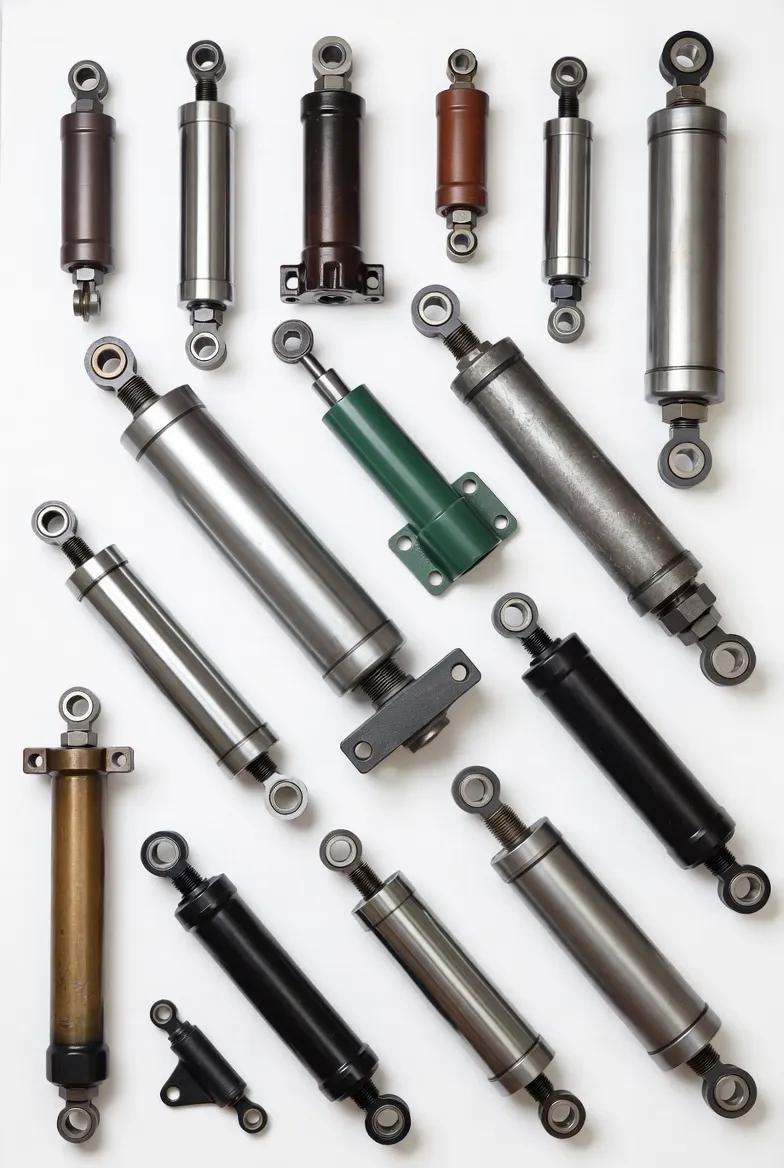
The Definitive Agricultural Maintenance SOP Matrix
To permanent eradicate unexpected downtime and maximize machine trade-in value, fleet managers must implement a strict, data-driven schedule for cleaning hydraulic actuators and monitoring mechanical wear.
- ✔️
The Daily Wipe-Down & Inspection Shift: At the conclusion of every single operating shift, operators must fully extend all cylinders and visually audit the chrome rods. Use a clean, lint-free microfiber cloth to gently wipe away accumulated dust and moist soil. Never allow a thick layer of mud to harden overnight around the head gland cap. This routine visual check allows technicians to spot early rod scoring before it causes complete seal failure.
- ✔️
The Pressure-Washer Safety Mandate: While cleaning farm implements is essential, high-pressure water blasters present a severe hazard to fluid power systems. Directing a 4,000 PSI water stream directly at the head gland of a cylinder will easily force water and micro-fine silt straight past the flexible lip of the wiper seal. The trapped water emulsifies the hydraulic oil, causing rapid internal oxidation and valve corrosion. Always maintain a minimum distance of two feet, angle the spray away from seal boundaries, and use low-pressure settings around actuators.
- ✔️
Weekly Pivot Lubrication & Alignment Check: A cylinder can only survive mud and dust if its stroke remains perfectly axially aligned. If the mounting clevis pins or spherical bearings are completely locked with grit and starved of grease, the cylinder will experience severe lateral side-loading. This causes uneven wear on the wear bands. Pump high-quality molybdenum disulfide grease into all zerk fittings weekly until fresh grease purges out the sides, physically pushing away trapped mud and sand.
- ✔️
Post-Season Storage Preservation: Before parking agricultural machinery in an open equipment shed for the winter, all hydraulic cylinders must be fully retracted. Leaving a chrome rod extended exposes it to humid winter air and chemical residue, causing atmospheric pitting and rust. If an implement design forces a cylinder to remain partially extended, the exposed chrome must be heavily coated in a specialized anti-corrosion storage wax or heavy duty grease barrier to seal out the elements.

Fluid Health: Eradicating the Internal Sandstorm
Defending the exterior of the cylinder is only half the battle. If abrasive silica micro-particles manage to breach the head gland, they will quickly circulate through the entire machine network, turning the clean oil into a destructive cutting compound.
When sand particles bypass the rod seals, they enter the fluid stream and travel straight to the core hydraulic pump. Under the intense mechanical forces of the pump, this grit accelerates wear on the internal gears or pistons, reducing volumetric efficiency and filling the oil with microscopic metal shavings. This compounding contamination will destroy the precision directional control valves and clog internal orifices, causing sudden system overheating and sluggish implement control. This systemic contamination is a major threat across all material handling sectors. For example, in automated warehouse environments, high-capacity Forklift Hydraulic Cylinder networks require absolute fluid purity to achieve the millimeter-level positional feedback needed to safely stack heavy pallets into vertical racking systems without dropping loads.
To eliminate this threat, agricultural operations must transition from primitive reactive maintenance to active fluid monitoring. Send oil samples to an independent laboratory annually for spectroscopic analysis to track silica (silicon) levels. If silicon counts spike, it is absolute empirical proof that your cylinder wiper seals have failed and are actively leaking external sand into the circuit. Furthermore, upgrade your farm equipment’s filtration network to high-efficiency, multi-stage glass media filters with a 3-micron or 5-micron absolute rating. Standard, cheap cellulose filters cannot capture fine silica dust, allowing it to circulate indefinitely and erode the entire fluid power framework.
Another critical factor is managing reservoir breathing. As custom hydraulic cylinders extend and retract, the fluid level inside the main oil tank rises and falls rapidly. This volume change forces the reservoir to “breathe” air in and out. If the tank is equipped with a cheap, unsealed breather cap, it will suck airborne dust clouds directly into the oil tank during dry harvest conditions. Fleet directors must install advanced desiccant breathers equipped with a 1-micron solid particulate filter and water-absorbing silica gel beads, ensuring that every ounce of air entering the system is perfectly sterile and dry.

Procurement Blueprint: Specifying Rugged Agricultural Actuators
When ordering custom linear actuators for new agricultural designs or upgrading a failing machine fleet, design engineers must look beyond simple bore and stroke dimensions. The physical construction of the actuator outer housing determines its ability to withstand severe environmental contamination.
Traditional tie-rod cylinders are highly popular in light industrial settings due to their low cost and standard NFPA mounting profiles. However, in heavy agricultural implements, tie-rod designs present a distinct vulnerability. The external steel tie-rods and square end caps create complex geometric pockets that act as magnets for wet mud, rock dust, and agricultural crop vines. As the mud cakes inside these tight pockets, it hardens around the head gland, placing immense abrasive stress directly on the wiper seals. Furthermore, under extreme cyclic loading, tie-rods can experience micro-stretching, allowing high-pressure seals to displace slightly and invite dirt ingression.
For absolute survival in severe-duty farming, engineers must specify **Welded Body Hydraulic Cylinders**. Welded actuators completely discard external tie-rods, instead utilizing automated robotic orbital welding to permanently fuse the steel base caps and heavy fluid ports directly to the thick-walled barrel. This creates a completely smooth, flush, and streamlined exterior profile that naturally sheds mud, water, and crop debris on the fly. The front head gland is internally threaded and screws flush into the barrel body, leaving no open crevices or pockets where dirt can accumulate. This monolithic construction is the same design philosophy deployed in high-capacity logistics machinery, such as heavy-duty Dump Truck Hydraulic Cylinders, which must continuously shed coarse mining gravel and abrasive rock dust daily without experiencing seal blowouts.
Conclusion: Securing the Future of Agricultural Output
The operational lifecycles and absolute reliability of agricultural fluid power components are completely determined by the discipline of the engineering and maintenance strategies defending them. A linear actuator is not a passive piece of steel; it is a highly calibrated thermodynamic pressure vessel that converts hydrostatic pressure into the relentless physical muscle required to shape our lands and harvest our crops. By acknowledging the microscopic reality of dust ingression via the moving oil film, upgrading to high-durometer double-lip polyurethane wiper seals, executing strict daily cleaning standard operating procedures, and insulating reservoirs with advanced desiccant breathers, fleet managers can completely eradicate unpredicted downtime and maximize the trade-in value of their machinery. Transitioning your maintenance model from reactive component swapping to empirical, proactive contamination defense is the only way to secure flawless performance during tight seasonal windows. Ensure your heavy equipment is outfitted with the exact mechanical muscle engineered to survive the dirt. If your organization is designing next-generation farm machinery, upgrading an agricultural implement fleet, or requires access to bespoke welded actuators engineered to the absolute highest international standards, our elite technical team stands ready to deliver your custom fluid power solution.