
Fluid Power Manufacturing Excellence
Custom Hydraulic Cylinders: 5 Questions to Ask Your Manufacturer
An authoritative engineering blueprint detailing the critical metallurgical, kinematic, and quality assurance inquiries required to successfully procure bespoke fluid power actuators for industrial applications.

Navigating the Complexity of Bespoke Fluid Power
In the highly rigorous disciplines of heavy equipment design, automated manufacturing, marine engineering, and commercial earthmoving, off the shelf components frequently fall short. When mechanical engineers map out the kinematic framework for a revolutionary new machine, they often discover that standard fluid power actuators simply cannot accommodate the extreme spatial constraints, specialized mounting geometries, or unprecedented hydrostatic pressure requirements of their design. This is the exact moment when the procurement of Custom Hydraulic Cylinders becomes an absolute engineering necessity. However, transitioning from standard catalog parts to bespoke fluid power manufacturing introduces a profound level of technical risk. Partnering with the wrong manufacturer can result in catastrophic equipment failure, massive financial liabilities, and highly dangerous operational environments. To explore the pinnacle of fluid power engineering, visiting our premium hydraulic cylinders platform is an essential first step.
Ordering a custom hydraulic cylinder is not merely a transaction; it is a highly collaborative engineering partnership. You are trusting an external fabrication facility to perfectly translate your theoretical kinematic requirements into physical, forged steel reality. The manufacturer must possess a profound understanding of fluid dynamics, metallurgical stress analysis, and polymer sealing architecture. A bespoke actuator must contain intense internal hydrostatic pressures that routinely exceed five thousand pounds per square inch, while simultaneously defending itself against hostile external environments filled with abrasive silica dust, corrosive chemicals, and violent physical shock loads.
From an authoritative engineering perspective evaluated against international fluid power manufacturing standards, vetting a potential manufacturing partner requires aggressive, highly technical interrogation. You cannot rely on marketing brochures alone. You must dissect their fabrication capabilities, their quality assurance protocols, and their understanding of operational physics. This comprehensive technical guide will meticulously outline the definitive 5 questions to ask your manufacturer before authorizing the production of any custom hydraulic cylinder, ensuring your heavy machinery performs with flawless, unyielding reliability.
Question 1: What Are Your Core Engineering and Metallurgical Capabilities?
The structural survival of a custom fluid power actuator is entirely dependent on the quality of the raw materials utilized and the precision of the manufacturing techniques applied to those materials.
Evaluating Steel Yield Strength
You must explicitly ask the manufacturer what grades of steel they utilize for the cylinder barrel and the piston rod. Standard light duty actuators may utilize 1045 medium carbon steel. However, if you are commissioning heavy equipment like Excavator Hydraulic Cylinders, the manufacturer must possess the capability to machine 4140 chromoly alloy steel. This high tensile material provides a yield strength exceeding 100,000 PSI, which is absolutely mandatory to prevent Euler column buckling during long extension strokes under massive compressive loads.
Welding and Fusion Protocols
For welded body custom cylinders, the integrity of the fusion joints is paramount. Inquire about their welding automation. Do they rely entirely on manual stick welding, or do they deploy advanced robotic orbital welding systems? Automated friction welding and deep penetration orbital techniques guarantee absolute uniformity, eliminating microscopic voids or slag inclusions that could lead to explosive tensile rupture when the cylinder is pressurized to its maximum threshold. Flawless welding is what separates a world class manufacturer from a standard fabrication shop.
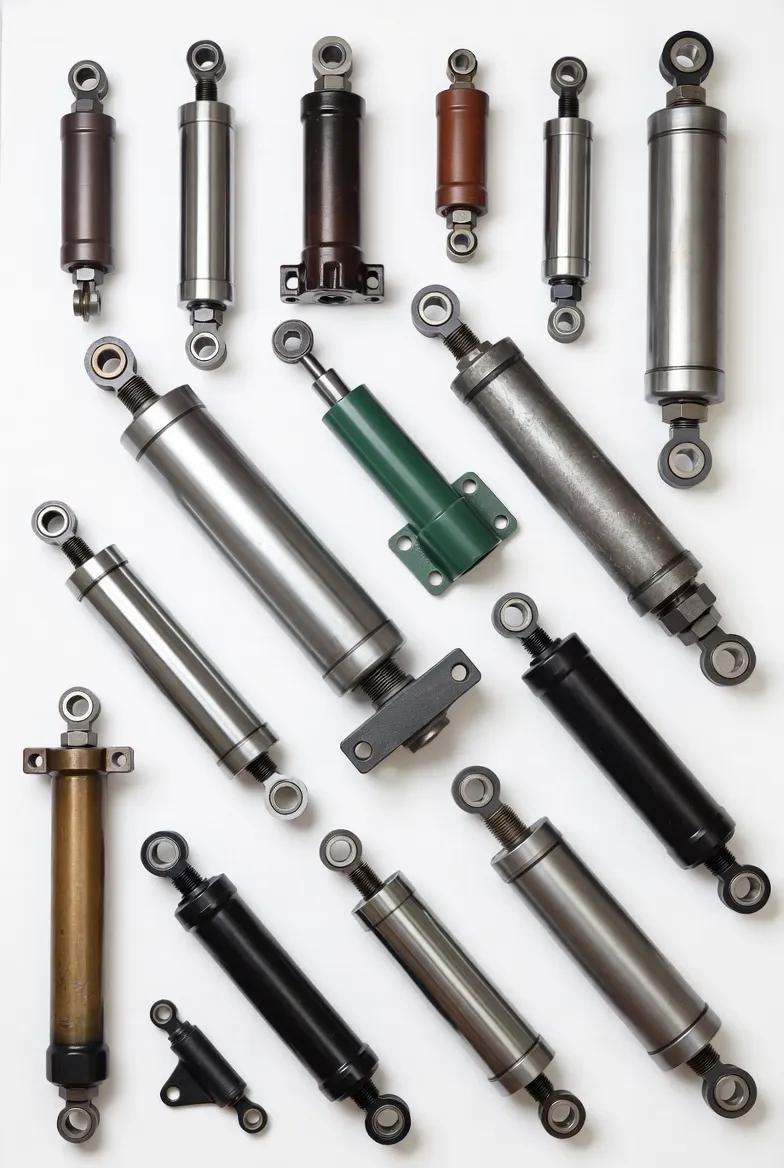
Question 2: How Do You Handle Unique Environmental Challenges?
A custom hydraulic cylinder is only as reliable as its ability to survive the specific hostilities of its operational environment. A design that works flawlessly in a clean indoor warehouse will be completely destroyed within weeks on a marine shipping dock.
Advanced Sealing Architecture
Ask the manufacturer how they plan to customize the internal sealing architecture. Standard polyurethane seals will bake and melt if the fluid temperature exceeds one hundred eighty degrees Fahrenheit. If your application involves high cycle rates or elevated ambient heat, the manufacturer must be capable of specifying high temperature Viton or energized PTFE Teflon seals. Conversely, if you require Agricultural Hydraulic Cylinders that operate in freezing mud, the external wiper seal must be upgraded to a rigid brass scraper ring to violently shear off thick ice before it damages the primary head gland components.
Corrosion Defense and Coatings
The exterior polished rod is highly susceptible to chemical pitting. Standard hard chrome plating contains microscopic cracks that allow saltwater or acidic fertilizers to reach the underlying steel core. Ask the manufacturer about their surface coating portfolio. For extreme offshore or chemical applications, they should offer dual layer Nickel Chrome plating, or advanced Ferritic Nitrocarburizing (Melonite) treatments. These advanced electrochemical processes create an impenetrable barrier against rust, ensuring the mirror smooth finish remains flawless to protect the dynamic seals.

Question 3: Can You Customize the Kinematics and Mounting Architecture?
The physical way a custom cylinder attaches to your machinery dictates its ability to survive. An incorrectly specified mount will induce massive lateral side loading, instantly bending the piston rod.
Trunnions and Long Strokes
If your design requires an exceptionally long extension stroke, a standard base clevis mount may allow the cylinder to exceed its Euler buckling limit. Ask the manufacturer if they can engineer an intermediate trunnion mount. By welding heavy duty pivot pins directly into the center of the cylinder barrel, the unsupported column length is effectively cut in half. This is a highly complex manufacturing request, but it is an absolute necessity for applications like Dump Truck Hydraulic Cylinders that must lift massive loads over extreme vertical distances without snapping.
Spherical Bearings for Misalignment
For heavy mobile equipment operating on uneven terrain, the chassis will naturally twist and flex. If the custom cylinder is mounted with a rigid pin hole, that twisting force will be transferred directly into the actuator, causing severe metal on metal binding. The manufacturer must have the capability to integrate heavy duty spherical bearing rod eyes. These advanced ball and socket joints allow the cylinder to articulate slightly in multiple dimensions, effortlessly absorbing severe structural misalignment and protecting the internal sealing architecture.

Question 4: What Are Your Quality Assurance and Testing Protocols?
A custom hydraulic cylinder is essentially a localized bomb waiting to detonate if not manufactured correctly. When pressurized to five thousand PSI, a structural failure is highly dangerous. You must aggressively question their testing procedures.
- ✔️
Hydrostatic Burst Testing: Do not accept a visual inspection. Ask if every single custom actuator undergoes physical hydrostatic pressure testing before it leaves the facility. A world class manufacturer will connect the finished cylinder to a test bench and pressurize it to at least 1.5 times its maximum rated operating pressure. They must hold this static load and monitor for even microscopic fluid weeping or pressure drops, guaranteeing the absolute integrity of the seals and weldments.
- ✔️
Non-Destructive Weld Inspection: For heavy duty welded body cylinders, ask how they verify the fusion joints. They should utilize non destructive testing NDT methodologies such as ultrasonic scanning or dye penetrant inspection. These protocols reveal microscopic internal stress fractures within the weld bead that are invisible to the naked eye, preventing catastrophic explosive failures on the job site. High reach machinery, such as Aerial Work Vehicle Hydraulic Cylinders, require this level of absolute metallurgical certainty.

Question 5: What is Your Capacity for Scalability and Lifecycle Support?
Finally, you must look beyond the initial prototype delivery. A custom hydraulic cylinder manufacturer must be a long term strategic partner capable of supporting your machinery throughout its entire operational lifecycle.
Inquire about their production scalability. If your new machine design is a massive commercial success, can they scale from producing ten bespoke cylinders a month to five hundred without compromising quality or extending lead times? Furthermore, ask about their aftermarket support. Since this is a proprietary custom design, you cannot simply buy a replacement seal kit from a generic catalog. The manufacturer must guarantee the long term availability of exact replacement seals, customized guide bands, and raw chrome stock to facilitate future predictive maintenance. For continuous warehouse operations, components like Forklift Hydraulic Cylinders require immediate spare parts availability to prevent crippling logistical bottlenecks.

Conclusion: Securing the Ultimate Engineering Partnership
Procuring custom hydraulic cylinders is the ultimate test of supply chain engineering. It requires moving beyond simple catalog purchasing and engaging in profound technical dialogue. By aggressively questioning a manufacturer regarding their metallurgical capabilities, their solutions for hostile environmental contamination, their mastery of kinematic mounting architectures, and the rigidity of their hydrostatic testing protocols, you strip away the marketing facade. Partnering with an elite fluid power fabrication facility ensures that your bespoke machinery will perform with absolute, unyielding, and safe reliability, delivering unparalleled kinetic force exactly as your mathematical blueprints intended. If you are ready to design your next masterpiece, our engineering team stands ready to answer all of these questions and more.