
Fluid Power Engineering Mastery
How to Size a Hydraulic Cylinder: The Ultimate Engineering Guide
An authoritative and highly comprehensive technical analysis exploring load dynamics, operating pressure calculations, rod buckling prevention, and fluid power system design parameters.

The Critical Importance of Precision Sizing
In the highly complex disciplines of mechanical engineering, heavy machinery manufacturing, and industrial automation, fluid power remains the absolute pinnacle of force generation. When designing a new piece of equipment, whether it is a colossal mining excavator, a high speed manufacturing press, or a precision aerospace testing rig, the linear actuator is the final execution point of your entire hydrostatic system. Consequently, knowing exactly how to size a hydraulic cylinder is not merely a theoretical exercise; it is the most critical fluid power calculation an engineer will perform. Sizing a hydraulic cylinder incorrectly will inevitably lead to disastrous consequences ranging from chronic energy inefficiency to catastrophic, explosive structural failure.
If a design engineer specifies a cylinder that is too small for the application, the system will simply lack the physical muscle to move the intended payload, causing the hydraulic pump to constantly operate at peak relief pressure. This generates massive amounts of thermal energy, rapidly degrading the hydraulic oil viscosity and destroying the internal elastomeric seals. Conversely, specifying a cylinder that is massively oversized is an equally egregious engineering error. An oversized hydraulic cylinder requires significantly more fluid volume to travel the same distance, meaning you will need a larger, more expensive hydraulic pump and a higher capacity reservoir to achieve your target operating speed. This bloats the manufacturing budget, increases the overall weight of the machinery, and drastically reduces the energy efficiency of the entire fluid power circuit.
From a rigorous engineering perspective evaluated against international manufacturing standards such as the National Fluid Power Association guidelines, determining the correct hydraulic cylinder size requires a methodical, step by step mathematical approach. You must accurately define the dynamic load, calculate the exact bore diameter to achieve your required force, analyze the rod diameter to absolutely prevent structural buckling, and determine the flow rate required to meet your cycle times. This authoritative, highly detailed technical guide will comprehensively break down the mathematics, the physics, and the practical application formulas required to master hydraulic cylinder sizing.
Step 1: Determine the Operational Load Mass and Friction
The absolute first step in sizing a hydraulic cylinder is identifying exactly how much force is required to move your load. You cannot guess this number; it must be calculated using precise physical vectors.

Static vs Dynamic Loads
A static load is the raw, unmoving weight of the object. If you are lifting a ten thousand pound steel block straight up into the air, your static load is ten thousand pounds. However, hydraulic cylinders rarely operate in a vacuum. You must account for dynamic forces, which include acceleration. To move a massive object from a dead stop requires significantly more force than merely holding it in place. Engineers must factor in the inertia of the payload. A standard engineering practice is to multiply the static load by an acceleration factor or safety margin typically 1.2 to 1.5 to ensure the cylinder has the necessary breakout force to initiate movement without stalling the hydraulic system.
Mechanical Friction and Angle of Operation
If your cylinder is pushing a heavy payload horizontally across a set of steel rails, gravity is no longer your primary opposing force; mechanical friction is. You must calculate the coefficient of friction between the sliding surfaces. Pushing a steel sled across greased bronze bearings requires vastly less hydraulic force than pushing that same sled across dry concrete. Furthermore, if your cylinder is operating at an angle such as tilting a dump truck bed you must utilize trigonometric functions sine and cosine to determine the exact horizontal and vertical force vectors. Only the force vector operating parallel to the cylinder stroke should be used in your sizing calculations.
Step 2: Establish the System Operating Pressure
Once you have definitively calculated the total force required to move your load, the next critical step in how to size a hydraulic cylinder is establishing the operating pressure of your fluid power system. Force, Pressure, and Area are permanently locked together in the fundamental equation of fluid dynamics: Force equals Pressure multiplied by Area.
The operating pressure is dictated by the hydraulic pump and the pressure relief valves installed in your power unit. If you are designing a system from scratch, you have the freedom to select your ideal pressure. However, if you are retrofitting a cylinder onto an existing machine, you are strictly bound by the maximum pressure that machine can safely produce. Industrial hydraulic systems typically operate in standardized pressure tiers.
Selecting the Right Pressure Tier
- ✔️
Low Pressure Systems (1000 to 1500 PSI): Commonly utilized in older manufacturing equipment or light duty automation. These systems require physically larger cylinders to generate significant force, but they are less demanding on hoses, seals, and pumps.
- ✔️
Medium Pressure Systems (2000 to 3000 PSI): The absolute standard for the vast majority of modern industrial and mobile equipment, including tractors, loaders, and factory presses. This tier offers an excellent balance between component cost, power density, and seal longevity.
- ✔️
High Pressure Systems (4000 to 10000 PSI): Reserved for extreme heavy duty applications like mining excavators, hydraulic rescue tools, and specialized aerospace testing. High pressure allows engineers to use incredibly compact cylinders to lift massive weights, but it requires highly expensive aerospace grade metallurgy and specialized anti extrusion sealing architectures.

Step 3: Calculate the Required Bore Size
With the required force and the system pressure established, you possess the two necessary variables to calculate the physical size of the cylinder barrel. The bore size refers to the internal diameter of the cylinder tube.
The Bore Area Formula
To find the necessary internal area of the cylinder, rearrange the fundamental fluid power equation. Divide your total required Force by your system Pressure.
Area required = Force divided by Pressure.
For example, if you need to lift a 20,000 pound load, and your hydraulic pump supplies 2,500 PSI of pressure, the math is 20,000 divided by 2,500. This equals an Area requirement of 8.0 square inches. This is the exact amount of surface area the piston must possess to lift the load at that specific pressure.
Converting Area to Bore Diameter
Once you have the required Area, you must convert it into a measurable Bore Diameter using standard geometry. The formula for the diameter of a circle derived from its area is: Diameter = Square Root of (Area divided by 0.7854).
Using our 8.0 square inch requirement: Divide 8.0 by 0.7854, which equals 10.18. Then, find the square root of 10.18, which is 3.19 inches. Therefore, you need a cylinder with an internal bore diameter of at least 3.19 inches. In standard engineering practice, you would round this up to the next available standard size, such as a 3.25 inch or 3.5 inch bore cylinder, ensuring you have a safe margin of extra lifting capacity.

Step 4: Rod Size Selection and Buckling Analysis
Calculating the bore size guarantees that your cylinder can push the load, but it does not guarantee that the cylinder will survive the structural stress of doing so. The single most common cause of catastrophic hydraulic cylinder failure is piston rod buckling. This occurs when a cylinder is pushing a heavy load over a long stroke distance, and the slender steel rod bows and snaps under the immense compressive stress. Determining the correct rod size is absolutely critical for machine safety.
To prevent this disaster, fluid power engineers utilize Euler Column Formula. This complex mathematical equation calculates the absolute maximum compressive load a slender column can endure before catastrophic deflection occurs. The buckling strength of a hydraulic cylinder rod is dictated by three primary factors: the actual physical diameter of the steel rod, the fully extended stroke length of the cylinder, and the specific mounting style utilized to attach the cylinder to the machinery.
The Impact of Mounting Styles on Buckling
How a cylinder is physically bolted to the machine drastically alters its structural column strength. A cylinder mounted with rigid, fixed flanges at both ends provides the absolute maximum resistance to buckling. The steel rod is held perfectly straight and cannot pivot. Conversely, a cylinder mounted with pivoting clevis pins at both the base and the rod end such as those found on excavator booms is highly susceptible to buckling. The pivoting mounts act like hinges, allowing the extended rod to bow outward under heavy compression. If your design requires a clevis mount and a long stroke, you must specify an oversized, significantly thicker piston rod to compensate for the loss of structural rigidity.
Implementing Stop Tubes
If your calculations indicate that even a heavy duty rod diameter will buckle under your required stroke length, engineers employ a mechanical safeguard known as a stop tube. A stop tube is a thick steel spacer installed internally on the piston rod between the piston face and the cylinder head gland. It physically prevents the piston from extending all the way to the end of the barrel. While this sacrifices some overall stroke length, it ensures that a significant portion of the piston and rod assembly remains deep inside the sturdy cylinder barrel even at maximum extension. This massive overlap creates a highly rigid structural bridge, drastically increasing the column strength and entirely eliminating the risk of catastrophic buckling during extreme long reach applications.

Step 5: Flow Rate and Cylinder Speed Calculation
After finalizing the structural dimensions to guarantee strength and safety, the final phase of hydraulic cylinder sizing is determining the speed of operation. A cylinder that possesses immense power but extends too slowly will cripple the productivity of an automated assembly line or frustrate a mobile equipment operator. The velocity of a hydraulic cylinder is entirely dependent on the volume of fluid the hydraulic pump can deliver, measured in Gallons Per Minute (GPM) or Liters Per Minute (LPM).
To calculate the required pump flow to achieve a specific cylinder speed, you must combine the Bore Area you calculated earlier with your desired extension time. The standard formula in the Imperial system is: Velocity (inches per minute) = (GPM x 231) divided by the Area (square inches). By rearranging this algebraic formula, you can input your desired speed to dictate the exact size of the hydraulic pump your system requires. It is also critical to remember that because of the volume occupied by the piston rod, a double acting hydraulic cylinder will always retract faster than it extends when supplied with a constant flow rate. Fluid power engineers must carefully balance the bore size, rod size, and pump flow to achieve perfect harmonious cycle times in complex machinery.
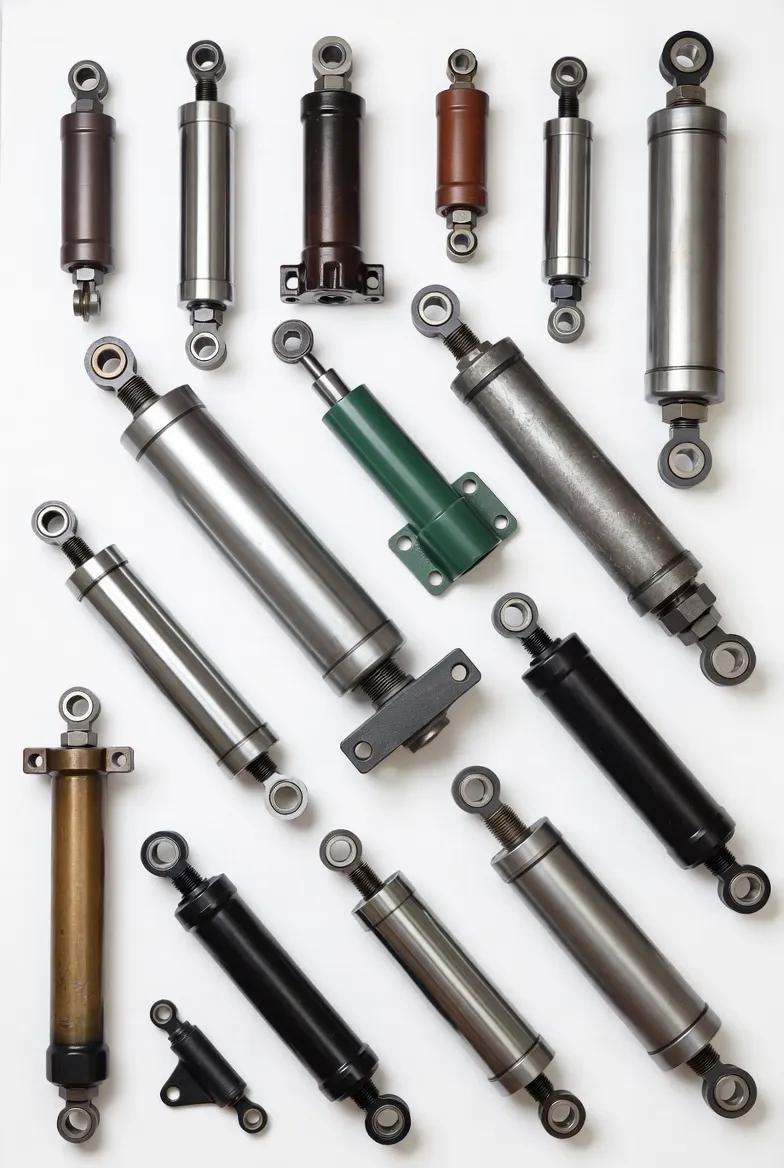
Conclusion: The Imperative of Mathematical Precision
Knowing exactly how to size a hydraulic cylinder is the fundamental bedrock of all successful mechanical design involving heavy lifting, pressing, or automated articulation. By mastering the core physics of Pascal Law, understanding the critical relationship between fluid pressure and bore area, executing rigorous rod buckling analysis, and calculating exact fluid flow requirements, design engineers can specify fluid power equipment with absolute confidence. Utilizing a meticulous, mathematically sound hydraulic cylinder sizing guide ensures operational safety, maximizes industrial energy efficiency, and guarantees the long term structural reliability of the world’s most powerful heavy machinery.