MARINE STAINLESS STEEL HYDRAULIC CYLINDER
Deck equipment sees salt spray, accumulating deposits and mechanical loads, while submerged actuators endure different corrosion and sealing conditions. Marine suitability therefore depends on the precise exposure zone, mounting materials and pressure function.
Classify the marine site rather than using a label
A cylinder in a protected machinery room is not exposed like one mounted on an open deck or in a splash zone. Record salt deposition, the duration of wetness, washing frequency and whether liquid remains trapped after the vessel is idle. A permanently submerged design raises additional considerations. Identify which rod surfaces are extended while the machine is parked. Material selection should be attached to this exposure description so that no one assumes an unspecified stainless grade guarantees seawater immunity.
Look for salt pockets at the gland and mounts
Marine spray can dry into concentrated salt beneath saddle mounts, pin washers, covers and port brackets. These narrow spaces may behave differently from open surfaces rinsed by rain. Inspect the original assembly for sheltered corrosion locations before specifying a replacement. The design engineer can evaluate drain paths, protective arrangements and access for inspection. A more resistant tube does not solve a seized pin or a trapped-electrolyte gap without attention to the full joint detail.

Evaluate the rod surface under salt contamination
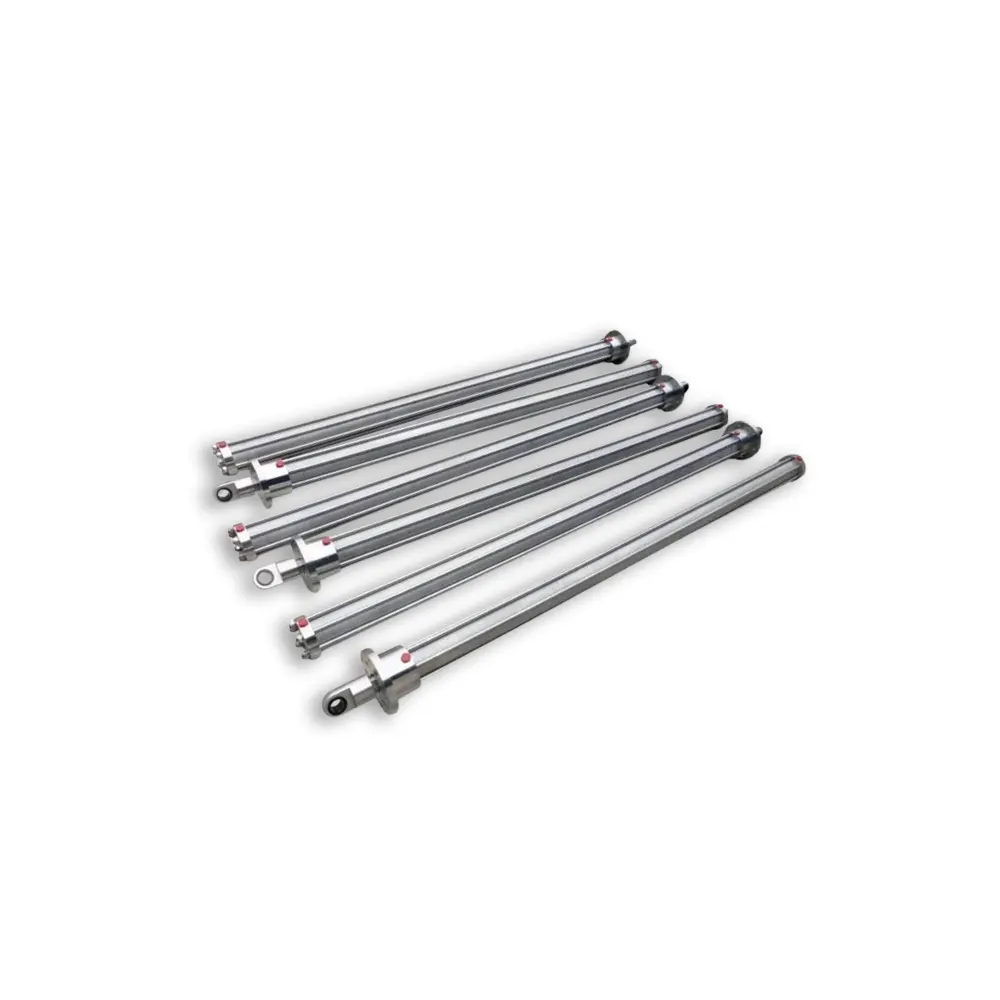
A polished piston rod slides through the gland and must meet both mechanical and corrosion requirements. Salt crystals or surface pits can damage wipers when the rod retracts after exposure. Define rod material, finish, expected parked position, cleaning approach and seal protection. The supplier should explain what evidence supports the proposed rod specification. A generic image of a marine machine is an application illustration; it cannot prove the supplied rod alloy or any completed seawater test.
For deck mechanisms and splash zones, check the stainless actuator product family.
Review galvanic pairing and connection loads
Pins, brackets and fasteners may be made from different alloys for bearing and strength reasons. In conductive seawater, electrical contact and exposed-area effects can affect corrosion. Any isolation choice needs engineering approval because a clevis still has to transmit load reliably. Record pin fit, lubrication and inspection access. A joint may fail by corrosion-assisted seizure or excessive play long before the stainless cylinder barrel itself is breached.

Define the maintenance and rinsing plan
Freshwater rinsing may remove marine salt deposits from some accessible components, but its safety and practicality depend on the equipment and associated electrical systems. Identify which surfaces can be reached and when the mechanism can be safely parked for cleaning. Track corrosion and leaks during scheduled maintenance windows, including hidden lower surfaces. The objective is to control exposure and recognize progressive damage, not to promise an invented fixed life under every salt-spray condition.
Preserve load-holding and pressure safety
A corrosion-resistant exterior does not prevent a loaded boom from moving after hose failure. Marine actuators may be part of mechanisms requiring suitable valves, controlled motion and independent mechanical supports. Record worst-case load geometry, pressure duty, mounting alignment and operating sequence. Maintenance must follow shipboard safety processes and isolation procedures. These requirements remain separate from corrosion selection; no material certificate can substitute for the hydraulic circuit’s safety assessment.
Set practical voyage inspection criteria
Record observable rod condition, gland leakage, corrosion at mounts and free movement at pins. A cylinder may only expose some critical surfaces at a particular stroke position, so inspections must be planned around safe access. Photograph defects with position and scale and log whether they progress between port visits. If a corrosion pit reaches a swept rod surface, treat its sealing implications differently from discoloration on a noncritical cover.
Write a qualified marine purchasing specification
State whether the unit sees coastal air, direct splash or immersion and identify which components require a particular alloy or protective finish. Include dimensions, pressure, fluid, temperature, rod surface, pins, seal type and test evidence. Where a marine classification approval is required, name the applicable requirement explicitly; a site showing offshore applications does not establish class certification for a specific cylinder. The supplier’s declaration should list deviations and the records delivered with the finished assembly.
Differentiate four marine duty conditions
A sheltered vessel interior, an open deck, direct surf splash and continuous seawater immersion should be described separately. Record salt deposits, temperature, moisture duration and cleaning practice for the specific installation. On an intermittently operating winch, the rod may remain extended for long intervals, concentrating salt on its sliding surface. Underwater operation may involve different pressure and corrosion factors. The material and sealing review should reflect these facts rather than assuming that a broadly labeled marine unit automatically suits every coastal machine.

Check vulnerable deck fittings and drain paths
Review the position of hose elbows, rod-end bolts, clevis pins, washers and barrel attachments. Seawater can collect under tight interfaces, while outer surfaces are naturally rinsed. Ask whether a deck worker can inspect those pockets without removing load-bearing guards or exposing a mechanism to unsafe movement. A material upgrade may address corrosion at one interface but not a trapped liquid pocket behind another. Prioritize the joints whose failure could prevent controlled movement or maintenance.
The site has additional application context for offshore tasks in marine cylinder range.
Define extended-rod exposure and service practice
The piston rod faces both atmospheric contamination and seal contact. If it sits extended beneath salt spray, residues may be drawn through the wiper on the next stroke. Specify an appropriate rod surface, wiper arrangement and safe cleaning practice. The vessel owner should document rod condition as part of routine checks. A shiny product image does not demonstrate the quality of the rod or a particular salt-spray test; the source must be the actual delivered configuration.
Review connection corrosion and mechanical integrity
Deck cylinder mounts often pair dissimilar metals. In conductive marine water, contact and exposed area can influence galvanic effects, but isolation choices must preserve designed bearing and shear loads. Record the pin alloy, bush material, lubrication requirement and available inspection access. A corroded or seized pin can immobilize an otherwise sound cylinder. The engineering review must not let a corrosion-avoidance component introduce unacceptable joint play or structural weakness.

Set a port-maintenance acceptance record
An offshore actuator should arrive with traceable materials where specified, approved drawings and pressure/function checks for the finished assembly. If a marine class requirement applies, its actual standard and approval scope belong in the contract. For ongoing inspections, record leakage at gland and ports, visible localized corrosion, rod finish and mount condition. Avoid assigning a guaranteed life under salt spray without service evidence. Use actual operating history to adjust maintenance frequency over time.
Offshore inspection worksheet
| Sea-service concern | Engineering response |
|---|---|
| Marine zone | Protected, splash, deck or immersion |
| Rod parking | Record extended portion exposed to salt |
| Joint metals | Review pin and bracket material pairing |
| Hidden crevices | Check drainage beneath washers and mounts |
| Functional safety | Protect loads independently of corrosion specification |
| Receipt records | Trace test evidence to delivered assembly |
Marine exposure zones and commissioning acceptance
To evaluate a deck-mounted actuator, mark three exposure regions on the installation drawing: components open to marine atmosphere, joints repeatedly receiving direct seawater splash, and crevices that remain wet while exposed surfaces dry. Record the specified material and finish for the rod, barrel, port block and clevis in each region. The rod may remain extended for days while a winch or platform is parked; the next stroke can carry accumulated salt toward its wiper. Ask whether the operator can inspect the exposed length without approaching suspended loads, and provide a safe cleaning procedure that respects electrical equipment and moving machinery. The location of salt deposits can matter more than a generic label of marine grade.
The documentation package should distinguish a raw-alloy certificate, completed-assembly pressure and function tests, and any independent classification required by the vessel. A certificate for a 316 tube does not identify the material of adjacent pins or prove the gland can survive a particular seawater exposure. When alternate fittings are proposed to avoid dissimilar-metal contact, assess their load capacity, fit and lubrication as well as their corrosion behaviour. The vessel engineer should also verify load-holding and circuit safety requirements independently of surface-material selection. In service, photographs with consistent scales and marked inspection positions can reveal progressive pitting earlier than annual narrative comments that the exterior looked acceptable.
Define inspection opportunities at commissioning, while the unit is parked and during scheduled overhaul. Identify hidden lower faces, weld toes, rod-sweep locations and the portions that need authorized disassembly for examination. If defects affect a pressure joint or a load-bearing attachment, assign engineering review rather than relying on a cleaning operator’s judgment. This makes marine suitability a documented maintenance and safety arrangement, not a universal promise of corrosion-free life.
Five offshore cylinder questions
Why is a deck actuator different from an immersed one?
Wetting pattern, oxygen supply, deposits and access differ. Those conditions influence material and sealing choices; a marine label cannot replace a specific exposure assessment.
Can corrosion of a mounting pin disable the cylinder?
Yes. A jammed or weakened joint can interrupt machine movement even if the pressure tube remains intact. Joint materials and actual loads need coordinated assessment.
What happens when salty deposits reach an exposed rod?
Contamination may accelerate surface damage and affect wiper or seal function during retraction. Inspect the swept rod zone and follow the machine maker’s safe cleaning method.
Is 316 enough for long-term seawater immersion?
It cannot be assumed. Crevice geometry and chloride conditions can still challenge 316; an immersion duty warrants specialist material review and appropriate qualification.
What marine documents should accompany delivery?
The accepted drawing, component material records when specified, test results and any precisely defined class evidence. General marketing statements are not product-specific approvals.
Finalize the marine engineering package
The approved marine design should state the service zone, rod and joint details, corrosion-focused materials, load-control safety and inspection responsibilities. Apply any class requirement only when it is specifically documented for the product and intended use.
Provide deck exposure, mount details and intended pressure duty.