STAINLESS STEEL HYDRAULIC CYLINDER SEALS
Seal performance is governed by fluid, pressure, temperature and contact geometry. Stainless construction does not establish that a rod wiper, piston seal or static O-ring is appropriate for the internal oil and the outside environment.
Separate external cleaning fluids from internal oil
Internal piston seals are usually immersed in hydraulic fluid, whereas the gland wiper may contact salt deposits, detergents or dust. A component compatibility study should describe both chemical environments and how they change during the duty cycle. Ask for exact fluid identities rather than broad mineral or synthetic labels. An elastomer compatible with one formulation may swell or harden in another. The supplier should identify which seal parts actually contact each fluid and whether cleaning spray can drive water toward the gland.
Identify piston and rod-side pressure duties
A double-acting cylinder has different effective piston areas on extension and retraction. Pressure direction, transient loading and holding time influence the design of seals and backup rings. Check whether the current assembly relies on a particular groove geometry or anti-extrusion arrangement. A nominal pressure figure on a general product category page does not certify a replacement seal. Record maximum permitted circuit pressure and any duty-specific peaks for the approved engineering review.

Treat temperature as a cycle, not a single number
Low-temperature starting conditions and sustained high oil temperature create different material challenges. External cleaning with hot water can expose the wiper to a brief thermal condition not measured at the reservoir. Supply operating and standby ranges, clean-down temperatures and exposure duration. Material families such as nitrile or polyurethane contain multiple formulations; their actual performance cannot be judged from a name alone. Verify compound-specific information rather than asserting a universal temperature capability.
Sealing issues should be matched to the stainless cylinder construction choices.
Match the seal to rod geometry and wear
The rod surface must have controlled finish, diameter and freedom from pits. A chemically suitable elastomer can still leak prematurely when a rod is scratched, bent or side loaded. Review wipers, bearings and the gland along with the dynamic sealing lip. A change from a coated steel rod to stainless material may require reconsideration of its surface process. Ask for the actual rod specification and seal manufacturer’s installation recommendations before treating two arrangements as interchangeable.
Inspect supporting seals and guide elements
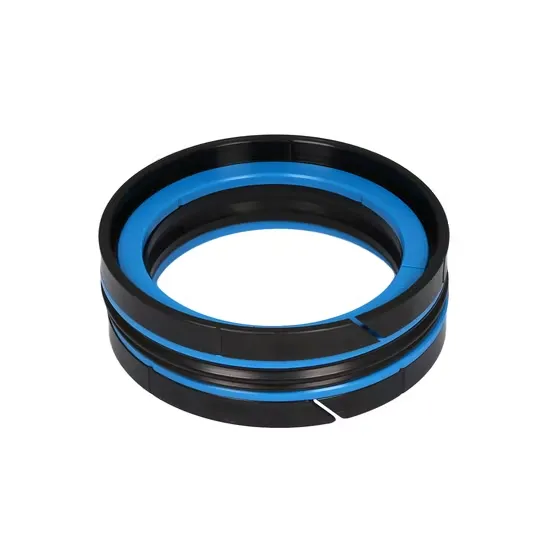
A typical hydraulic seal assembly may include static rings, piston elements, guide bands, wipers and backups. These serve different functions and should not be replaced indiscriminately from a visually similar kit. Verify groove widths, cross-sections, pressure orientation and intended fit. Contaminant ingress may require wiper and filtration work, while internal bypass points to piston and bore conditions. The maintenance plan should identify each component precisely enough to prevent substitution errors.
Separate seal faults from circuit faults
Slow drift can arise from valve leakage, piston bypass, thermal changes or changing external loads. Oil appearing at the rod end may also run from a port or hose fitting. Begin with symptom logs under defined operating states and safe load support, not with immediate dismantling. Never seek pressurized leakage with bare hands. Replacing a compound alone cannot fix misalignment, damaged rod finish or a leaking manifold elsewhere in the hydraulic circuit.

Specify testing at an appropriate scope
The test plan should distinguish static pressure integrity, dynamic leakage, stroke functionality and chemistry compatibility. A short room-temperature pressure test confirms only its stated conditions; it does not establish long-term chemical resistance. Ask for written test criteria with pressure, fluid and acceptance limits. Any special validation should be agreed before production rather than implied by generic images of testing equipment.
Manage seal changes with revision control
A different compound or profile can affect friction, extrusion and swelling. Record the original seal identity, drawing or kit revision and approved alternative before a replacement is ordered. If the machine changes hydraulic fluid or washdown chemistry, the modification should trigger compatibility review. Keep an operating history that links the seal decision to observed leakage and service conditions so future technicians do not unknowingly restore an obsolete configuration.
Create a dual-fluid exposure record
A seal chart must distinguish hydraulic oil inside the actuator from liquid reaching its exterior. The internal piston seal can encounter additives and temperature cycles, while the rod wiper may meet detergent, brine or grit. Write down exact trade names, concentrations and duration for each exposure. Ask the seal supplier to assess the proposed compound against both contexts. Broad statements such as compatible with oil or suitable for washdown are incomplete unless the fluid and conditions are defined.
Check gland geometry before replacing seals
A seal profile depends on groove depth, width, corner radii, extrusion gaps and rod dimensions. Similar-looking rings are not automatically interchangeable. Review the assembly drawing and replacement kit identification before ordering, especially where a backup ring or guide element is involved. Changes in pressure direction may also affect seal orientation. A correctly selected compound can fail if installed into a damaged gland, so inspection should include metal surfaces and alignment as well as polymer parts.
The rod-side and cap-side design explanation is related to double-acting actuator details.
Explain temperature and motion interactions
At low temperature some compounds lose flexibility, while elevated oil temperature can accelerate material aging. Rapid reciprocation changes friction and heat generation; static holding creates different sealing demands. Exterior hot wash water may strike the gland when hydraulic oil is comparatively cool. Record the full operating pattern rather than one nominal temperature. The supplier’s range statement must match the exact formulation and cross-section selected, not just a broad polymer family.
Use symptoms to target the faulty interface
External oil staining, internal drift and slow motion are not the same symptom. A leaking rod seal may leave oil at the gland, while a piston bypass or valve fault may cause movement without visible leakage. Record pressure state, rod position and circuit behavior before a qualified test. Never loosen live hydraulic lines or look for pressure injection leaks by hand. A change of seal compound will not repair a scored rod, misaligned guide or faulty external fitting.

Request test evidence without overgeneralizing
A static pressure test can show that the finished cylinder met a specific acceptance condition, but it does not prove long-term chemical resistance or fatigue life. Distinguish seal material data, assembly leakage checks and service qualification tests. Record conditions, limits and test medium. After a seal substitution, maintain part-number and revision traceability so future service teams know precisely which compound and profile were installed.
Seal compatibility register
| Seal parameter | Compatibility requirement |
|---|---|
| Internal fluid | Identify exact hydraulic oil and additives |
| Outside exposure | Record detergent, brine or dust contact |
| Temperature cycle | Set hot, cold and cleaning conditions |
| Rod interface | Measure finish and seal travel condition |
| Gland groove | Check geometry and backup elements |
| Test basis | Separate pressure acceptance from chemistry aging |
Record seal compatibility before approving a substitution
A seal-compatibility sheet should give the exact hydraulic fluid, relevant additive information, ambient and oil temperature ranges, outside cleaning chemistry and the frequency of exposure. Then identify the seal positions: piston, rod gland, external wiper, static port interface and backup elements. These do not all experience the same fluids or pressure cycles. For a washdown machine, a wiper may encounter detergent that never touches the internal piston seal; a data sheet for mineral-oil compatibility therefore does not settle the exterior chemical question. The compound manufacturer needs the actual exposure rather than a generic statement that the actuator will operate indoors or in food machinery.
A used seal’s failure pattern can help distinguish causes. Swelling after a fluid change suggests a different investigation from a straight cut produced during assembly or repeated abrasion from a scored rod. Extrusion damage may point toward pressure, clearance or backup-ring configuration rather than alloy corrosion. Record the groove dimensions, rod diameter, seal profile and assembly drawing revision before ordering a substitute. A ring of similar color and outer diameter is not proof of suitable geometry. If a supplier proposes another material formulation, request its compatibility basis, intended pressure conditions and the particular part number.
Acceptance must be specific about what was tested. Static pressure checks, stroke movement, chemical aging data and long-term operational wear are not interchangeable evidence. The service manual should name approved replacement materials and any restrictions imposed by fluid or sanitation changes. A technician who changes oil type or cleaning frequency should request a compatibility review rather than assume an old seal kit remains qualified. With these records, a future recurrence can be diagnosed without repeating unsupported material guesses.
Five seal selection questions
Why does a stainless cylinder still need seal compatibility review?
Metal choice and polymer chemistry address different exposures. The internal fluid, outside chemicals, temperatures and seal groove must all be assessed independently.
Can the same seal kit be used for all hydraulic fluids?
No universal interchange should be assumed. Fluid additives, temperature and material formulation affect compatibility, while the physical seal profile must match the actual gland.
Does gland oil always mean the rod seal has failed?
Not necessarily. Oil from ports or hoses can flow into the same region. Clean and observe the assembly under an authorized safe test before deciding which component is responsible.
Which dimension is crucial to replacement seals?
The complete groove and mating-surface geometry matters, including width, depth, rod or bore diameter and allowed extrusion clearance. A picture alone cannot verify those features.
What happens when cleaning chemistry changes?
Reopen external seal and materials compatibility checks, document the new process and revise service parts where necessary. Treat the modification as a controlled engineering change.
Keep approved seals in the maintenance record
Finalize seal selection from the actual fluid list, installed geometry and duty cycle. Keep the reviewed material identity, service kit and test criteria with the cylinder drawing so any later replacement remains traceable.
Identify fluids, temperature cycles and seal dimensions.