Fluid Power Engineering Mastery
What Are the Different Types of Hydraulic Cylinders? A Complete Guide
An authoritative and comprehensive engineering analysis exploring hydraulic actuator categorizations, operating functions, structural designs, and their specialized industrial applications.

The Mechanical Muscles of Modern Industry
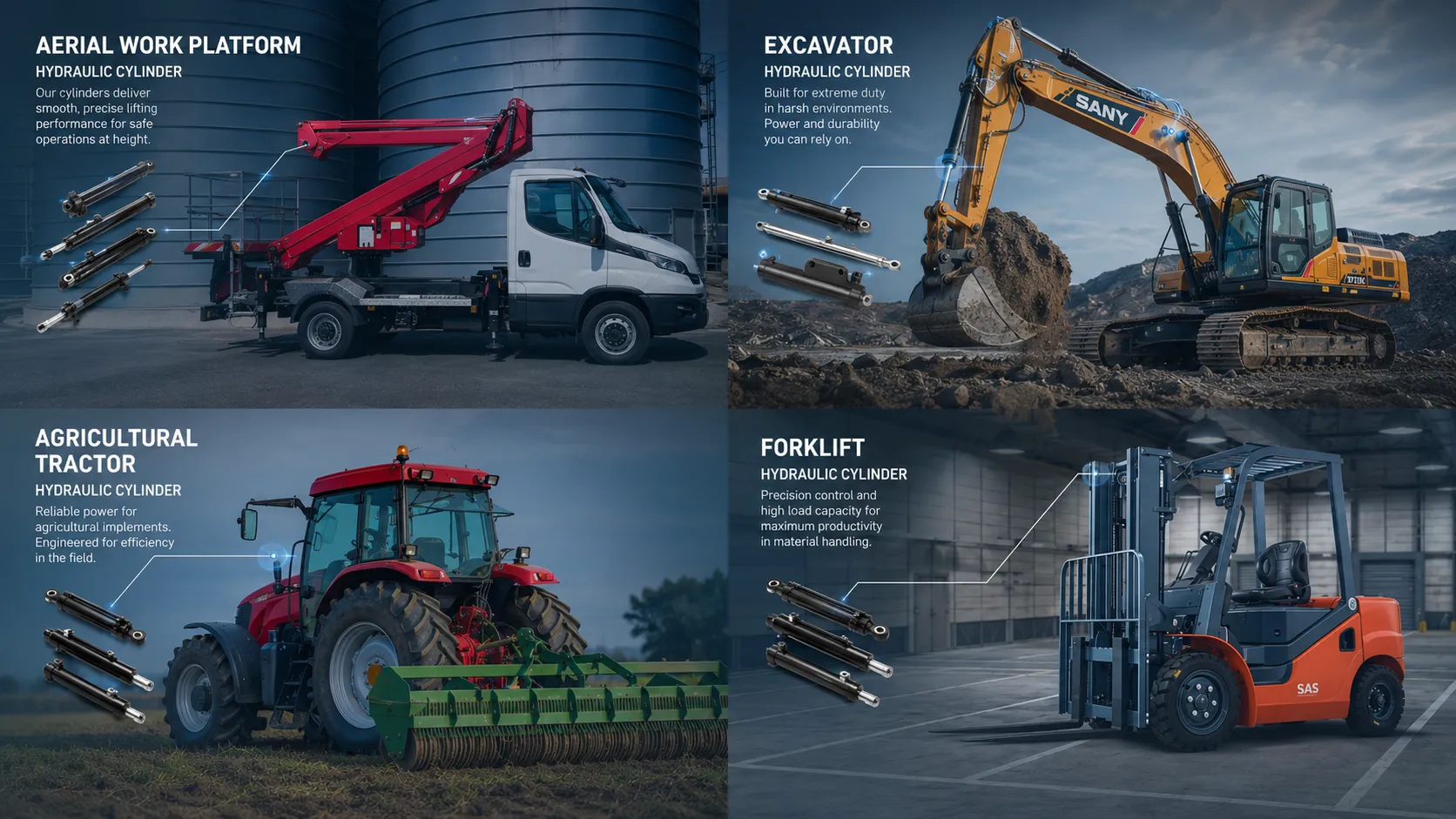
In the vast and complex world of mechanical engineering and industrial automation, fluid power remains the undisputed champion of generating massive, controlled linear force. At the very heart of this technological domain lies the hydraulic cylinder. A hydraulic cylinder is a mechanical linear actuator that converts hydrostatic energy pressurized hydraulic fluid into highly controlled, unidirectional kinetic force. From the colossal excavators shaping our urban infrastructure to the microscopic precision required in aerospace testing equipment, understanding the different types of hydraulic cylinders is absolutely essential for any engineer, procurement specialist, or maintenance professional.
The fluid power industry is not a monolith. Because industrial applications vary so wildly from clean room pharmaceutical manufacturing to the abrasive, punishing environment of deep shaft mining the design, architecture, and functionality of hydraulic actuators must adapt accordingly. Selecting the incorrect type of hydraulic cylinder for a specific load profile or environmental condition will inevitably lead to catastrophic seal failure, structural buckling, and massive financial losses due to unplanned operational downtime.
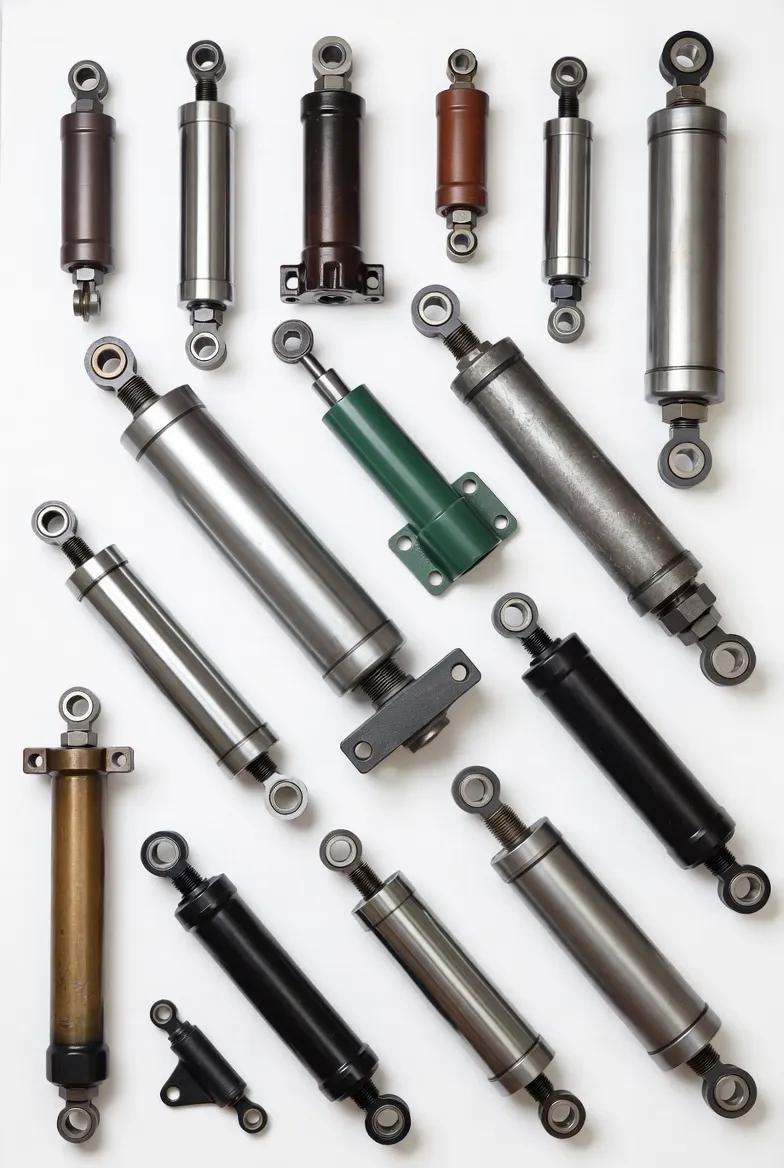
From a rigorous engineering perspective evaluated against international manufacturing standards, hydraulic cylinders are primarily categorized through two distinct lenses: their operating function how fluid moves the piston and their construction style how the physical housing is built. This highly detailed, authoritative guide will comprehensively dissect the different types of hydraulic cylinders, exploring their internal mechanical kinematics, their structural advantages, and their ideal deployment scenarios in the modern industrial landscape.
Categorization by Operating Function: Single Acting vs Double Acting
The most fundamental method of classifying hydraulic cylinders is determining how the hydrostatic pressure is applied to the piston to create motion. This defines whether the cylinder can exert force in one direction or both directions.
Single Acting Hydraulic Cylinders
A single acting hydraulic cylinder is designed to exert kinetic force in only one direction. This architecture features a single hydraulic port located at the base of the cylinder barrel. When the pump engages, pressurized fluid enters this port, pushing against the full surface area of the piston face and driving the rod outward. Because there is no fluid pressure available to pull the rod back inward, single acting cylinders must rely on an external force to retract.
- –Gravity Return: Utilizes the dead weight of the lifted payload to push the piston down, forcing the fluid back into the reservoir. Widely used in hydraulic elevators and material handling lifts.
- –Spring Return: Integrates a heavy duty mechanical coil spring inside the cylinder housing. When fluid pressure is released, the tension of the spring forcefully retracts the rod. Common in clamping tools and braking systems.
Double Acting Hydraulic Cylinders
Double acting hydraulic cylinders are the undisputed standard in complex industrial machinery. Unlike their single acting counterparts, these actuators feature two distinct fluid ports: one at the base the cap end and one at the rod end. This allows the system to route high pressure hydraulic fluid to either side of the piston, granting the machine the ability to exert massive force in both extension and retraction strokes.
- –Differential Type: The most common design. Because the piston rod occupies volume in the retraction chamber, the effective surface area for fluid to push against is reduced. Thus, the cylinder extends slower but with more force, and retracts faster but with less force.
- –Double Rod Type: Features a single piston with a rod extending through both ends of the barrel. This provides perfectly symmetrical volume and surface area, allowing for identical force and speed in both directions, ideal for steering systems.

Categorization by Construction Style: Tie Rod vs Welded Body
While the operating function dictates how the cylinder moves, the construction style dictates how the physical components of the actuator are held together under extreme hydrostatic pressure. The debate between tie rod designs and welded body construction is a fundamental cornerstone of fluid power mechanical engineering, with each style offering distinct advantages for specific operational environments.
Tie Rod Hydraulic Cylinders
Tie rod hydraulic cylinders are the backbone of the global manufacturing and factory automation sectors. This architecture utilizes a series of high strength threaded steel rods typically four or more installed on the exterior of the cylinder housing to clamp the two end caps securely to the central barrel.
Engineering Advantages: The primary benefit of the tie rod design is rapid serviceability. Factory maintenance teams can easily unbolt the tie rods to completely disassemble the cylinder, allowing for the swift replacement of damaged piston seals or worn guide rings right on the factory floor. These cylinders are heavily standardized by organizations like the NFPA National Fluid Power Association, meaning components are easily interchangeable across different manufacturers. However, they are physically bulky and the tie rods can stretch under extreme pressure spikes, making them less ideal for mobile equipment.
Welded Body Hydraulic Cylinders
Welded body hydraulic cylinders represent the ultimate standard for rugged, mobile fluid power. In this construction, the end caps, mounting clevises, and fluid ports are directly and permanently welded to the heavy wall steel barrel. This creates a monolithic, incredibly robust pressure vessel.
Engineering Advantages: Eliminating the exterior tie rods grants the welded cylinder a much narrower, compact profile, which is absolutely crucial for fitting into the tight chassis constraints of excavators, tractors, and mining equipment. The welded construction can endure significantly higher cyclic fatigue and violent physical shock loads without the risk of tie rod stretching. While disassembling a welded cylinder for maintenance is more complex requiring specialized tools to unscrew the internal head gland their superior durability makes them the only choice for harsh, outdoor industrial environments.

Specialized Hydraulic Actuator Types
Beyond the standard configurations, fluid power engineers have developed highly specialized linear actuators designed to overcome extreme spatial limitations or multiply force geometry.
Telescopic Hydraulic Cylinders
The fundamental engineering challenge of a standard cylinder is that its extended length can never exceed twice its collapsed length. Telescopic hydraulic cylinders solve this geometric paradox. They feature a series of nested tubular stages that slide outward sequentially. This allows a cylinder that is incredibly short when fully collapsed to extend to massive lengths. They are the driving force behind dump truck beds, allowing the bed to tilt to extreme angles while fitting neatly behind the vehicle cabin. Telescopic cylinders can be single acting relying on gravity to collapse the nested stages or double acting for applications requiring powered retraction.
Tandem Hydraulic Cylinders
When an industrial application requires an immense amount of pushing force, but the physical installation space is too narrow to accommodate a cylinder with a large bore diameter, engineers deploy tandem hydraulic cylinders. This design links two distinct cylinder barrels together in a single linear line, with the piston rod of the rear cylinder pushing against the piston of the front cylinder. Because the hydraulic fluid acts upon two separate piston surface areas simultaneously, the tandem configuration effectively doubles the total output force without increasing the outer diameter footprint of the actuator.
Mill Type Hydraulic Cylinders
Operating in the most hostile environments imaginable, such as steel foundries, offshore oil rigs, and heavy forging plants, mill type hydraulic cylinders are the ultimate heavy duty actuators. These cylinders discard standard snap rings and threads in favor of heavy steel flanges that are bolted directly to the cylinder barrel. This allows the cylinder to withstand massive, violent shock loads, extreme side bending moments, and severe high temperature environments that would instantly destroy standard welded or tie rod designs.
Engineering Selection Criteria: How to Choose the Right Type
Selecting the correct type of hydraulic cylinder is a critical engineering decision that dictates the safety, efficiency, and longevity of the entire machine. Fluid power engineers must evaluate a matrix of complex variables before specifying an actuator for a particular industrial application.
- ✔️
Operating Pressure and Load Capacity: The maximum weight the cylinder must push or pull dictates the required system pressure and the bore diameter of the cylinder. High load applications demand heavy walled welded bodies or mill type construction to prevent barrel ballooning under thousands of PSI.
- ✔️
Stroke Length and Buckling Risk: Pushing a load over a long distance introduces a severe risk of the piston rod buckling under compression. If a long stroke is required in a confined space, a telescopic hydraulic cylinder is mandatory. Engineers must also calculate the Euler buckling load to ensure the rod diameter is sufficiently thick.
- ✔️
Mounting Styles and Pivot Kinematics: How the cylinder connects to the machine determines how forces are transferred. Clevis and trunnion mounts allow the cylinder to pivot and absorb arc movements, which is critical for mobile booms. Flange mounts rigid connections are utilized for straight line pressing operations where zero lateral movement is expected.

The Digital Horizon: Smart Hydraulic Cylinders and the IoT
The fluid power industry is currently experiencing a massive paradigm shift driven by the Industrial Internet of Things. Traditional hydraulic cylinders, regardless of their type, are evolving from passive mechanical force generators into highly intelligent, sensor driven data nodes integrated seamlessly into facility management software.
Next generation smart hydraulic cylinders are deeply integrated with absolute linear position sensors hidden safely inside the hollow piston rod. These sensors feed real time stroke telemetry to the machine control unit, allowing for micrometer precision in automated assembly lines. Furthermore, integrated high resolution pressure transducers and vibration sensors can analyze the performance signature of the cylinder over millions of cycles. Artificial intelligence algorithms use this data to accurately predict internal seal wear, fluid degradation, or potential rod binding. This shift toward AI driven predictive maintenance allows plant managers to replace degrading fluid power components during scheduled downtime, eradicating the catastrophic costs associated with sudden, unexpected hydraulic failures on the factory floor.

Conclusion: Mastering Fluid Power Actuation
Understanding the different types of hydraulic cylinders is the fundamental baseline for any successful mechanical design involving heavy lifting, pressing, or articulation. Whether deploying a simple single acting cylinder for a gravity lift, a rugged welded body actuator for a mining excavator, or a highly complex multi stage telescopic cylinder for aerial rescue equipment, selecting the precise fluid power architecture guarantees operational safety, maximizes energy efficiency, and ensures long term structural reliability. As digital sensors and smart valving continue to merge with traditional hydraulics, the capability and precision of these mechanical titans will only continue to expand across the global industrial landscape.