
Fluid Power Kinematics Engineering
What is a Hydraulic Cylinder Clevis? A Definitive Engineering Guide
An authoritative technical analysis exploring structural pivot mechanics, shear stress distribution, metallurgical fabrication, and the vital role of clevis mounting brackets in fluid power linear actuators.

The Crucial Mechanical Bridge of Hydrostatic Power
In the highly rigorous disciplines of heavy equipment manufacturing, automated industrial fabrication, marine engineering, and commercial agriculture, fluid power systems are relied upon to deliver massive, unyielding kinetic force. Hydraulic cylinders act as the fundamental mechanical muscles of this machinery, converting the hydrostatic energy of pressurized fluid into precise linear motion capable of lifting hundreds of thousands of pounds. However, the internal generation of this massive force is only one part of the engineering equation. That massive mechanical power must be safely, efficiently, and rigidly transferred to the surrounding equipment chassis or moving payload. This vital transfer of kinetic energy is entirely dependent upon the mechanical interface connecting the cylinder to the machine. When engineers and equipment operators ask what a hydraulic cylinder clevis is, they are inquiring about the absolute most critical and universally utilized pivot mounting structure in the fluid power industry.
A hydraulic cylinder clevis is a specialized, U-shaped mechanical fastener designed to create a secure, pivoting connection point. The fundamental purpose of a clevis mount is to allow the fluid power linear actuator to swing smoothly through a designated arc of motion while simultaneously transmitting immense push and pull forces. If an excavator boom raises a heavy bucket of earth, the geometry of the machine dictates that the cylinder cannot remain perfectly stationary; its angle relative to the chassis must change dynamically as the boom elevates. If the cylinder were bolted rigidly to the frame without a pivot point, the massive lateral forces would instantly bend the hardened steel piston rod, shatter the internal polyurethane seals, and result in catastrophic mechanical failure. The clevis mount elegantly solves this complex kinematic dilemma.
From a highly authoritative engineering perspective evaluated against international manufacturing standards, the design, metallurgy, and maintenance of a hydraulic cylinder clevis are paramount to the safety and longevity of the entire machine. A clevis is not a simple bracket; it is a highly stressed load-bearing component that must endure relentless shear forces, abrasive environmental contamination, and brutal shock loads without fracturing. This comprehensive technical engineering manual will meticulously dissect the anatomical architecture of the clevis mount, explore the advanced physics of shear stress distribution, contrast the rod end clevis against the base end clevis, and detail the precise industrial applications that mandate their deployment.
The Anatomical Architecture of a Clevis Joint
To truly comprehend how a hydraulic cylinder clevis manages extreme hydrostatic loads, one must examine its distinct geometric components. A complete clevis joint is actually a synchronized assembly of three highly machined parts working in perfect unison.
The Clevis Bracket (The U-Shape)
The primary body of the mount is the clevis bracket itself. This component is characterized by its distinctive U-shape, featuring a solid base that attaches to the cylinder and two parallel extending arms, commonly referred to in the fluid power industry as the “ears” or “tines”. The gap between these two extending ears is known as the “throat”. The clevis bracket is typically manufactured from forged high-tensile carbon steel or heavy-duty cast ductile iron to prevent the ears from snapping under violent tensile forces. Each ear is precision-machined with a perfectly aligned cross-hole to accept the pivot pin.
The Tang (The Mating Eye)
A clevis bracket cannot function alone; it requires a mating component to connect with the heavy machinery. This mating component is known as the tang, or the single eye. The tang is a solid steel block with a single bored hole that slides perfectly into the throat of the U-shaped clevis bracket. The dimensional tolerance here is absolutely critical. If the throat is too wide, the tang will rattle and clunk during operation, creating severe shock loads that will rapidly destroy the assembly. If the throat is too tight, the joint will bind, causing immense friction and preventing the necessary pivoting motion.

The Unsung Hero: The Clevis Pin and Shear Stress
Once the tang is inserted into the throat of the clevis bracket, the two components are locked together by the third piece of the architecture: the clevis pin. The clevis pin is a solid, cylindrical steel shaft that is driven through the aligned holes of the clevis ears and the central tang. While the clevis bracket itself looks massive and impressive, it is actually the relatively small clevis pin that bears the ultimate burden of the hydraulic cylinder’s incredible force.
Understanding hydraulic cylinder clevis design requires a deep dive into the physics of mechanical stress. When the cylinder extends to push a massive load, the entire kinetic force attempts to rip the tang out of the clevis throat. The only thing preventing catastrophic separation is the physical resistance of the clevis pin. This force applies extreme “double shear stress” to the pin. It is called double shear because the pin is supported on both ends by the clevis ears, while the tang pushes against the middle. The pin is simultaneously fighting being sliced in half at two distinct locations.
Pin Metallurgy and Retention Mechanisms
Because of this massive double shear stress, a standard bolt or low-grade steel shaft cannot be used as a clevis pin; it would guillotine instantly under pressure. Clevis pins are specifically manufactured from ultra-high-yield-strength alloy steel and are frequently induction-hardened to prevent surface galling. To prevent the pin from vibrating out of the bracket during violent machine operation, it must be secured.
The most common retention method is a simple cotter pin or R-clip inserted through a small cross-hole at the end of the clevis pin. In heavier industrial applications, snap rings or specialized threaded locknuts are deployed to guarantee absolute retention. If a clevis pin escapes its housing, the hydraulic cylinder will instantly detach, swinging wildly under pressure and causing lethal destruction to the surrounding environment.

Rod End Clevis vs. Base End Clevis
In fluid power system design, the clevis mounting style can be applied to either the front of the actuator or the rear. Understanding the functional differences between a rod end clevis and a base clevis bracket is critical for proper machine kinematics.
The Rod End Clevis
A rod end clevis is attached to the moving chrome piston rod. This component is rarely permanently welded to the rod; instead, it is almost exclusively a threaded attachment. The polished chrome rod is machined with external or internal threads, and the clevis bracket is screwed tightly onto the tip, often secured with a heavy jam nut or industrial thread-locking compound. The massive engineering advantage of a threaded rod end clevis is adjustability. It allows maintenance technicians to make micro-adjustments to the overall extended length of the cylinder by threading the clevis further in or out, ensuring perfect kinematic timing for complex robotic arms or manufacturing presses.
The Base Clevis Bracket
The base clevis, frequently referred to as the cap end clevis, is located at the stationary rear of the hydraulic cylinder. Unlike the highly adjustable rod end, the base clevis is typically an integral, immovable part of the pressure vessel. In heavy-duty welded body cylinders, the U-shaped clevis ears are forged directly into the solid steel end cap or permanently fusion-welded to the barrel base. In tie-rod cylinder architectures, the base clevis is a heavy cast iron bracket that the external tie rods clamp tightly against the barrel. The base clevis serves as the fundamental anchor point, transmitting the entire reactionary thrust of the cylinder directly into the heavy equipment chassis.
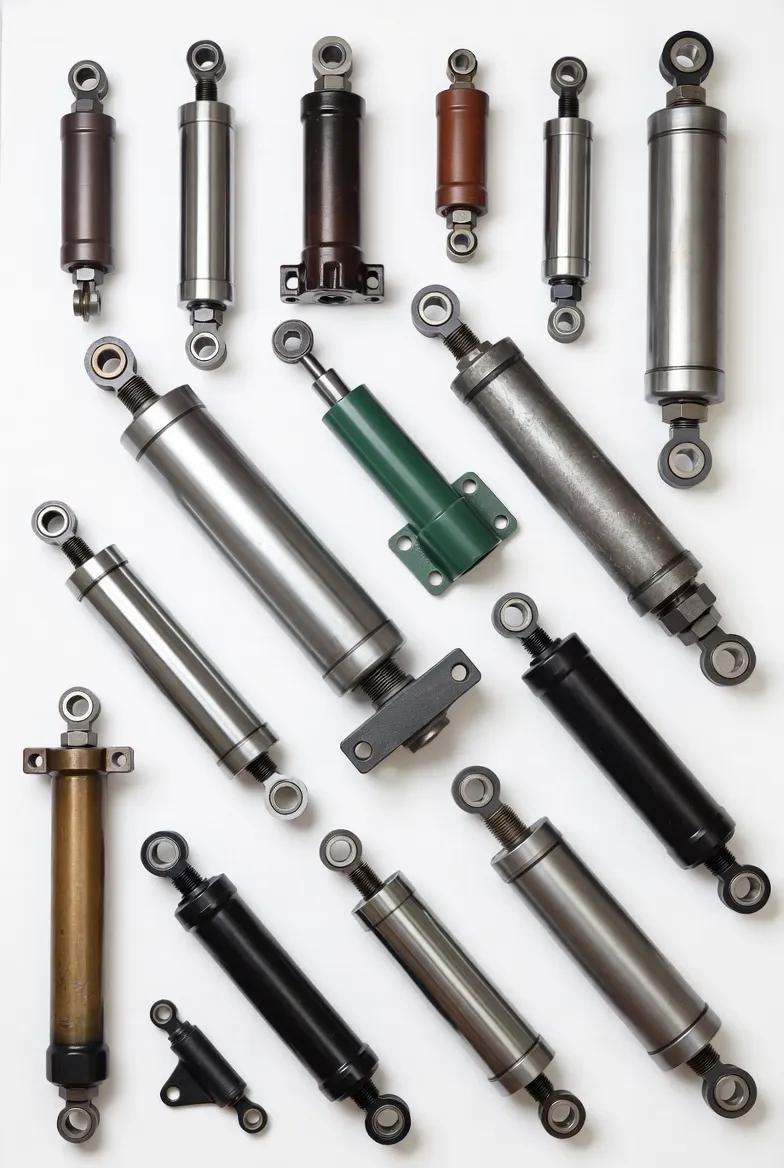
Kinematic Advantages: Why Choose a Clevis Mount?
When configuring hydraulic cylinder mounting styles, engineers have several options, including rigid flange mounts, intermediate trunnions, and foot mounts. The decision to specify a clevis joint is driven entirely by the need to manage dynamic, sweeping motion and protect the internal sealing architecture from destructive lateral forces.
- ✔️
Single-Plane Articulation: The absolute primary advantage of a clevis mount is its ability to allow the cylinder to pivot freely in a single, two-dimensional plane. Think of a dump truck raising its cargo bed. The base of the cylinder is anchored to the truck frame, and the rod is pushing the bed upward. As the bed rises, the angle between the bed and the frame changes drastically. The clevis pin acts as a hinge, allowing the cylinder barrel to swing smoothly and track this changing angle. If the cylinder were rigidly flange-mounted, the extending rod would bend instantly under the shifting geometry.
- ✔️
Centerline Force Transfer: Unlike foot mounts or side lugs, which create dangerous offset bending moments, a clevis mount ensures that the pushing and pulling force is directed perfectly along the centerline axis of the cylinder rod. This perfectly symmetrical load distribution minimizes internal friction against the bronze guide bands, drastically extending the operational lifespan of the polyurethane piston seals and preventing the cylinder head gland from shattering under pressure.

The Hidden Danger: Lateral Side Loading and Clevis Failure
While clevis mounts are exceptionally strong in their primary plane of motion, they possess a severe structural vulnerability. They are highly intolerant of misalignment and lateral side loading. Understanding this limitation is crucial for hydraulic cylinder maintenance and safe equipment operation.
A standard clevis pin is designed to act as a hinge, moving up and down. It is not designed to twist side-to-side. If a heavy machine chassis flexes or twists while driving over deeply rutted construction terrain, that torsional twisting force is transferred directly into the clevis joint. The tang will aggressively grind against the inside ears of the clevis bracket, resulting in severe metal-on-metal binding. This lateral force, known as side loading, causes the clevis pin to gall and seize. In extreme scenarios, the lateral leverage will literally snap one of the steel ears completely off the clevis bracket, resulting in a sudden, catastrophic mechanical detachment.
The Spherical Bearing Upgrade
To combat the destructive threat of lateral frame twisting in heavy mobile equipment, fluid power engineers upgrade the standard rigid clevis to a spherical bearing mount (often utilized in a crosstube configuration). Instead of a simple straight hole, the bracket is fitted with a swiveling, hardened steel spherical ball joint.
This advanced ball-and-socket geometry allows the cylinder to not only pivot in its primary lifting plane but also tilt and articulate slightly in multiple dimensions. Spherical bearings effortlessly absorb severe structural misalignment and chassis flex without binding the pin or transmitting destructive lateral side loads into the delicate internal cylinder seals. While significantly more expensive than a standard clevis, spherical mounts are an absolute mandatory requirement for high-stress articulated loaders and extreme off-road forestry equipment.

Conclusion: The Foundation of Fluid Power Kinematics
Understanding what a hydraulic cylinder clevis is represents the fundamental bedrock of designing and maintaining safe, highly functional industrial machinery. The clevis is far more than a simple bracket; it is a highly engineered mechanical bridge that absorbs massive kinetic forces while allowing seamless geometric pivoting. By mastering the differences between rod end adjustability and base end anchoring, recognizing the immense double shear stress placed upon the clevis pin, and upgrading to spherical bearings when lateral side loading threatens structural integrity, engineering professionals can specify the exact fluid power interface required. A properly selected and rigorously maintained clevis mount guarantees that the world’s most powerful automated equipment will continue to lift, push, and perform with absolute, unyielding, and flawless reliability.