
Fluid Power Standards & Interchangeability
What Is NFPA T3.6.7 R1 Standard for Hydraulic Cylinders?
A comprehensive guide to the foundational North American dimensional standard for tie rod hydraulic cylinders, covering mounting styles, port sizes, rod end threads, and the critical role it plays in interchangeability and maintenance.

The Bedrock of Interchangeability in North American Fluid Power
In the precise and demanding world of industrial fluid power, the question of what is the NFPA T3.6.7 R1 standard for hydraulic cylinders is fundamental to understanding machine design, maintenance, and supply chain efficiency across North America. Established by the National Fluid Power Association (NFPA), this standard is the definitive dimensional code for square-head, tie rod type industrial hydraulic cylinders. Its purpose is elegantly simple yet economically profound: to ensure that a cylinder of a given bore size, pressure rating, and mounting style will have the exact same critical envelope dimensions regardless of which manufacturer produced it. This guarantee of interchangeability allows a plant manager to replace a failed cylinder on a critical assembly line with a unit from a different global supplier sourced from local inventory, without requiring any modification to the machine. This eliminates the need for custom, sole-sourced components, drastically reducing machine downtime and simplifying the procurement of spare parts.
The NFPA T3.6.7 R1 standard is not merely a manufacturing suggestion; it is a powerful engineering contract. It creates a competitive marketplace where cylinder manufacturers are incentivized to innovate in materials, sealing technology, and production efficiency to offer the best value, all while adhering to a fixed set of external dimensions that guarantee their product will fit the customer’s equipment. For the design engineer, the standard provides a library of pre-engineered mounting configurations, port locations, and rod end threads, allowing them to seamlessly integrate a proven actuator into their machine design without having to design a custom interface. This standard has been so successful that it has become a cornerstone of the North American fluid power industry, influencing every aspect of hydraulic cylinder production, from the raw materials used to the final quality inspections performed at advanced testing centers like the one at EverPower-Huachang HYDRAULIC.
This comprehensive guide will provide an exhaustive technical survey of the NFPA T3.6.7 R1 standard. We will explore its exact scope, the specific pressure classes it governs, and the detailed mounting dimensions it defines for a wide array of styles from standard foot mounts and flange mounts to clevis and trunnion configurations. We will examine how it works in concert with other standards, such as those for port sizes (SAE) and rod end threads (UNF), to create a complete and fully interchangeable actuator. Understanding this standard is not just an exercise in reading a print; it is the key to unlocking a world of reliable, cost-effective, and rapidly serviceable hydraulic machinery.
Scope and Core Provisions of the NFPA T3.6.7 R1 Standard
The standard’s power lies in its precise definitions of pressure classes and the detailed dimensions for a wide array of mounting configurations.
Defined Pressure Classes: The 2500 PSI and 3000 PSI Ratings
The T3.6.7 R1 standard categorizes tie rod cylinders into specific pressure classes, with the most common being the 2500 PSI (often referenced as the “standard” or “air” series in older literature, though pneumatic cylinders are covered by a different NFPA standard) and the heavy-duty 3000 PSI hydraulic class. The pressure rating is fundamental because the standard’s dimensional tables are segregated by pressure class; a 3.25-inch bore, 3000 PSI cylinder will have a different overall envelope size (a larger barrel OD and heavier-duty tie rods) than a 2500 PSI cylinder of the same bore. A quality-focused hydraulic cylinder manufacturer will design and test their products to meet or exceed these pressure ratings, providing a hydrostatic test certificate to verify that the cylinder can safely withstand 1.5 times its rated pressure. When specifying a cylinder, calling out both the standard (e.g., “NFPA T3.6.7 R1-3.25 bore, MF5 mount, 3000 PSI”) ensures you receive a heavy-duty cylinder built to the correct dimensional and strength requirements.
Bore and Rod Diameter Combinations for Interchangeability
A critical function of the standard is to normalize the relationship between the bore diameter and the available piston rod diameters. For interchangeability, the rod diameter must match the original cylinder not just for mounting purposes, but for the cylinder’s dynamic performance. The standard prescribes a series of standard “NFPA rod sizes” for each bore. For example, a standard 4.00-inch bore cylinder will have a predefined rod diameter, but the standard also provides for larger, heavy-duty rod options for applications where column strength and buckling resistance are critical. By adhering to these combinations, a machine designer ensures that a replacement cylinder will not only fit the machine mechanically but will also have the correct force output (determined by the bore) and rod stiffness (determined by the rod diameter). This prevents a situation where a physically interchangeable cylinder performs differently on the machine due to an incorrect rod size.

Detailed Mounting Configurations and Related Standards
The true utility of the NFPA T3.6.7 R1 standard is realized through its comprehensive coverage of mounting styles and the related standards it references.
?The “MF” Code: Decoding Mounting Styles (MF1 to MF6)
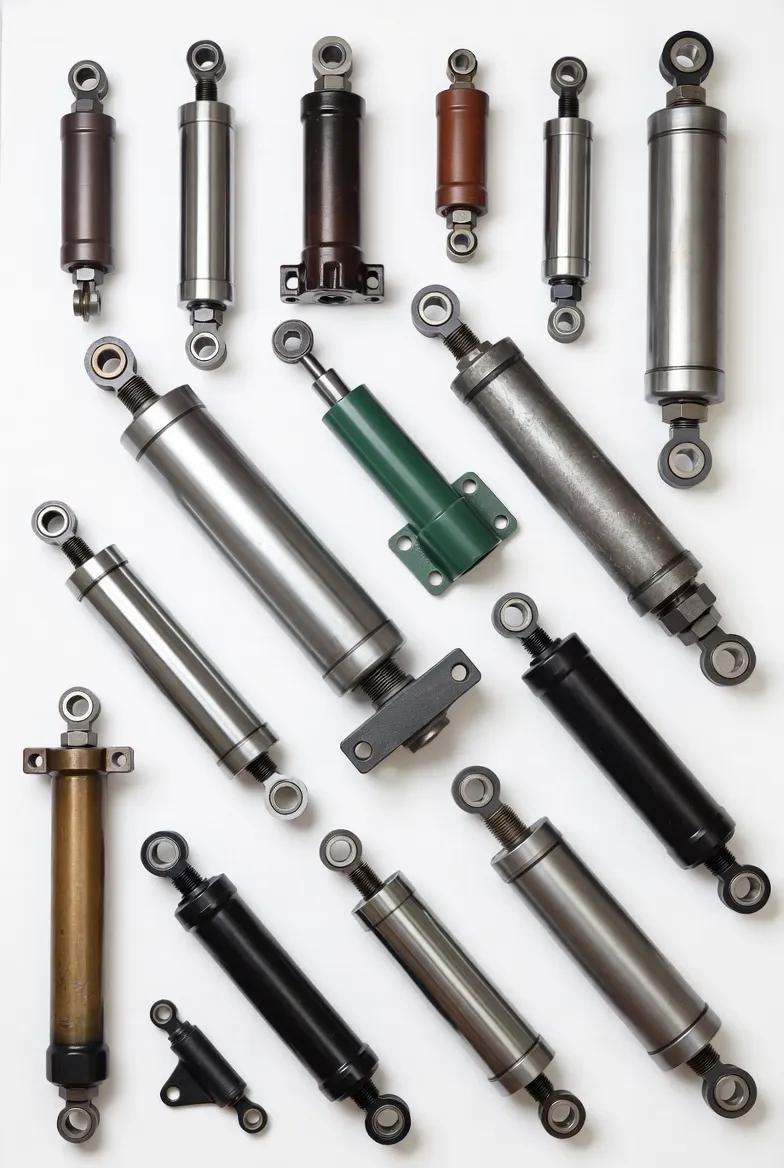
The standard defines a series of mounting styles, each identified by a unique “MF” number. MF1 is a standard head rectangular flange mount, where the cylinder bolts directly to a structural surface via a flange on the head end cap. MF2 is a cap-end rectangular flange mount. The most common mount, MF5, is a head side lug mount, and MF6 is a cap side lug with tapped holes. For pivoting applications, the standard also defines dimensions for clevis (MP1) and trunnion (MT1, MT2, MT4) mounts. Crucially, the standard does not just define the footprint; it dictates the exact location of the mounting holes relative to the cylinder centerline, the size of the bolts, and the dimensions of the machined rabbets (pilot diameters) on flanges that ensure precise alignment. A manufacturer with a robust quality management system will verify these critical dimensions with advanced metrology as part of their First Article Inspection (FAI), confirming that their “NFPA-compliant” cylinder is truly interchangeable.
⚙️Referenced Standards: SAE Ports and UNF Rod End Threads
No cylinder standard exists in a vacuum. For a complete, interchangeable assembly, the NFPA T3.6.7 R1 standard relies on other industry norms. It specifies that hydraulic ports are to be SAE straight thread O-ring boss (ORB) ports per SAE J1926, ensuring a reliable, leak-free connection with standard hydraulic fittings. Similarly, the piston rod end is threaded with a Unified National Fine (UNF) thread. The standard specifies the exact thread size and length for a given bore and rod combination. This is a vital safety and functional aspect; using a standard rod end thread ensures that a load-bearing clevis or attachment from any manufacturer will correctly thread onto the rod. For a comprehensive overview of other relevant standards, including international ones, please refer to our guide on what industry standards apply to hydraulic cylinders. This integrated framework of standards creates a complete, interchangeable actuator.

The Economic and Practical Impact of NFPA Standardization
The standardization mandated by NFPA T3.6.7 R1 creates profound, tangible benefits for equipment manufacturers, maintenance teams, and the entire fluid power supply chain.
Drastically Reduced Machine Downtime and Spare Parts Inventory
The most immediate benefit of NFPA compliance is in maintenance and repair. When a cylinder on a standard NFPA press or machine tool fails, the maintenance team does not need to track down the original equipment manufacturer or wait weeks for a custom replacement. They can source a new, dimensionally identical cylinder from a local hydraulic distributor who stocks NFPA-compliant units from various high-quality manufacturers, including global leaders like EverPower-Huachang HYDRAULIC. This reduces machine downtime from potentially weeks to mere hours. Furthermore, because the mounting dimensions are standardized, the need to keep a large inventory of unique spare parts is eliminated. A single spare cylinder can be kept in stock to serve multiple machines across a plant, dramatically reducing working capital tied up in maintenance spares. This standardization is the primary economic driver behind its widespread adoption across North American industry.
Simplified Design Engineering and Competitive Sourcing
For OEM design engineers, the NFPA standard provides a pre-validated, off-the-shelf component that can be incorporated into a new machine design from the earliest CAD layouts. The engineer selects the required bore, stroke, and mounting style from the standard tables, and immediately knows the precise dimensional envelope the cylinder will occupy. This accelerates the design process and eliminates the risk of an interface error. On the procurement side, the standard enables genuine competitive sourcing. A buyer can issue a request for quotation for an NFPA T3.6.7 R1 cylinder and know that all bids are for a functionally and dimensionally identical product. The decision can then be made based on price, delivery, quality certifications, and the supplier’s reputation for reliability—a true, competitive market that drives value for the customer. This is particularly effective when sourcing from a manufacturer whose quality is backed by high-tech certifications and an advanced manufacturing capability.
Verification and Compliance: The Role of the Manufacturer
The value of the standard is only realized if the manufacturer has the capability to strictly adhere to it. This requires a commitment to precision manufacturing and a robust quality assurance system. A cylinder is not truly “NFPA interchangeable” just by looking similar; it must be verified. A quality manufacturer will use a CMM or other precision metrology equipment to measure a first-off sample of each production run and produce a dimensional inspection report. Their quality management system, ideally certified to ISO 9001, ensures that their processes are stable and capable of holding the required micron-level tolerances. The same advanced testing center that performs hydrostatic and endurance tests on cylinders can also be used to validate the fitment of a cylinder against a master test fixture that replicates the standard’s interfaces. This commitment to documented, repeatable quality is what separates truly compliant manufacturers from the rest.
Applying the Standard in Practice: Specification and Sourcing
Effectively leveraging the NFPA T3.6.7 R1 standard requires understanding how to correctly specify a cylinder and what documentation to expect from a qualified manufacturer.
- ?
How to Correctly Specify an NFPA Cylinder: A complete specification goes beyond just the standard number. It should clearly state: 1. The bore diameter and stroke length. 2. The pressure class (2500 or 3000 PSI). 3. The NFPA mounting style (e.g., “MF5”). 4. The required rod diameter. 5. Any special port or rod end options if they deviate from the standard. 6. The required documentation package (e.g., Certificate of Conformance, material and pressure test certificates). For example, a procurement specification might read: “NFPA T3.6.7 R1 hydraulic cylinder, 4.00-inch bore, 24-inch stroke, 3000 PSI class, MF5 head lug mount, 1.75-inch diameter standard rod, SAE #12 ORB ports per standard.” This level of detail ensures the quotation you receive is accurate and that the delivered cylinder will be the exact, interchangeable component you need.
- ✅
The Interchangeable Seal Kit: A Direct Result of Standardization: A direct and crucial byproduct of the NFPA dimensional standard is the availability of common, interchangeable seal kits for cylinder rebuilds. Because the bore and rod diameters are standardized, the piston and rod seals required for a 4.00-inch bore, 3000 PSI cylinder will be the same regardless of the manufacturer. This empowers the maintenance team to perform an in-house cylinder rebuild using a standard seal kit sourced from a local seal supplier. It eliminates the dependence on the original cylinder manufacturer for spare seals. For a detailed, step-by-step guide on performing this maintenance task, refer to our comprehensive article on how to repair a leaking hydraulic cylinder rod seal. This self-serviceability is a major factor in reducing the total cost of ownership for NFPA-standard equipment.
- ?
Verifying Compliance: The Certificate of Conformance: The final assurance of NFPA compliance is the supplier’s Certificate of Conformance (CoC). This document, signed by a quality representative of the manufacturer, is a binding declaration that the specific cylinder serial numbers in your shipment have been manufactured in accordance with the NFPA T3.6.7 R1 standard. A reputable manufacturer will provide this with every order. This certificate, along with the hydrostatic test report and material certifications, completes the quality documentation package for a reliable, standards-compliant cylinder. A supplier that is evasive about providing a CoC or dimensional inspection data should be viewed with extreme caution, as their products may not be truly interchangeable, leading to costly installation problems.

The Future and Global Context of the NFPA Standard
The enduring relevance of the NFPA T3.6.7 R1 standard is a powerful example of how thoughtful standardization creates lasting economic and technical value in a globalized industry.
The Relationship Between NFPA and ISO Standards
While NFPA T3.6.7 R1 is dominant in North America, its metric counterpart on the global stage is the ISO 6020/2 standard for tie rod cylinders. The two standards are functionally analogous, each serving as the dimensional interchangeability standard for tie rod cylinders in their respective regions. The key difference is that NFPA uses imperial units (inches) and SAE ports, while ISO uses metric dimensions and metric ports. A global OEM exporting machinery to both North America and Europe will often design two variants of a machine, one with an NFPA cylinder and one with an ISO cylinder. A globally competent manufacturer like EverPower-Huachang HYDRAULIC will have the engineering expertise and flexible production lines to manufacture to either standard, offering a seamless supply solution for multinational companies.
Evolution and Relevance in Modern Design
The T3.6.7 standard is not a static document; it is periodically reviewed and updated by the NFPA technical committee. Its longevity is a testament to the soundness of its core principle. Even as machine design moves toward electrification in some sectors, the hydraulic tie rod cylinder is irreplaceable for the vast force densities it achieves in a compact package. The standard ensures these power-dense components remain serviceable and competitive. Innovations in seal materials, position sensing technology, and advanced coatings are all integrated by manufacturers into the standard NFPA envelope, providing a constant stream of performance improvements without sacrificing the fundamental interchangeability that is the standard’s greatest gift to the industry.
Strategic Procurement: Leveraging the Standard for Value
For strategic sourcing professionals, the NFPA T3.6.7 R1 standard is the ultimate tool for creating a competitive and reliable supply chain. It allows a buyer to qualify a panel of suppliers based on their quality certifications and technical capabilities, knowing that all can supply the same physical product. When engaging with a potential supplier, a key question to ask is about their specific experience in manufacturing to this standard and to request a sample dimensional inspection report. A manufacturer that is, as noted, part of a respected industrial group and holds quality and safety certifications provides inherent credibility. Asking the right questions, as outlined in our guide on what questions to ask a hydraulic cylinder supplier, is key to unlocking this strategic value.
The NFPA T3.6.7 R1 standard is a cornerstone of industrial fluid power engineering in North America. It is a powerful enabler of rapid maintenance, competitive procurement, and efficient machine design. Understanding its scope, and partnering with a manufacturer who has the demonstrated capability to produce fully compliant, documented, and reliable cylinders is a non-negotiable aspect of professional machine design and asset management.

Conclusion: Standardization as a Strategic Advantage
The NFPA T3.6.7 R1 standard is far more than a simple engineering chart. It is a strategic instrument that underpins the efficiency and reliability of a vast segment of North American industry. By codifying the dimensional interfaces of tie rod hydraulic cylinders, it empowers machine designers, empowers maintenance teams with true interchangeability, and empowers procurement professionals with a competitive, transparent market. Compliance with this standard, verified by a robust quality system and precise manufacturing from a partner like EverPower-Huachang HYDRAULIC, is the mark of a professional and reliable component. In a complex and demanding technical world, this standard provides a clear, unambiguous, and brilliantly useful framework that strips away complexity and replaces it with the elegant efficiency of perfect interchangeability.