
Fluid Power Mechanical Engineering
Where Should I Mount My Hydraulic Cylinder?
A comprehensive engineering guide to optimal hydraulic cylinder mounting configurations, pivot geometry, load alignment, and structural integration for industrial fluid power systems.

The Critical Importance of Hydraulic Cylinder Mounting Geometry
In the precision driven domain of fluid power engineering, selecting where to mount a hydraulic cylinder is not merely a mechanical formality it is a fundamental decision that governs the entire performance envelope, structural longevity, and operational safety of the system. The question of hydraulic cylinder mounting location directly influences bearing loads, piston rod buckling resistance, seal integrity, and the overall mechanical efficiency of linear force transmission. Engineers and system designers must carefully evaluate pivot pin placement, clevis attachment angles, and the resulting force vector geometry to prevent premature component failure and catastrophic structural fatigue.
Hydraulic cylinder mounting options extend far beyond simple bracket selection. The optimal mounting configuration must account for dynamic load conditions, including side loading forces that can induce accelerated seal wear and rod scoring. Whether implementing a clevis mounted hydraulic cylinder for oscillating motion or a flange mounted hydraulic cylinder for rigid linear thrust, each configuration presents unique advantages and inherent limitations. Understanding the nuanced relationship between mounting style and cylinder mounting orientation is essential for achieving maximum service life and minimal downtime in demanding industrial applications.
This exhaustive technical guide explores the full spectrum of hydraulic cylinder mounting configurations, providing authoritative insights into fixed versus pivoting mounts, proper alignment methodologies, and the mechanical engineering principles that ensure reliable fluid power actuation. From heavy duty construction equipment to precision industrial automation, the correct hydraulic cylinder mounting strategy is the cornerstone of robust and efficient linear motion control.
Fixed Mounting Configurations: Rigid Structural Integration
Fixed hydraulic cylinder mounts provide absolute positional stability, ensuring that the cylinder body remains stationary while the piston rod extends and retracts along a precise linear axis.
Flange Mount Cylinders
Flange mounting represents one of the most robust fixed mounting configurations available. The cylinder incorporates a machined flange either at the head end, cap end, or an intermediate position. This flange bolts directly to a rigid machine surface, creating an exceptionally stable platform for high force linear actuation. Head flange mounts are particularly effective at resisting tensile forces, while cap flange mounts excel under compressive thrust conditions. Proper flange mount installation requires precise machining of mating surfaces to ensure perfect perpendicularity relative to the intended line of action.
Foot Mounted Cylinders
Foot mounting utilizes integral or bolt on feet positioned along the longitudinal axis of the cylinder barrel. This configuration is widely employed in industrial applications where the cylinder must be supported horizontally. The feet provide a stable base that resists both axial thrust forces and moderate transverse loads. Engineers must carefully calculate foot mount bolt shear stresses, particularly under high cycle fatigue conditions. Using hardened steel dowel pins in conjunction with mounting bolts significantly enhances the rigidity and repeatability of foot mounted hydraulic cylinder installations.

Pivoting Mounting Configurations: Accommodating Angular Motion
Unlike rigid fixed mounts, pivoting hydraulic cylinder mounting configurations permit angular oscillation during the extension and retraction cycle. This capability is essential in applications where the driven load follows an arcuate path, such as excavator booms, dump truck bodies, and articulated steering linkages.
?Clevis Mount Cylinders
The clevis mount is arguably the most versatile and widely adopted pivoting configuration. A clevis bracket featuring a precision machined pin hole is integrated into either the cap end or both ends of the cylinder assembly. This design allows the cylinder to pivot freely about the clevis pin axis, accommodating angular misalignment and following the natural arc of rotating mechanisms. The clevis mounted hydraulic cylinder is ubiquitous in mobile equipment, agricultural machinery, and material handling systems where the load path is inherently curvilinear.
?Trunnion Mount Cylinders
Trunnion mounting incorporates cylindrical pivot pins or a continuous shaft projecting perpendicularly from the cylinder body. These trunnions are supported by pillow block bearings or machined saddles, enabling the entire cylinder assembly to pivot about a fixed axis. Trunnion mounts offer distinct advantages in terms of load distribution, as the pivot point can be positioned precisely at the cylinder center of gravity or at a specific location along the barrel to optimize mechanical advantage. This configuration is frequently specified for heavy duty hydraulic cylinder mounting locations in industrial presses and large scale material processing equipment.

Engineering Analysis: Forces Induced by Mounting Geometry
The selection of hydraulic cylinder mounting location profoundly influences the magnitude and direction of reaction forces transmitted to the machine structure.
Side Loading and Bearing Stress
Improper hydraulic cylinder mounting location inevitably introduces deleterious side loading forces. When the cylinder mounting points are misaligned relative to the load path, the piston rod experiences bending moments that dramatically accelerate gland bearing wear and rod seal degradation. Even minute angular deviations can generate significant radial loads, drastically reducing the operational lifespan of the fluid power actuator.
Column Strength and Rod Buckling
For long stroke applications, the hydraulic cylinder mounting configuration critically impacts the buckling resistance of the extended piston rod. Fixed mount cylinders with rigid end supports offer superior column stability compared to pivoting mounts. Engineers must consult Euler column formulas and manufacturer stop tube recommendations to determine the maximum permissible stroke length for a given mounting style and cylinder bore diameter.
Force Vector Optimization
The optimal hydraulic cylinder mounting location maximizes the mechanical advantage throughout the entire range of motion. By strategically positioning the cylinder pivot points, designers can tailor the force curve to match specific load requirements. This is particularly crucial in linkage mechanisms where the effective lever arm changes as the cylinder extends.
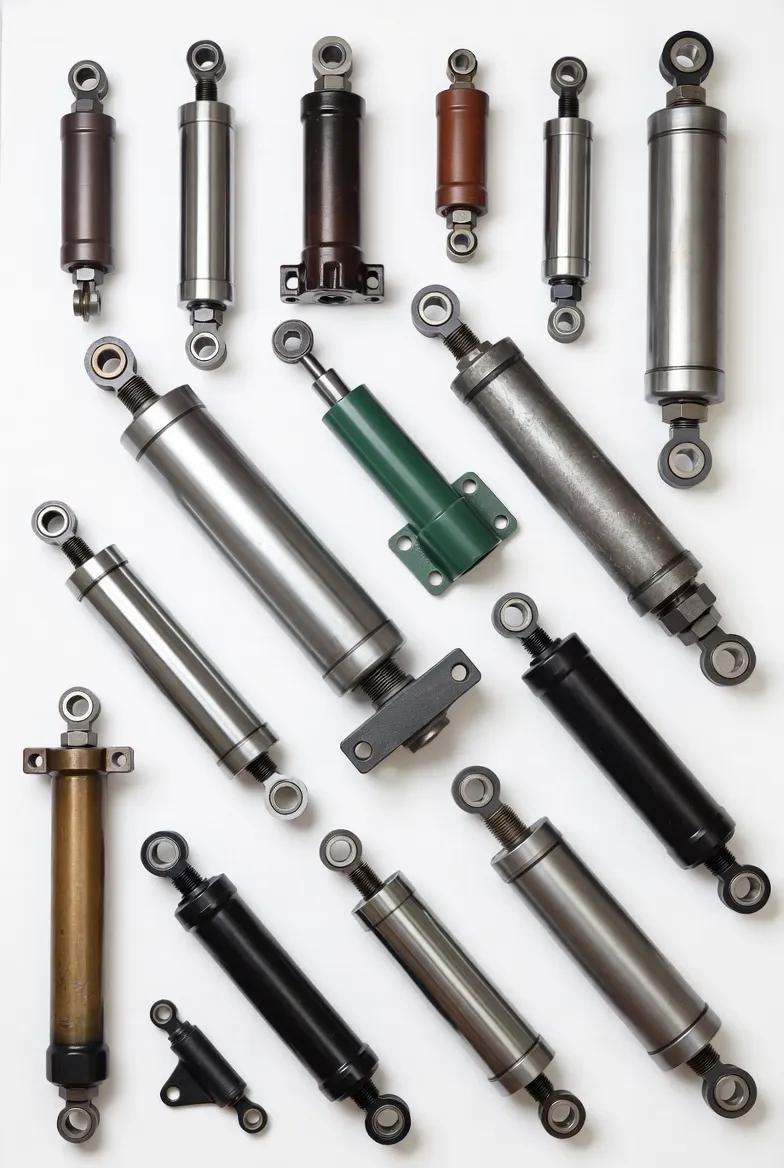
Specialized Mounting Arrangements and Accessories
Beyond the fundamental fixed and pivoting categories, numerous specialized hydraulic cylinder mounting options address unique application challenges.
- ?
Spherical Bearing Mounts: Incorporating spherical plain bearings into clevis or rod end attachments provides an additional degree of rotational freedom, effectively compensating for minor structural misalignments and preventing the transmission of bending stresses to the piston rod. Spherical bearing mounts are essential for ensuring proper hydraulic cylinder mounting alignment in welded fabrications where thermal distortion is a concern.
- ?
Intermediate Fixed Mounts: Long stroke cylinders often benefit from an intermediate mounting bracket positioned along the barrel. This hydraulic cylinder mounting location provides additional support, mitigating sag induced bending and reducing vibration amplitudes in horizontal installations.
- ?️
Swivel Mounts and Gimbals: In complex multi axis motion systems, swivel mounts or gimbaled hydraulic cylinder mounting configurations permit universal angular freedom, allowing the cylinder to self align as the driven mechanism traverses its full range of motion.

Best Practices for Hydraulic Cylinder Mounting Installation
Achieving optimal performance and longevity from a fluid power system requires meticulous attention to hydraulic cylinder mounting procedures.
Alignment Precision
Ensure that cylinder mounting surfaces are machined flat and perpendicular to the intended line of action. Use precision shims as required to achieve perfect hydraulic cylinder mounting alignment, eliminating any possibility of induced side loads.
Fastener Torque and Retention
All mounting bolts must be torqued to manufacturer specifications using calibrated torque wrenches. In high vibration environments, consider the use of thread locking compounds or mechanical locking devices to prevent hydraulic cylinder mounting hardware from loosening.
Pin Clearance and Lubrication
Pivoting hydraulic cylinder mounting pins require proper diametral clearance within their bushings to permit free rotation while minimizing play. Regular greasing of pivot points is essential for preventing accelerated wear and fretting corrosion.
A thorough understanding of hydraulic cylinder mounting location principles empowers engineers to design fluid power systems that deliver unwavering reliability in the most demanding operational environments. By carefully evaluating the mechanical demands of the application and selecting the appropriate mounting configuration, the service life of hydraulic cylinders can be maximized, and the total cost of ownership significantly reduced.

Conclusion: Mastering Hydraulic Cylinder Mounting Location
The decision of where to mount a hydraulic cylinder is a multifaceted engineering challenge that demands a comprehensive understanding of load dynamics, structural rigidity, and mechanical alignment. From the unwavering stability of flange and foot mounts to the adaptive flexibility of clevis and trunnion configurations, each hydraulic cylinder mounting option serves a distinct purpose within the fluid power ecosystem. By adhering to rigorous installation best practices and prioritizing precise hydraulic cylinder mounting alignment, engineers can unlock the full potential of linear hydraulic actuation, ensuring safe, efficient, and durable machine performance across countless industrial sectors. Selecting the optimal hydraulic cylinder mounting location is not merely a step in the assembly process it is the foundational element upon which the entire success of the fluid power application is built.