
Advanced Fluid Power Architecture
Rotary Hydraulic Actuators (Rotary Motors): Breaking the Limits of Linear Motion
An authoritative engineering blueprint detailing the physics of high-torque continuous rotation, hydrostatic drive mechanics, vane versus rack-and-pinion architectures, and the ultimate fluid power solutions for omnidirectional industrial machinery.

The Paradigm Shift from Linear Push to Continuous Rotation
In the rigorous disciplines of heavy industrial manufacturing, marine logistics, deep-sea drilling, and automated material handling, fluid power represents the absolute foundation of immense mechanical force. Traditionally, engineers default to linear hydraulic cylinders to push, pull, or lift massive payloads across a fixed straight-line trajectory. However, modern machinery frequently demands kinematics that standard linear actuators simply cannot accommodate. When an excavator cab needs to infinitely pivot 360 degrees, or when a massive industrial drill requires thousands of foot-pounds of continuous rotational torque without stalling, linear motion becomes obsolete. This critical mechanical threshold is exactly where Rotary Hydraulic Actuators, commonly known as Hydraulic Motors, shatter the constraints of traditional machine design. For engineering professionals seeking elite-tier components capable of delivering this rotational force, exploring our premium hydraulic cylinders platform is a mandatory prerequisite.
A rotary hydraulic actuator utilizes the exact same foundational hydrostatic principles as a linear cylinder—incompressible synthetic fluid generating pressure against a physical boundary—but it fundamentally alters the geometric trajectory of the output. Instead of driving a steel rod straight outward, the fluid pressure acts upon internal vanes, gears, or pistons connected to an output shaft, forcing the shaft to spin. This transformation allows for immense torque generation within a phenomenally compact physical footprint. Unlike electric motors which require massive copper coils and run the risk of catastrophic overheating under stalled loads, a hydraulic rotary motor can maintain maximum torque indefinitely at zero RPM without suffering electrical burnout.
From an authoritative fluid power engineering perspective, evaluated against strict ISO manufacturing tolerances, integrating rotary actuators requires a profound understanding of volumetric displacement, torque-to-pressure ratios, and internal leakage dynamics. This comprehensive technical blueprint will meticulously dissect the working principles of rotary fluid power, explore the critical architectural differences between limited-rotation actuators and continuous hydraulic motors, and provide the definitive engineering matrix to determine when your heavy machinery must pivot from linear cylinders to advanced rotary solutions.
The Physics of Rotary Fluid Power: How They Work
Translating the linear flow of pressurized fluid into rotational torque is an engineering marvel. It is achieved through carefully calibrated internal geometries that exploit pressure differentials.

Volumetric Displacement and Torque
In a linear cylinder, force is a product of pressure multiplied by the piston area. In a rotary actuator, the mathematical equivalent is Torque. The torque output of a hydraulic motor is directly proportional to its volumetric displacement (the amount of fluid required to complete one full revolution) and the system operating pressure. By introducing high-pressure fluid into the inlet port, the fluid forces the internal mechanisms (gears or vanes) to rotate in order to escape toward the low-pressure outlet port. The larger the internal displacement chamber, and the higher the fluid pressure, the more massive the rotational torque generated at the output shaft.
RPM vs. Flow Rate
While torque is dictated by pressure, the rotational speed (RPM) of the actuator is governed entirely by the volumetric flow rate of the fluid (Gallons Per Minute or GPM). Pumping more fluid into the motor causes it to spin faster. However, fluid power engineers face an absolute thermodynamic limitation: pushing excessive flow through a compact motor creates severe fluid friction and heat, rapidly degrading the internal synthetic seals. In massive mobile machinery, such as Excavator Hydraulic Cylinders operating in tandem with heavy swing motors, balancing flow to prevent thermal breakdown is critical.
Limited Rotation vs. Continuous Motors: Two Distinct Architectures
Rotary hydraulic actuators are broadly classified into two highly distinct architectural categories based on their range of motion. Specifying the incorrect architecture will result in catastrophic mechanical limitation.
Limited-Rotation Actuators (Vane and Rack-and-Pinion)
When a machine needs to tilt, flip, or swing a payload back and forth within a restricted arc—typically between 90 and 360 degrees—limited-rotation actuators are deployed. The Rack-and-Pinion actuator is a brilliant hybrid. It utilizes standard linear hydraulic pistons that push a geared rack back and forth. The rack engages a pinion gear, turning the linear push into intense rotational torque. This design is exceptionally rugged, capable of holding massive static loads rigidly in place without drift. They are heavily utilized in boom rotation and steering mechanisms for off-road equipment, similar in ruggedness to Agricultural Hydraulic Cylinders that must survive hostile environments.
Continuous Hydraulic Motors (Gear, Piston, and Gerotor)
If the application requires infinite, uninterrupted 360-degree rotation—such as driving the massive wheels of a skid-steer loader, powering an industrial conveyor belt, or spinning a deep-earth drill bit—a continuous hydraulic motor is mandatory. Radial or axial piston motors represent the pinnacle of this technology. By arranging multiple small pistons in a circular block that ride against an angled swashplate, the high-pressure fluid forces the pistons to sequentially extend and retract, generating incredibly smooth, high-torque, infinite rotation. These motors provide unmatched power density compared to standard electric motors.

The Core Advantages of Rotary Fluid Power
Why choose a hydraulic motor over a massive electric motor or a complex linkage driven by a linear cylinder? The answers lie in power density, thermodynamic survivability, and kinetic control.
Stall Resistance and Safety
If an electric motor is subjected to a load that forces it to stop spinning (a stall condition), the copper windings will rapidly overheat, melt the insulation, and cause a catastrophic electrical fire. A rotary hydraulic actuator can be stalled indefinitely. If a massive drill bit hits impenetrable rock, the fluid pressure simply reaches its maximum relief valve setting. The oil bypasses safely back to the tank, and the motor sustains zero damage, holding full torque against the rock safely.
Explosion-Proof Operations
In subterranean mining, oil and gas refineries, or chemical processing plants, the atmosphere is often saturated with highly explosive gases or dust. Electric motors create internal sparks and require massive, heavy explosion-proof enclosures. Hydraulic motors run entirely on pressurized oil, generating zero sparks. They are inherently intrinsically safe. This makes them the ultimate choice for heavy-duty rotation in hazardous environments.
Unrivaled Power-to-Weight Ratio
A rotary hydraulic actuator can generate the same amount of mechanical horsepower as an electric motor while occupying roughly one-quarter of the physical footprint and weight. For mobile machinery like Dump Truck Hydraulic Cylinders and supporting chassis equipment, shedding hundreds of pounds of electric motor weight allows for increased legal payload capacities and significantly improved fuel efficiency.
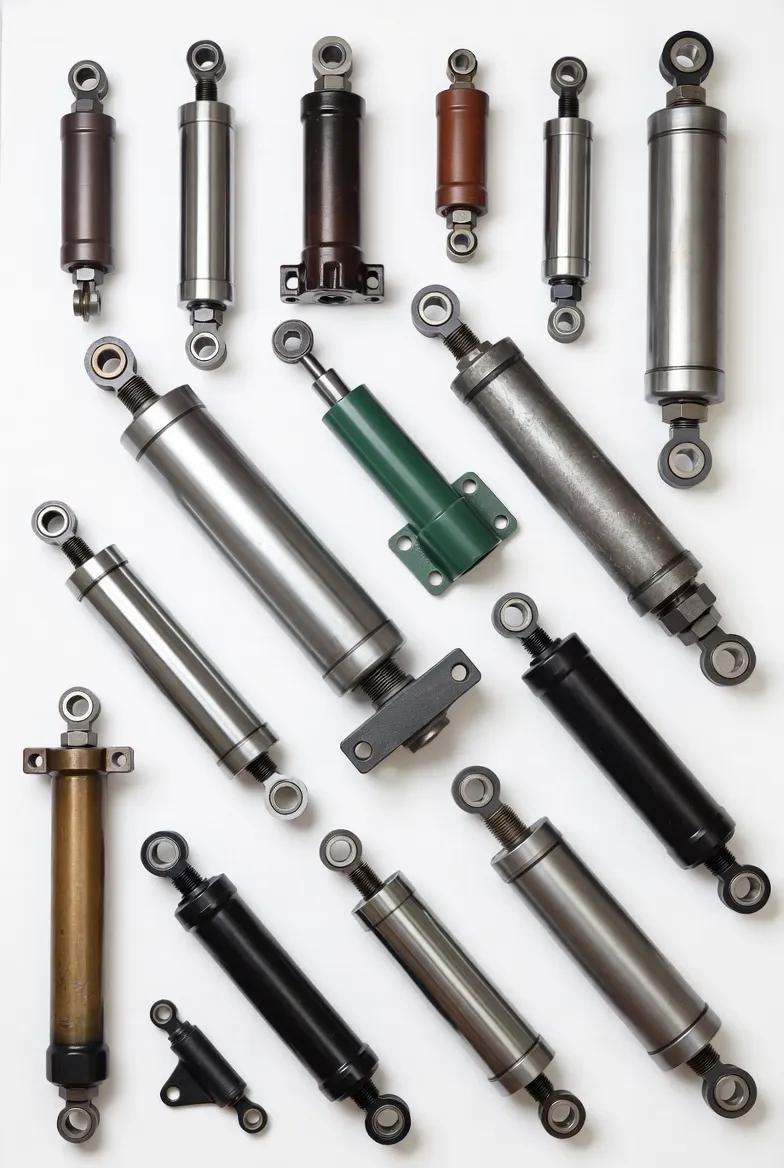
Bridging Linear and Rotary: Real-World Integrations
The most advanced and capable industrial machines do not rely solely on one type of motion; they seamlessly integrate both linear hydraulic cylinders and rotary hydraulic actuators to achieve full six-axis omnidirectional mastery.
- ✔️
Aerial Work Platforms (Cherry Pickers): In elevating human personnel, the primary boom elevation is controlled by heavy-duty linear Aerial Work Vehicle Hydraulic Cylinders. However, to allow the worker in the basket to perfectly align with their workspace, a limited-rotation rotary actuator is placed directly beneath the basket, allowing it to smoothly pivot side-to-side without moving the entire truck base.
- ✔️
Logistics and Material Handling: While Forklift Hydraulic Cylinders provide the primary vertical mast lift and forward tilt, modern logistics require advanced attachments. Drum clamps and heavy roll rotators utilize high-torque rotary hydraulic actuators mounted directly to the forklift carriage, allowing the machine to grab, lift, and infinitely rotate multi-ton paper rolls or industrial barrels for precise pouring.


Conclusion: Engineering the Complete Kinetic Spectrum
Rotary hydraulic actuators represent a monumental leap in mechanical engineering capabilities. By harnessing the same impenetrable hydrostatic pressures that fuel massive linear cylinders, these rotational devices shatter the geometric limitations of straight-line motion. Whether employing a rugged rack-and-pinion actuator for high-torque boom swinging or utilizing continuous piston motors to drive off-road tracks through treacherous terrain, fluid power provides an energy density and thermodynamic resilience that electrical systems simply cannot survive. Mastering the integration of both linear and rotary fluid power ensures that your machinery can navigate, manipulate, and dominate its operational environment with absolute precision and unyielding strength. If your industrial designs require the integration of elite rotational actuators alongside world-class linear force solutions, our premier engineering team stands ready to architect your ultimate kinetic network.