
Advanced Fluid Power Metallurgy
Stainless Steel Hydraulic Cylinders: The Ultimate Sizing Guide for Highly Corrosive Environments
An authoritative engineering blueprint detailing metallurgical alloy selection, hydrostatic load sizing, extreme environmental survival protocols, and the definitive mathematics for specifying corrosion-resistant linear actuators.

Conquering the Invisible Enemy: Industrial Corrosion
In the rigorous domains of offshore marine engineering, chemical processing, pharmaceutical manufacturing, and heavy agricultural production, mechanical machinery faces a relentless, invisible adversary: extreme atmospheric and chemical corrosion. Standard carbon steel hydraulic actuators, while possessing immense tensile strength, will rapidly succumb to oxidation, chloride pitting, and galvanic degradation when exposed to harsh saline environments or caustic washdown procedures. When a heavily corroded cylinder piston rod retracts, it drags abrasive rust particles directly through the fragile polyurethane rod seals, instantly destroying the hydrostatic boundary and causing catastrophic fluid hemorrhage. This failure not only paralyzes critical operations but introduces severe environmental contamination risks. To explore the absolute highest industry standards for fluid power components engineered to survive these conditions, visiting our premium hydraulic cylinders platform is a mandatory first step for procurement engineers.
The definitive solution to this metallurgical vulnerability is the deployment of Stainless Steel Hydraulic Cylinders. By utilizing advanced iron-chromium alloys, these specialized actuators form a passive, self-healing oxide layer that completely neutralizes corrosive attacks. However, designing and specifying a stainless steel linear actuator is a vastly different engineering challenge compared to sizing standard carbon steel equipment. Different grades of stainless steel possess dramatically varying yield strengths, thermal expansion coefficients, and machining tolerances. A miscalculation in the required wall thickness or rod diameter can lead to explosive structural ballooning under high pressure or catastrophic Euler column buckling during maximum extension.
Evaluated against stringent international fluid power manufacturing criteria, this comprehensive technical blueprint will serve as your ultimate sizing guide for highly corrosive environments. We will meticulously dissect the specific alloy grades utilized in modern actuators, provide the definitive mathematical formulas for calculating safe operating pressures, explore the integration of advanced fluoropolymer sealing architectures, and deliver a precise decision matrix for engineering stainless steel power transmission systems.
Decoding the Metallurgy: Selecting the Proper Alloy Grade
Not all stainless steel is created equal. The specific blend of chromium, nickel, and molybdenum determines the actuator survival capability against distinct chemical threats. Specifying the incorrect grade will result in rapid pitting and structural failure.
Type 304 Stainless Steel
Type 304 is the most common austenitic stainless steel utilized in light-duty corrosive environments. It contains eighteen percent chromium and eight percent nickel, providing excellent resistance to water, mild atmospheric oxidation, and basic organic chemicals. It is heavily favored in food processing, beverage bottling, and pharmaceutical logistics. Because these facilities require daily high-pressure washdowns with mild detergents, 304 stainless prevents the equipment from rusting. Many specialized materials handling machines, akin to Forklift Hydraulic Cylinders operating in cold-storage food warehouses, rely on 304 stainless steel to maintain strict FDA sanitary compliance.
Type 316 Marine Grade
When the machinery moves outdoors to coastal or offshore environments, Type 304 becomes insufficient. Seawater contains high concentrations of chlorides that will aggressively pit and destroy 304 steel. Type 316 stainless steel includes the addition of two to three percent molybdenum, which drastically increases its resistance to chloride ion attack and industrial solvents. This marine-grade alloy is the absolute minimum specification for dockside cranes, offshore drilling platforms, and marine vessels. For equipment constantly exposed to caustic elements, such as Agricultural Hydraulic Cylinders spraying highly concentrated liquid fertilizers, 316 stainless steel guarantees long-term survival.
Super Duplex Alloys
For the most extreme, punishing environments on earth—such as deep-sea subsea trenching or highly corrosive chemical processing plants—standard austenitic steels lack the structural yield strength required for massive loads. Super Duplex stainless steels feature a mixed austenitic-ferritic microstructure. This grants them unparalleled immunity to stress corrosion cracking while providing more than double the mechanical yield strength of standard 316. These exotic alloys allow engineers to build high-pressure cylinders with thinner walls, saving massive amounts of weight on offshore platforms.

The Mathematics of Sizing: Compensating for Yield Strength
The most critical error an engineer can make is assuming a stainless steel cylinder can be sized exactly identically to a high-tensile carbon steel cylinder. Austenitic stainless steels (like 304 and 316) typically possess lower mechanical yield strengths than induction-hardened chromoly steel.
Calculating Required Wall Thickness (Hoop Stress)
To safely contain high-pressure hydraulic fluid without the barrel expanding or rupturing, engineers must calculate the required wall thickness using Barlow’s Formula for hoop stress. Because 316 stainless steel has a lower yield strength, the cylinder barrel must be engineered with thicker walls compared to a carbon steel equivalent operating at the same pressure. If a system requires 3,000 PSI to lift a heavy payload, the stainless barrel must be significantly fortified. This is especially critical for heavy earthmoving equipment adapted for corrosive environments, where Excavator Hydraulic Cylinders must resist extreme hydrostatic shock spikes during rock-breaking operations.
Rod Diameter and Euler Column Buckling
When the actuator extends, the stainless steel piston rod acts as a long, slender column. Under heavy compressive loads, it is highly susceptible to Euler column buckling. Because standard stainless steel is less rigid than hardened carbon steel, the rod diameter must often be oversized to maintain identical pushing capacities over long strokes. Failing to mathematically oversize the rod will result in the rod bowing outward and violently snapping under load. This calculation is mandatory when sizing telescopic systems or long-stroke Dump Truck Hydraulic Cylinders adapted for handling corrosive mining aggregate.

Advanced Sealing Architectures for Chemical Resistance
Deploying an indestructible stainless steel housing is futile if the internal polymer seals dissolve upon contact with the working environment. Corrosive environments demand extreme-duty elastomeric engineering.
Fluorocarbon (Viton) Seals
Standard nitrile or polyurethane seals will rapidly melt and extrude when exposed to high temperatures, acidic washdowns, or harsh industrial solvents. High-performance stainless cylinders must be equipped with Fluorocarbon (commonly known by the trade name Viton) seals. Viton offers exceptional thermal stability up to 400 degrees Fahrenheit and near-universal resistance to petroleum-based fluids, silicone fluids, and aggressive acids. This ensures the high-pressure internal oil remains securely separated from the hostile external atmosphere.
PTFE Wiper and Scraper Systems
The most vulnerable point of any cylinder is where the rod exits the head gland. In highly corrosive environments, the retracting rod can drag dried caustic chemicals or crystallized salt directly into the cylinder. Heavy-duty PTFE (Teflon) energized wiper seals act as aggressive mechanical scrapers, violently shearing off bonded chemical residue before it can breach the primary pressure seal. This absolute sealing integrity is the same protocol utilized to protect critical safety equipment like Aerial Work Vehicle Hydraulic Cylinders operating in coastal, salt-spray environments.
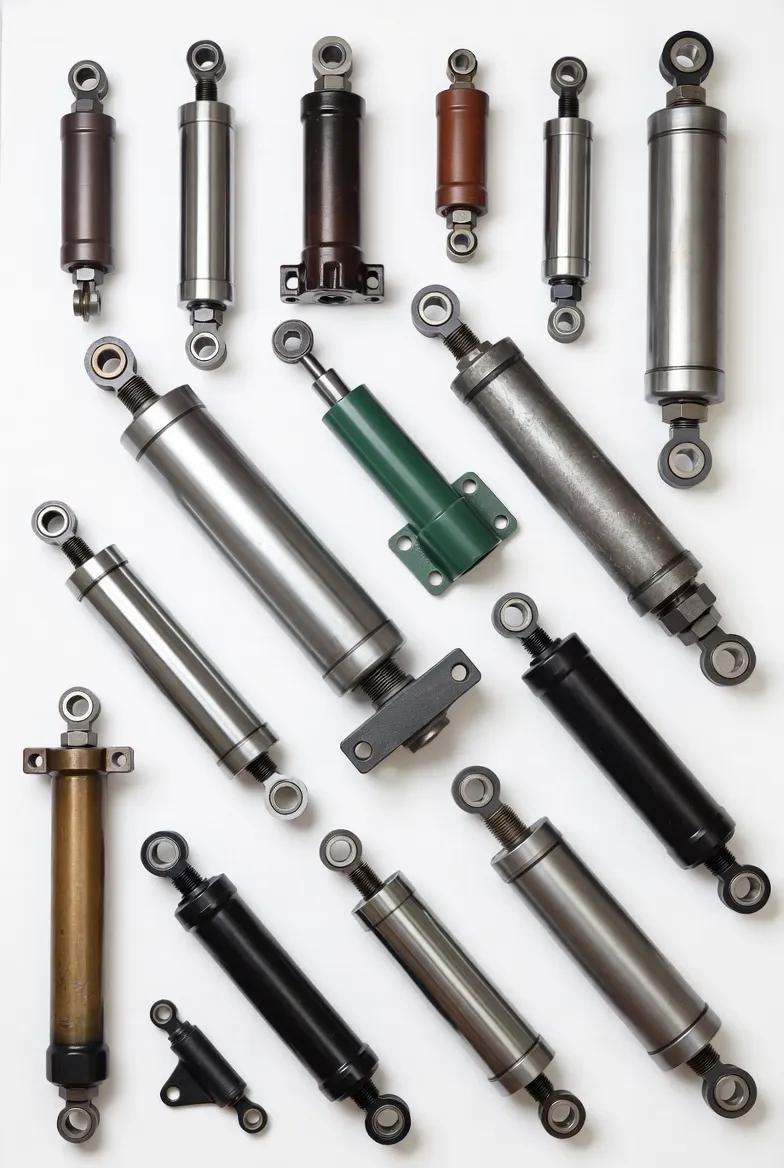
Surface Topography and Galvanic Isolation
Procuring a stainless steel cylinder is only part of the equation. How it is manufactured and mounted dictates its long-term survival in the field.
- ✔️
Electropolishing for Micro-Smoothness: In food-grade or pharmaceutical applications, microscopic crevices on the cylinder body can harbor deadly bacterial growth. Premium stainless cylinders undergo electropolishing—an electrochemical process that strips away microscopic surface peaks, resulting in a mirror-like, ultra-smooth finish that is completely sterile and impenetrable to organic contamination.
- ✔️
Preventing Galvanic Corrosion: A severe engineering mistake occurs when a stainless steel cylinder is bolted directly to a standard carbon steel machine chassis. In the presence of an electrolyte (like seawater), the two dissimilar metals create a microscopic battery, causing the weaker carbon steel to dissolve rapidly through galvanic corrosion. Engineers must install specialized dielectric isolation bushings or sacrificial zinc anodes at the mounting points to interrupt this electrical current and protect the structural integrity of the machine.


Conclusion: Architecting Indestructible Fluid Power
Specifying a stainless steel hydraulic cylinder is not merely a material upgrade; it is a complex engineering commitment to absolute survivability in the most hostile environments on earth. Standard industrial actuators will disintegrate when faced with offshore saline spray, caustic washdowns, or harsh chemical processing. By understanding the distinct metallurgical properties of 304, 316, and Duplex alloys, mathematically compensating for altered yield strengths to prevent column buckling, and deploying advanced Viton and PTFE sealing architectures, design engineers can guarantee unparalleled mechanical longevity. A properly sized stainless steel actuator will deliver unrelenting kinetic force while remaining completely impervious to its environment. If your organization is designing equipment for marine, food processing, or chemical sectors and requires precision-engineered, corrosion-resistant fluid power solutions, our elite technical team stands ready to architect your ultimate mechanical advantage.