
Advanced Fluid Power Diagnostics
Why is Your Hydraulic Cylinder Making Noise? A Troubleshooting Guide to Aeration and Cavitation
An authoritative engineering blueprint detailing the thermodynamic physics of fluid phase changes, acoustic diagnostic protocols, micro-dieseling destruction, and the definitive methodologies to restore absolute hydrostatic silence and reliability to your heavy machinery.

The Acoustic Alarm of Imminent Mechanical Failure
In the highly rigorous disciplines of commercial earthmoving, deep subterranean mining, large scale agricultural production, and automated industrial manufacturing, fluid power systems are engineered to operate with unrelenting, smooth, and relatively silent kinetic force. When properly calibrated, the transmission of hydrostatic pressure through synthetic oil is an incredibly efficient and quiet process. Therefore, when a heavy equipment operator suddenly hears their hydraulic cylinder making noise—whether it is a high-pitched whining, a violent knocking, or a sound resembling rocks tumbling inside a steel drum—it is not merely a nuisance. It is an acoustic alarm signaling that the fundamental physics of the fluid power system have been dangerously compromised. To explore the absolute highest industry standards for precision-engineered components designed to operate flawlessly under extreme conditions, visiting our premium hydraulic cylinders platform provides an essential technical baseline.
A noisy hydraulic cylinder is crying out for immediate diagnostic intervention. The sounds emanating from the actuator and the primary hydraulic pump are the auditory manifestations of severe internal fluid turbulence, phase changes, and mechanical destruction. While it is easy to assume that a mechanical linkage is loose or a bearing has failed, in the vast majority of fluid power cases, the culprit is entirely fluidic. The hydraulic oil, which is supposed to act as a rigid, incompressible medium, has been invaded by a compressible gas or has undergone a violent thermodynamic phase change. These two phenomena are known in the engineering world as Aeration and Cavitation. Although they produce similar symptoms and auditory profiles, their root causes, physical mechanisms, and necessary repair protocols are entirely different.
From an authoritative engineering perspective evaluated against stringent international ISO maintenance standards, misdiagnosing aeration as cavitation—or vice versa—will result in massive capital waste, repeated component failures, and dangerous operational downtime. This comprehensive technical troubleshooting guide will meticulously dissect the physics behind a hydraulic cylinder making noise. We will explore the complex fluid dynamics of vapor bubbles, analyze the destructive micro-dieseling effect, provide a definitive sensory guide to distinguishing between the two phenomena, and deliver the exact maintenance protocols required to restore your heavy machinery to a state of perfect hydrostatic silence and absolute reliability.
Understanding Aeration: The Invasion of Atmospheric Gas
Aeration occurs when atmospheric air physically enters the hydraulic system and mixes with the synthetic fluid. Because air is highly compressible and oil is not, this mixture destroys the rigid power transmission capabilities of the circuit.
How Air Breaches the System
Hydraulic systems are completely sealed closed loops. Therefore, air can only enter through specific vulnerabilities, almost exclusively on the suction side of the primary pump. The suction line operates under a slight vacuum to draw fluid from the reservoir. If there is a loose clamp, a porous rubber hose, or a degraded shaft seal on the pump itself, the vacuum will pull ambient atmospheric air directly into the fluid stream. Another massive culprit is a dangerously low fluid level in the main reservoir; if the fluid drops below the suction intake line, the pump creates a vortex and sucks pure air directly into the system. This immediately aerates the oil, turning it into a compressible, spongy mixture.
The Acoustic and Physical Symptoms
When an aerated fluid mixture reaches the high-pressure side of the circuit and enters the hydraulic cylinder, the symptoms are immediate and severe. Because the trapped air bubbles compress under load, the cylinder will lose its absolute rigidity. The payload will bounce, stutter, and exhibit a highly dangerous “spongy” motion. This is a critical safety hazard for precision lifting equipment like Forklift Hydraulic Cylinders, where bouncing can cause heavy pallets to dislodge at high elevations. Acoustically, aeration presents as a loud knocking or hammering sound as the highly compressed air bubbles rapidly expand and collapse as they pass through directional control valves and cylinder ports.

Understanding Cavitation: The Thermodynamic Vacuum Implosion
While aeration involves outside air coming in, cavitation is a far more violent and complex phenomenon. It involves a localized thermodynamic phase change of the hydraulic fluid itself due to extreme pressure drops.
The Creation of Vapor Bubbles
Cavitation occurs when the hydraulic pump demands more fluid than the suction line can physically supply. This fluid starvation creates an intense localized vacuum at the pump inlet. If the absolute pressure drops below the vapor pressure of the hydraulic oil, the fluid literally boils at ambient temperature. This rapid boiling creates microscopic vapor cavities (bubbles) within the fluid stream. Fluid starvation is typically caused by severely clogged suction filters, collapsed inlet hoses, or attempting to run the machine with incredibly thick, highly viscous cold oil during winter mornings. This is why heavy-duty Agricultural Hydraulic Cylinders must undergo strict warm-up procedures before engaging high-RPM loads in freezing weather.
The Destructive Implosion and Micro-Jetting
The true danger of cavitation occurs fractions of a second after the vapor bubbles are formed. As these vacuum bubbles are swept from the low-pressure suction side into the high-pressure discharge side of the pump or the cylinder chamber, the surrounding high pressure instantly crushes them. The bubbles do not merely pop; they violently implode. This implosion generates a microscopic, supersonic jet of fluid (a micro-jet) that impacts the surrounding steel surfaces with forces estimated to exceed 10,000 PSI. Over time, millions of these micro-jet impacts literally blast molecules of steel away from the cylinder barrel, the piston rod, and the valve spools. This metallurgical erosion looks like severe pitting or sponge-like decay on the hard metal surfaces. Acoustically, cavitation is unmistakable: it sounds exactly like a handful of metal marbles violently rattling inside the pump housing or a high-pitched, agonizing whine emanating from the cylinder body.

The Nightmare Scenario: Micro-Dieseling
When aeration is ignored and allowed to persist in a highly pressurized circuit, it triggers a secondary, catastrophic thermodynamic event known as the micro-dieseling effect. This is the ultimate destroyer of hydraulic seals.
Adiabatic Compression
In a diesel engine, fuel is ignited without a spark plug by rapidly compressing air until the temperature spikes high enough to trigger spontaneous combustion. The exact same physics apply inside an aerated hydraulic cylinder. When a massive load forces the cylinder to suddenly pressurize the oil, the trapped air bubbles are subjected to adiabatic compression. They are violently crushed from a large volume into a microscopic volume in milliseconds. This rapid compression causes the temperature inside the air bubble to instantly skyrocket to over 2,000°F (1,100°C).
The Internal Explosion
Because the air bubble is surrounded by atomized hydraulic oil mist, this intense 2,000-degree heat acts as an ignition source. The oil-air mixture literally explodes inside the cylinder barrel. These miniature explosions cause severe auditory banging and knocking. More importantly, the immense heat instantly scorches and carbonizes the polyurethane piston seals, turning them black and brittle. When a technician disassembles a noisy cylinder and finds deep, black scorch marks on the rod and burnt seals, it is absolute confirmation of micro-dieseling. This phenomenon is a massive risk in heavy lifting equipment like Dump Truck Hydraulic Cylinders where high pressure spikes are frequent.
Total Seal Annihilation
Once the primary seals are charred and destroyed by micro-dieseling, the cylinder completely loses its hydrostatic integrity. High-pressure fluid will bypass the piston freely, causing rapid cylinder drift, loss of lifting capacity, and massive external leaks if the rod wiper seal is also thermally damaged. Resolving this requires completely remanufacturing the cylinder and bleeding the entire hydraulic network to remove all entrained air.
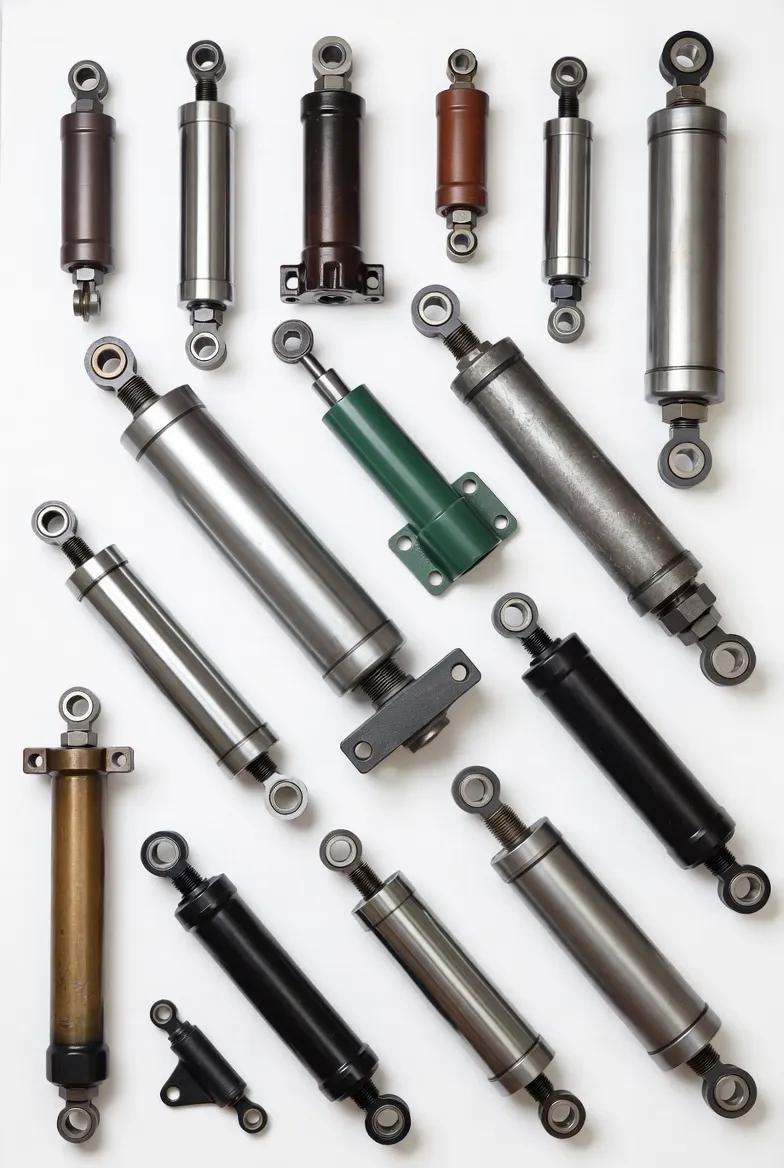
The Definitive Diagnostic Protocol: Distinguishing the Fault
To correctly silence a noisy hydraulic cylinder and prevent further mechanical destruction, engineers must execute a rigorous diagnostic triage to definitively isolate whether the system is suffering from aeration or cavitation.
- ✔️
Acoustic Isolation: First, listen to the specific frequency of the noise. If the machine sounds like it is violently knocking or hammering, and the cylinder movements are distinctly spongy and jerky, you are dealing with Aeration. If the pump sounds like it is grinding metal marbles, accompanied by a high-pitched, agonizing whine that increases with engine RPM, you are dealing with Cavitation.
- ✔️
The Visual Fluid Inspection: Turn the machine off and immediately open the main hydraulic reservoir cap. Inspect the condition of the hydraulic oil. If the fluid looks milky, cloudy, or has a thick layer of foam resting on the surface, you have confirmed severe Aeration. The milkiness is caused by millions of microscopic air bubbles suspended in the oil. If the fluid looks perfectly clear and normal, but the machine is still whining, the problem is highly likely Cavitation caused by a physical restriction.
- ✔️
Tracing the Suction Pathway: For aeration, physically inspect every single connection point on the suction hose between the reservoir and the pump inlet. Look for loose hose clamps, cracked rubber lines, or degraded O-rings. Remember, the suction line is under a vacuum, so it will not leak oil outwards; it will suck air inwards. For cavitation, immediately check the suction strainer/filter located inside the reservoir. A heavily clogged filter physically chokes the pump, dropping the pressure below the vapor limit and triggering the violent implosion cycle.
- ✔️
Thermodynamic Viscosity Checks: Ensure the hydraulic fluid viscosity matches the ambient operating temperature. Running summer-weight heavy oil in freezing winter conditions guarantees that the oil will be too thick to flow into the pump inlet, instantly causing severe cavitation. Always perform proper warm-up cycles for heavy equipment like Excavator Hydraulic Cylinders before demanding full RPM operation.


Conclusion: Restoring Absolute Hydrostatic Integrity
A hydraulic cylinder making noise is never a self-correcting problem; it is a critical thermodynamic warning that the machine is actively destroying itself. Whether the system has been invaded by atmospheric air causing spongy, elastic aeration, or it is starved for fluid resulting in the violent, metal-eroding vacuum implosions of cavitation, the result is the same: catastrophic loss of power, severe internal mechanical damage, and dangerous operational instability. By mastering the acoustic signatures, understanding the catastrophic threat of micro-dieseling, and executing rigorous diagnostic protocols to isolate suction line leaks and clogged filters, maintenance professionals can arrest these destructive forces before they require total machine remanufacturing. Do not allow your heavy machinery to operate under these crippling fluid conditions. If your fleet is suffering from chronic noise, severe seal degradation, or requires world-class replacement actuators engineered to withstand the harshest industrial demands, our elite technical engineering team stands ready to deliver the ultimate fluid power solution.