
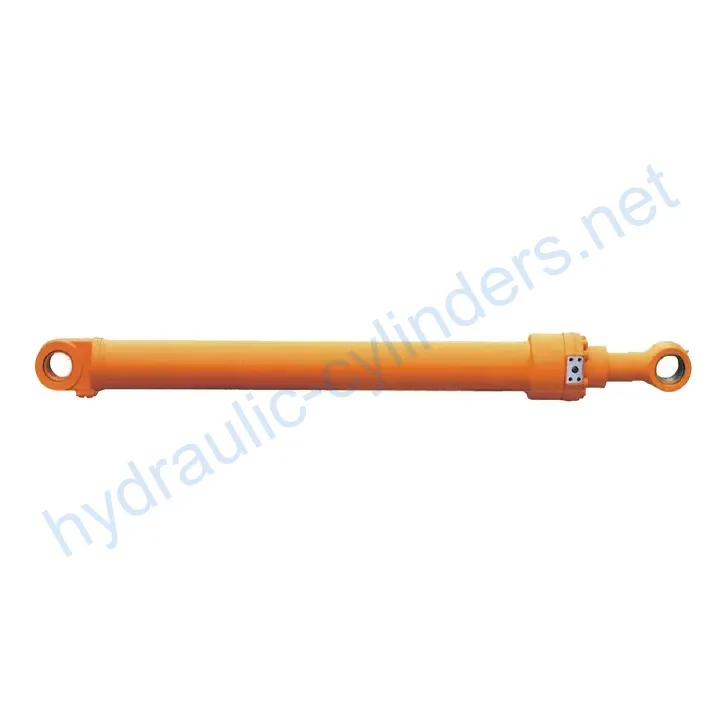
Arm Cylinder For Liebherr Large Excavator R974CL
Als einer der Hersteller, Lieferanten und Exporteure von mechanischen Produkten, bieten wir Hydraulikzylinder und viele andere Produkte an.
Bitte setzen Sie sich mit uns in Verbindung, um Einzelheiten zu erfahren.
Post:sales@hydraulic-cylinders.net
Hersteller, Lieferant und Exporteur von Hydraulikzylindern.
Arm Cylinder For Liebherr Large Excavator R974CL
Einführung
The arm cylinder is a specially designed hydraulic cylinder that is primarily used to provide linear motion and power to the arm of various types of machinery such as excavators, cranes, and mechanical arms. The arm cylinder plays a critical role in hydraulic systems, allowing attachments or accessories to be moved and controlled effectively. These cylinders not only provide smooth motion but can also withstand heavy loads, thereby ensuring efficient operation and reliability of the machinery under various operating conditions.
Merkmale
-
Effiziente Energieübertragung
Der Armzylinder sorgt für eine kraftvolle lineare Bewegung und Kraft und gewährleistet so eine hocheffiziente Leistung des mechanischen Arms bei verschiedenen Vorgängen.
-
Präzise Steuerung
Durch das Hydrauliksystem kann der Armzylinder eine präzise Bewegungssteuerung erreichen, wodurch der Betrieb zusätzlicher Werkzeuge flexibler und genauer wird.
-
Haltbarkeit
Arm cylinders are usually made of high-strength materials with good wear and corrosion resistance, making them suitable for long-term use in harsh environments.
-
Multifunktionale Anpassungsfähigkeit
These cylinders can be widely used in various mechanical equipment such as excavators, cranes, and mechanical arms, adapting to different working needs.
-
Einfache Wartung
Bei der Konstruktion wurde auf einfache Wartung und Austausch geachtet, was regelmäßige Inspektionen und Wartungsarbeiten bequemer macht und Ausfallzeiten der Geräte reduziert.

Anwendungen
The arm cylinder is widely used in various industries such as construction, manufacturing, agriculture, mining, logistics, and transportation.
-
Bauingenieurwesen
Bei Baggern und Kränen werden Armzylinder verwendet, um die Bewegung von Schaufeln oder Auslegern für Erdarbeiten, Materialtransport und die Montage von Bauwerken zu steuern.
-
Fertigungsindustrie
In automated production lines, arm cylinders are used for mechanical arm motion for assembly, welding, and handling processes, improving production efficiency and accuracy.
-
Landmaschinen
Bei landwirtschaftlichen Maschinen wie Mähdreschern und Sämaschinen steuern Armzylinder die Bewegung des Arbeitsarms und führen Aufgaben wie Säen, Düngen und Ernten aus.
-
Bergbau
Bei Bergbaumaschinen werden Armzylinder verwendet, um die Armbewegung der Bergbaumaschinen für den Erzabbau und die Erzförderung zu steuern.
-
Logistik und Transport
In forklifts and handling robots, arm cylinders are used to control the lifting and movement of cargo, realizing material handling and stacking.
Designüberlegungen und Auswahlkriterien
Bei der Konstruktion und Auswahl von Armzylindern sollten folgende Faktoren berücksichtigt werden:
-
Tragfähigkeit
The cylinder should be able to withstand the maximum load that is likely to be imposed upon it during service.
-
Dichtungsleistung
The cylinder should be provided with effective seals to prevent leakage of the hydraulic fluid.
-
Haltbarkeit
The cylinder should be made of materials that are resistant to wear and corrosion.
-
Sicherheit
The design should ensure the safety of the operator and bystanders during operation.
-
Wartbarkeit
The design should consider ease of maintenance, inspection, and repair, reducing equipment downtime.

Abdichtung und Schmierung
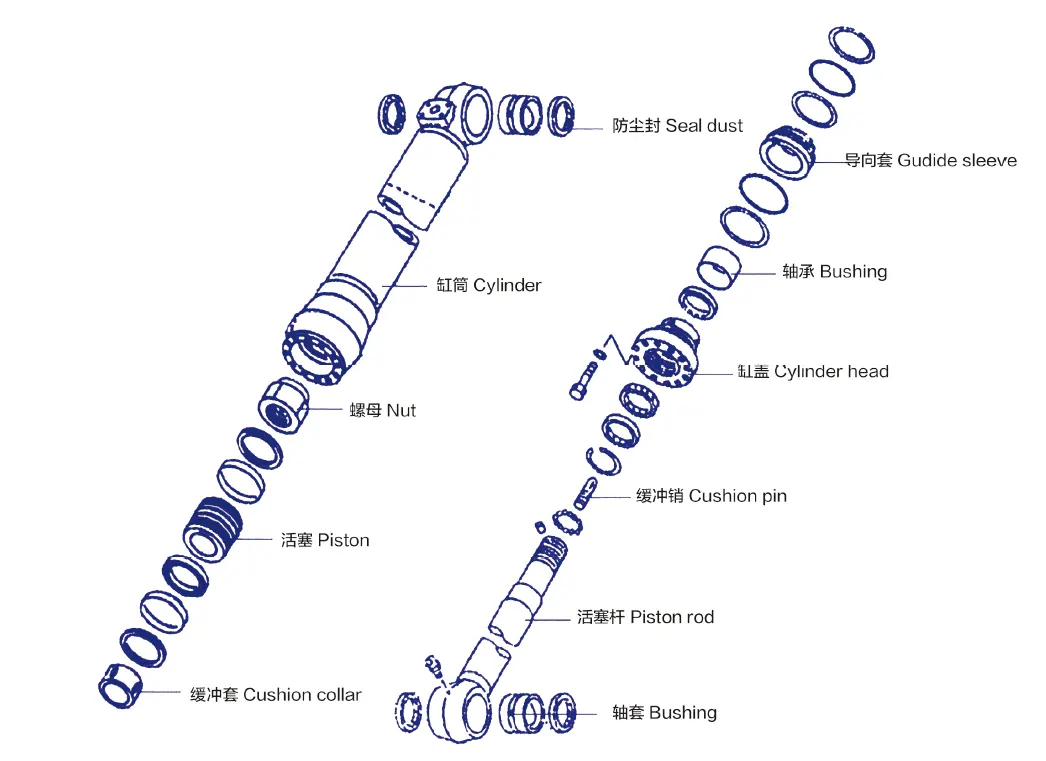
The arm cylinder uses various sealing components such as piston seals, rod seals, and wipers made of wear-resistant materials such as polyurethane and nitrile rubber. The cylinder body and threaded end surface are finely processed to improve wear resistance. The cylinder requires regular lubrication with the appropriate amount of hydraulic oil to ensure smooth operation and seal performance.
Wartung und Reparatur
Regular inspection and preventive maintenance are necessary to ensure the correct operation and longevity of the cylinder. The following measures should be taken:
-
Inspect the Seals
The sealing elements of the cylinder should be regularly inspected for wear, damage, and leakage.
-
Check the Mounting Bolts
The mounting bolts of the cylinder should be checked regularly for tightness.
-
Replace the Hydraulic Oil
The hydraulic oil should be replaced regularly to prevent contamination and ensure proper lubrication.
-
Repair or Replace Damaged Parts
If any part of the cylinder is damaged, it should be repaired or replaced in a timely manner.

Installationshinweise
The following guidelines should be followed when installing the arm cylinder:
-
Inspect the Cylinder
Inspect the cylinder for any signs of damage or wear before installation.
-
Clean the Installation Surface
Clean the mounting surface to ensure that it is free of debris.
-
Align the Cylinder
Align the cylinder with the mounting surface and tighten the mounting bolts to the recommended torque.
-
Connect the Hydraulic Hoses
Connect the hydraulic hoses to the cylinder and the hydraulic system.
-
Test the Cylinder
Test the cylinder to ensure that it is operating correctly and there are no leaks.
Sicherheitsaspekte und Umweltfaktoren
When using the arm cylinder, it is important to follow the recommended safety procedures to avoid injury to the operator or bystanders. The proper disposal of hydraulic fluid and cylinder components should be considered to minimize the impact on the environment.
Fehlerbehebung und häufige Probleme
The following are common issues that may arise when using the arm cylinder:
-
Leckage
The cylinder may develop leaks due to wear or damage to the seals or other components.
-
Strommangel
The cylinder may not provide sufficient power due to hydraulic system issues or damage to the cylinder.
-
Lärmbetrieb
The cylinder may produce excessive noise due to problems with the hydraulic system or internal components.
The following measures can be taken to address these issues:
-
Replace the Seals
If the cylinder is leaking, the seals should be replaced.
-
Check the Hydraulic System
If the cylinder lacks power, the hydraulic system should be inspected for problems.
-
Replace Damaged Components
If the cylinder produces excessive noise, damaged internal components should be replaced.

Über uns
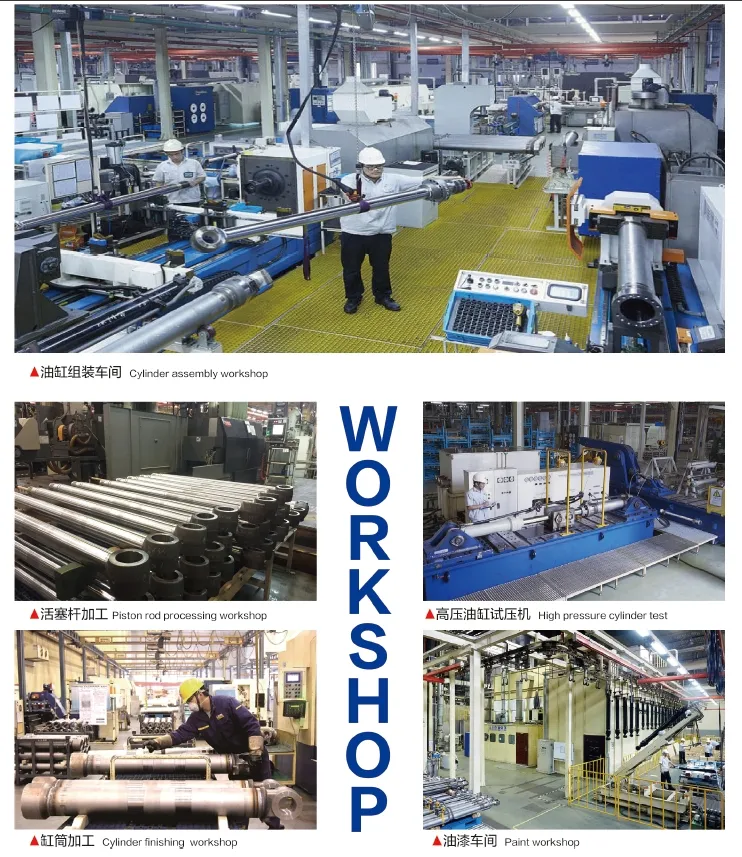
We are a professional manufacturer of replacement hydraulic cylinders, with a wide range of product types, and have become one of the leading hydraulic cylinder manufacturers and wholesale distributors in the domestic and international markets. We always uphold the principle of excellent quality, relying on the industrial production management strategy of fine manufacturing workshops to continuously improve our technical level and production efficiency. By introducing high-end digital manufacturing equipment and professional testing systems, we continue to optimize the manufacturing platform, improve the product quality control process, and have strong innovation capabilities. Our goal is to meet the diverse needs of customers with high efficiency, accuracy, and high-quality principles.
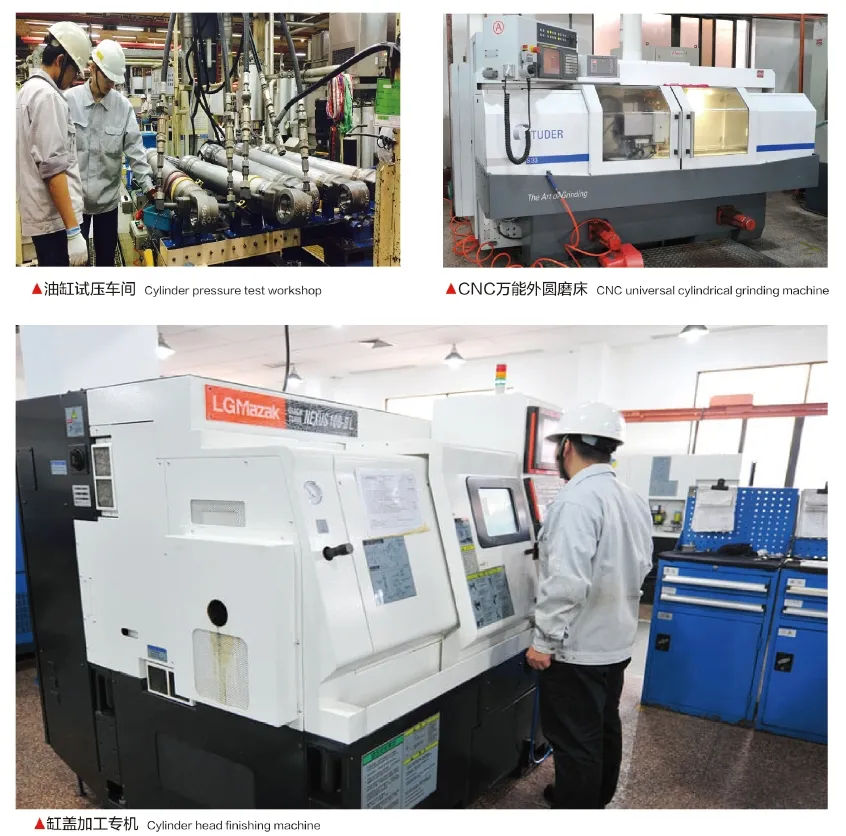
Our company specializes in providing customized services, producing hydraulic cylinders that can perfectly replace these cylinders. We have passed international certifications such as ISO9001, CE, and TUV, and our products are exported to more than 50 countries and regions worldwide. We provide professional and efficient pre-sales, in-sales, and after-sales services, and have won the trust and support of our customers with our excellent quality and perfect service.
Autor: lyl.
Hydraulischer Zylinder Anwendung:

 DE
DE  EN
EN  PT
PT  ES
ES  FR
FR  IT
IT  AR
AR  ZH
ZH  RU
RU  KO
KO  KA
KA  BG
BG  CS
CS  DA
DA  EL
EL  ET
ET  FI
FI  HU
HU  ID
ID  LT
LT  LV
LV  NB
NB  NL
NL  PL
PL  RO
RO  SK
SK  SL
SL  SV
SV  TR
TR  UK
UK