

Arm CylinderFor Komatsu Large Excavator PC300-3-5-6-7-8
Als einer der Hersteller, Lieferanten und Exporteure von mechanischen Produkten, bieten wir Hydraulikzylinder und viele andere Produkte an.
Bitte setzen Sie sich mit uns in Verbindung, um Einzelheiten zu erfahren.
Post:sales@hydraulic-cylinders.net
Hersteller, Lieferant und Exporteur von Hydraulikzylindern.
Einführung
The Arm Cylinder for Komatsu Large Excavator PC300-3-5-6-7-8 is a hydraulic cylinder designed specifically to provide linear motion and power for the arm of various types of machinery, such as excavators, cranes, and mechanical arms. The arm cylinder plays a crucial role in hydraulic systems, enabling the efficient movement and control of attachments or accessories. These cylinders not only ensure smooth motion, but also have the ability to withstand heavy loads, ensuring high efficiency and reliability of the machinery under various working conditions.
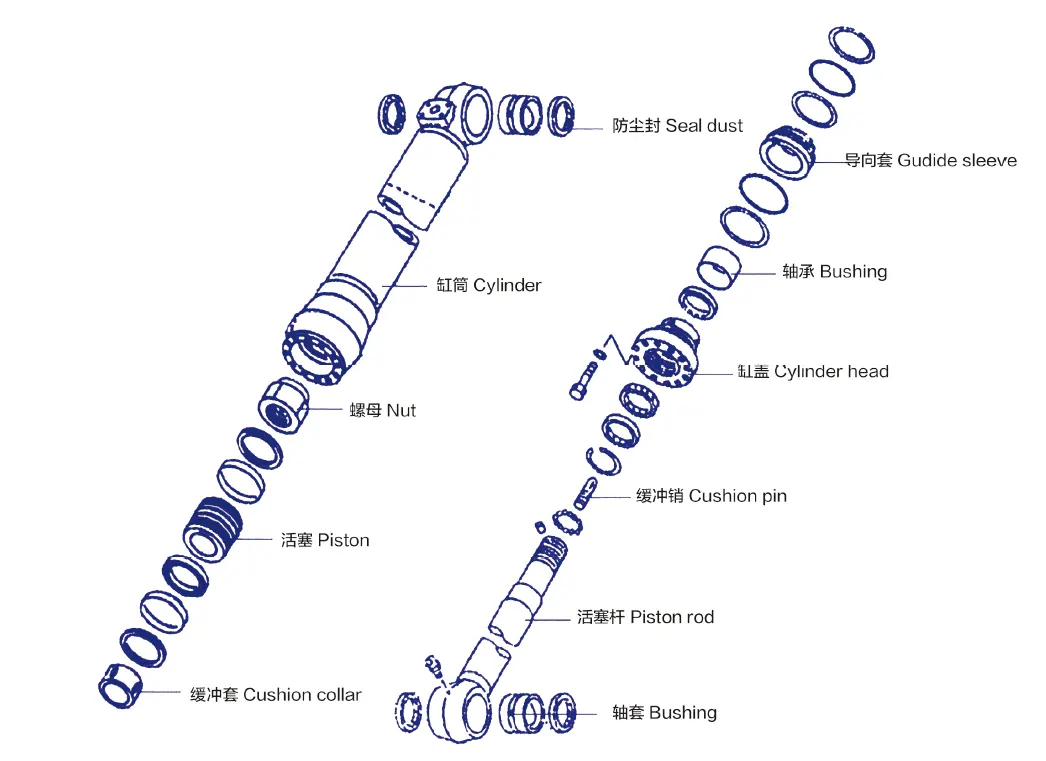
Merkmale
-
Hocheffiziente Übertragung
The arm cylinder provides powerful linear motion and force, ensuring the high efficiency performance of the mechanical arm in various operations.
-
Präzise Steuerung
Durch das Hydrauliksystem ermöglicht der Armzylinder eine präzise Bewegungssteuerung, wodurch der Betrieb von Anbaugeräten flexibler und genauer wird.
-
Haltbarkeit
The arm cylinder is typically manufactured using high-strength materials, providing excellent wear resistance and corrosion resistance, making it suitable for long-term use in harsh environments.
-
Multifunktionale Anpassungsfähigkeit
These cylinders can be widely applied to various types of machinery, such as excavators, cranes, and mechanical arms, to meet different working requirements.
-
Einfache Wartung
Designed with maintenance and replacement in mind, the arm cylinders make regular inspection and maintenance more convenient, reducing equipment downtime.

Anwendungen
Der Armzylinder findet in verschiedenen Branchen Anwendung:
-
Bauingenieurwesen
Bei Baggern und Kränen steuert der Armzylinder die Bewegung von Schaufeln oder Auslegern für Erdarbeiten, Materialtransport und die Montage von Bauwerken.
-
Herstellung
In automated production lines, the arm cylinder is used for the motion of mechanical arms in processes like assembly, welding, and material handling, improving production efficiency and precision.
-
Landmaschinen
Bei landwirtschaftlichen Maschinen wie Mähdreschern und Sämaschinen steuert der Armzylinder die Bewegung der Arbeitsarme für Aufgaben wie Säen, Düngen und Ernten.
-
Bergbau
In mining equipment, the arm cylinder controls the movement of the arm for mining and material handling.
-
Logistik und Transport
Bei Gabelstaplern und Handhabungsrobotern steuert der Armzylinder das Anheben und Bewegen der Gabeln und ermöglicht so die Handhabung und Stapelung von Materialien.
Designüberlegungen und Auswahlstandards
When it comes to the design and selection of the arm cylinder, several factors need to be considered:
-
Tragfähigkeit
Der Armzylinder sollte so konstruiert sein, dass er der erforderlichen Tragfähigkeit standhält, um einen sicheren und effizienten Betrieb zu gewährleisten.
-
Versiegelung
Various sealing components, such as piston seals and rod seals, should be used to maintain proper sealing. These seals are made of durable materials like polyurethane and nitrile rubber to withstand wear and tear.
-
Haltbarkeit
The arm cylinder should be constructed with high-quality materials and undergo precise surface treatments to enhance durability and resistance to wear.
-
Sicherheit
The design should incorporate safety features to prevent accidents and ensure the safe operation of the machinery.
-
Wartbarkeit
The arm cylinder should be designed for easy maintenance and replacement, reducing downtime and increasing productivity.

Abdichtung und Schmierung
The arm cylinder employs various sealing components, such as piston seals and rod seals, which are made of wear-resistant materials like polyurethane and nitrile rubber. The cylinder body and threaded end surfaces are finely treated to improve wear resistance. Regular lubrication with the appropriate amount of hydraulic oil is required to ensure smooth operation.

Regelmäßige Inspektion und vorbeugende Wartung
- Regularly inspect the arm cylinder for any signs of wear or damage.
- Prüfen Sie die Dichtungskomponenten und tauschen Sie diese gegebenenfalls aus.
- Ensure proper lubrication and refill with hydraulic oil when needed.
- Inspect and maintain other components connected to the arm cylinder.
- Halten Sie sich an den vom Hersteller empfohlenen Wartungsplan.
Produktinstallationsrichtlinien
Befolgen Sie diese Schritte für die ordnungsgemäße Installation des Armzylinders:
- Bereiten Sie die erforderlichen Werkzeuge und Geräte vor.
- Carefully remove the existing cylinder, if applicable.
- Install the new arm cylinder in the correct position, aligning the mounting points.
- Tighten the bolts securely to ensure a stable connection.
- Prüfen Sie nach der Installation auf Undichtigkeiten oder ungewöhnliche Bewegungen.

Sicherheitsaspekte und Umweltfaktoren
When using the arm cylinder, it is important to follow safety measures to prevent accidents and ensure the well-being of operators and others. Proper safety equipment and training should be provided. Additionally, environmental factors, such as temperature and humidity, should be considered to ensure optimal performance of the arm cylinder.
Fehlerbehebung und häufige Probleme
Common issues that may arise with the arm cylinder:
- Austretende Hydraulikflüssigkeit
- Ungewöhnliche Geräusche während des Betriebs
- langsame oder reaktionslose Bewegung
- Ungleichmäßiger Druck
- Uneven wear on sealing components
To troubleshoot these issues, follow these tips:
- Inspect the cylinder for any visible leaks and repair or replace the damaged seals.
- Prüfen Sie den Hydraulikflüssigkeitsstand und füllen Sie gegebenenfalls nach.
- Inspect the hydraulic lines, fittings, and valves for any damage or blockage.
- Check the pressure settings and adjust if needed.
- Regularly clean and lubricate the
Hydraulischer Zylinder Anwendung:

 DE
DE  EN
EN  PT
PT  ES
ES  FR
FR  IT
IT  AR
AR  ZH
ZH  RU
RU  KO
KO  KA
KA  BG
BG  CS
CS  DA
DA  EL
EL  ET
ET  FI
FI  HU
HU  ID
ID  LT
LT  LV
LV  NB
NB  NL
NL  PL
PL  RO
RO  SK
SK  SL
SL  SV
SV  TR
TR  UK
UK