
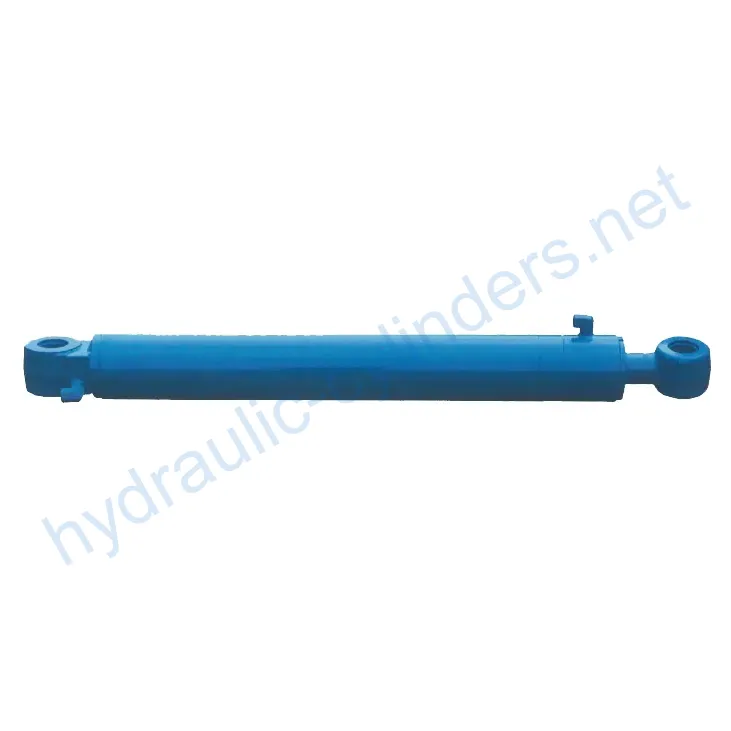
Cilindro de brazo para excavadora pequeña Doosan DH130-5-7
Como cilindros hidráulicos uno de los fabricantes, los surtidores y los exportadores de productos mecánicos, ofrecemos cilindros hidráulicos y muchos otros productos.
Póngase en contacto con nosotros para más información.
Correo:sales@hydraulic-cylinders.net
Fabricante proveedor exportador de cilindros hidráulicos.
Cilindro de brazo para excavadora pequeña Doosan DH130-5-7
Introducción
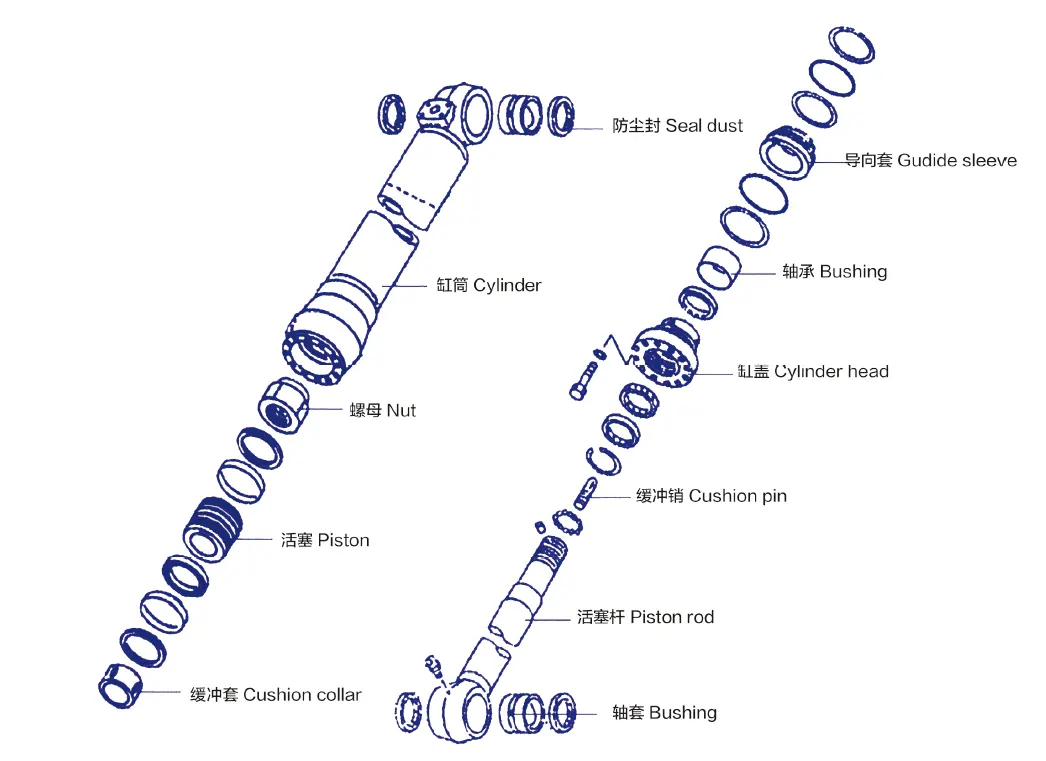
The Arm Cylinder is a specially designed hydraulic cylinder that provides linear motion and power to the arm of various machinery such as excavators, cranes, and mechanical arms. It plays a critical role in hydraulic systems, allowing for efficient movement and control of attachments or accessories. These cylinders not only ensure smooth motion, but also withstand heavy loads, ensuring efficient operation and reliability of the machinery under various working conditions.
Características
-
Transmisión de alta eficiencia
El cilindro del brazo proporciona un potente movimiento lineal y fuerza, lo que garantiza un alto rendimiento del brazo mecánico en diversas operaciones.
-
Control de precisión
Mediante el sistema hidráulico, el cilindro del brazo permite un control preciso del movimiento, lo que hace que el funcionamiento de las herramientas acopladas sea más flexible y preciso.
-
Durabilidad
The Arm Cylinder is typically made of high-strength materials, offering good wear resistance and corrosion resistance, making it suitable for long-term use in harsh environments.
-
Adaptabilidad versátil
These cylinders can be widely used in various machinery such as excavators, cranes, and mechanical arms, adapting to different working requirements.
-
Fácil mantenimiento
The design takes into consideration ease of maintenance and replacement, making regular inspection and upkeep more convenient and reducing equipment downtime.

Aplicaciones
-
Ingeniería de la construcción
En excavadoras y grúas, el cilindro del brazo se utiliza para controlar el movimiento de cucharones o plumas para movimiento de tierras, manipulación de materiales e instalación estructural.
-
Industria manufacturera
In automated production lines, the Arm Cylinder is used for the motion of mechanical arms in processes such as assembly, welding, and handling, improving production efficiency and accuracy.
-
Maquinaria agrícola
In agricultural equipment such as harvesters and seeders, the Arm Cylinder controls the movement of operating arms for tasks such as seeding, fertilizing, and harvesting.
-
Minería
In mining equipment, the Arm Cylinder is used to control the movement of mining equipment arms for ore extraction and transportation.
-
Logística y Transporte
En carretillas elevadoras y robots de manipulación, el cilindro del brazo se utiliza para controlar la elevación y el movimiento de las horquillas, lo que permite la manipulación y el apilado de materiales.
Consideraciones de diseño y criterios de selección
-
Capacidad de carga
The Arm Cylinder should be designed to withstand the intended load requirements to ensure safe and efficient operation.
-
Caza de focas
Various sealing components such as piston seals and rod seals are used, typically made of wear-resistant materials such as polyurethane or nitrile rubber. The cylinder body and threaded end surfaces are finely treated to improve wear resistance. Regular lubrication with hydraulic oil is necessary for proper lubrication.
-
Durabilidad
Considerations should be given to the material selection and manufacturing processes to ensure the Arm Cylinder’s durability in challenging operating conditions.
-
Seguridad
Proper safety measures and features should be incorporated into the design to prevent accidents and ensure operator protection during operation.
-
Mantenibilidad
The design should facilitate easy maintenance and repair, allowing for quick inspections, replacements, and minimizing equipment downtime.

Inspección regular y mantenimiento preventivo
- Regularly inspect the Arm Cylinder for any signs of damage, leaks, or abnormal wear.
- Maintain proper lubrication by regularly adding the appropriate amount of hydraulic oil.
- Verifique y ajuste cualquier conexión o sujetador suelto.
- Replace worn-out seals or components promptly to prevent further damage.
- Follow the manufacturer’s guidelines for recommended maintenance intervals and procedures.
Guía de instalación del producto
Here are the steps for correctly installing the Arm Cylinder:
- Ensure the equipment is properly supported and stabilized.
- Carefully align the Arm Cylinder with the designated mounting points.
- Securely attach the cylinder using appropriate bolts or fasteners.
- Connect the hydraulic hoses or pipes according to the system specifications.
- Perform a thorough inspection of the installation to ensure proper alignment and connections.

Consideraciones de seguridad y factores ambientales
When using the Arm Cylinder, it is essential to prioritize safety measures to prevent accidents and ensure the well-being of operators and surrounding personnel. Adequate training on equipment operation and safety protocols is crucial. Additionally, considering environmental factors such as noise reduction, energy efficiency, and waste management can contribute to sustainable and responsible use of the Arm Cylinder.
Solución de problemas y problemas comunes
Here are some common issues that may arise with the Arm Cylinder:
- Fuga de fluido hidráulico
- Ruidos anormales durante el funcionamiento
- Insufficient or unresponsive movement
- Vibración excesiva
- movimiento irregular o a trompicones
Para abordar estos problemas, considere las siguientes soluciones y procedimientos de resolución de problemas:
- Inspect and tighten any loose connections or fittings.
- Replace damaged or worn-out seals or components.
- Check the hydraulic fluid level and refill if necessary.
- Ensure proper alignment and mounting of the cylinder.
- Consult the manufacturer’s guidelines or seek professional assistance if the issue persists.

Recuerda organizar el artículo de forma lógica, usar subtítulos para facilitar la navegación, incorporar imágenes o gráficos relevantes para mejorar la comprensión y asegurarte de que el contenido sea claro, conciso y adecuado para lectores con diferentes niveles de conocimiento técnico.
Autor: lyl
Sobre nosotros
We are a professional manufacturer of replacement hydraulic cylinders, offering a wide range of products. We have become one of the leading manufacturers and wholesale distributors of hydraulic cylinders in domestic and international markets. We always uphold the principle of excellent quality and rely on industrialized production management strategies in our sophisticated manufacturing workshops to continuously improve our technical expertise and production efficiency. By introducing high-end digital manufacturing equipment and professional testing systems, we optimize our manufacturing platform and enhance our product quality control processes, demonstrating
Cilindro hidráulico Aplicación:

 ES
ES  EN
EN  PT
PT  DE
DE  FR
FR  IT
IT  AR
AR  ZH
ZH  RU
RU  KO
KO  KA
KA  BG
BG  CS
CS  DA
DA  EL
EL  ET
ET  FI
FI  HU
HU  ID
ID  LT
LT  LV
LV  NB
NB  NL
NL  PL
PL  RO
RO  SK
SK  SL
SL  SV
SV  TR
TR  UK
UK