
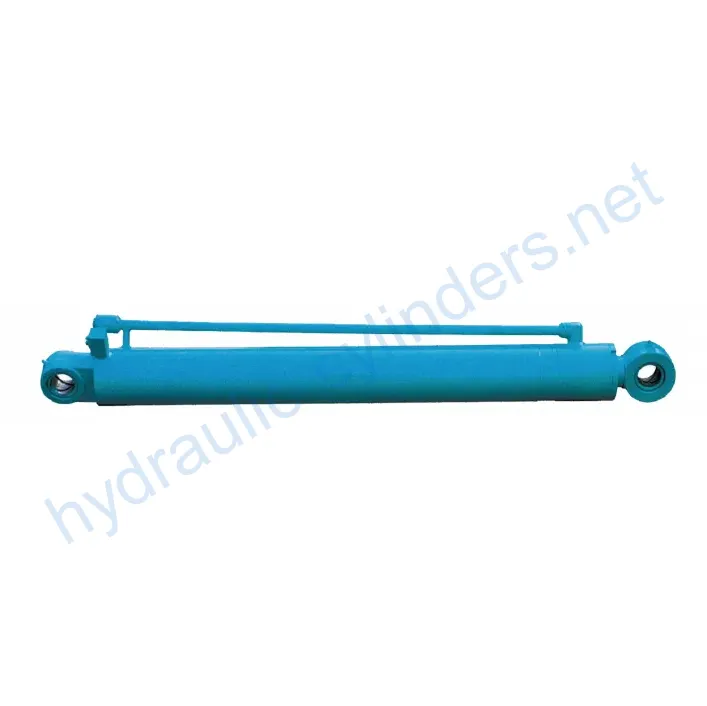
Arm CylinderFor Hyundai Large Excavator R450LC-5
Como cilindros hidráulicos uno de los fabricantes, los surtidores y los exportadores de productos mecánicos, ofrecemos cilindros hidráulicos y muchos otros productos.
Póngase en contacto con nosotros para más información.
Correo:sales@hydraulic-cylinders.net
Fabricante proveedor exportador de cilindros hidráulicos.
Arm CylinderFor Hyundai Large Excavator R450LC-5
Introducción
The arm cylinder is a specially designed hydraulic cylinder that is primarily used to provide linear motion and power to the arm of various machinery, such as excavators, cranes, and robotic arms. The arm cylinder plays a crucial role in hydraulic systems, allowing for efficient movement and control of additional tools or attachments. These cylinders not only enable smooth and precise motion but also have the ability to withstand heavy loads, ensuring high efficiency and reliability of the machinery in various operating conditions.
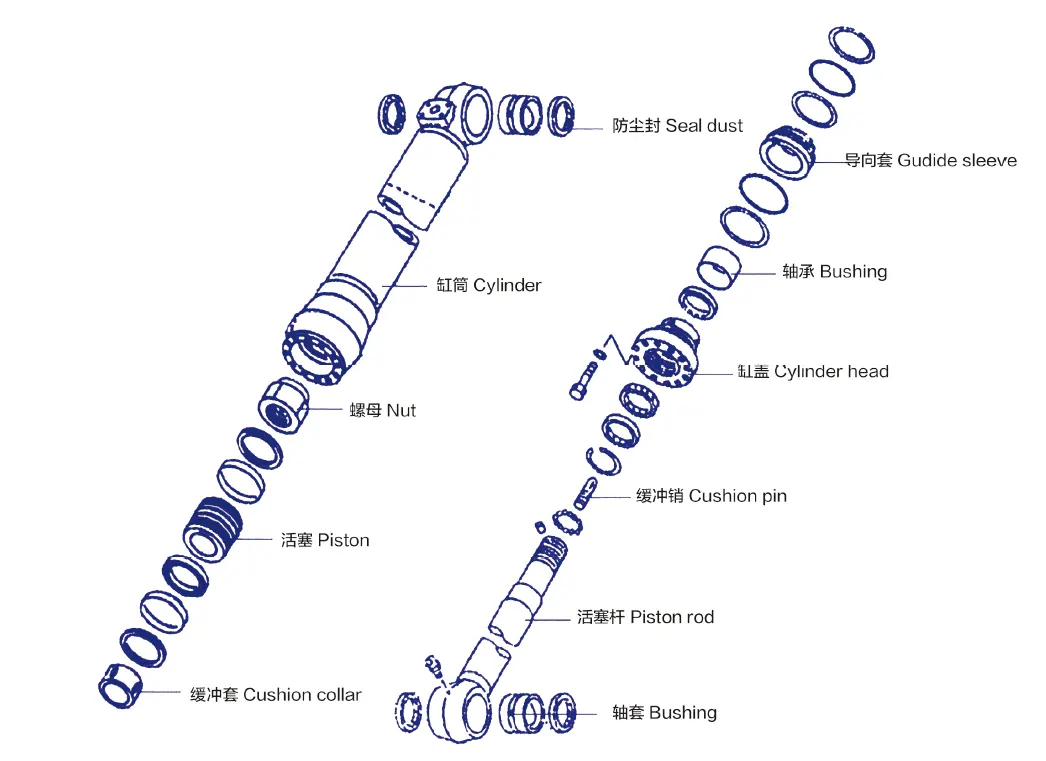
Características
- Transmisión de alta eficiencia: El cilindro del brazo proporciona un potente movimiento y fuerza lineal, lo que garantiza un rendimiento eficiente del brazo mecánico en diversas operaciones.
- Control de precisión: A través del sistema hidráulico, el cilindro del brazo puede lograr un control de movimiento preciso, haciendo que la operación de las herramientas adjuntas sea más flexible y precisa.
- Durabilidad: Los cilindros de los brazos suelen estar fabricados con materiales de alta resistencia, que ofrecen una excelente resistencia al desgaste y a la corrosión, lo que los hace adecuados para su uso a largo plazo en entornos hostiles.
- Adaptabilidad multifuncional: Estos cilindros se pueden aplicar ampliamente a diversas maquinarias, como excavadoras, grúas y brazos robóticos, adaptándose a diferentes requisitos de trabajo.
- Fácil mantenimiento: El diseño del cilindro del brazo tiene en cuenta la facilidad de mantenimiento y reemplazo, lo que hace que las inspecciones y el mantenimiento regulares sean más convenientes y reducen el tiempo de inactividad del equipo.

Aplicaciones
El cilindro del brazo encuentra aplicaciones en diversas industrias:
1. Ingeniería de la Construcción
In excavators and cranes, the arm cylinder is used to control the movement of buckets or booms for earthworks, material handling, and structural installations.
2. Industria manufacturera
In automated production lines, the arm cylinder is used for the motion of robotic arms, enabling processes such as assembly, welding, and material handling, thereby improving production efficiency and accuracy.
3. Maquinaria agrícola
En maquinaria agrícola, como cosechadoras y sembradoras, el cilindro del brazo controla el movimiento de los brazos operativos, realizando tareas como sembrar, fertilizar y cosechar.
4. Minería
In mining equipment, the arm cylinder is used to control the arm movement of mining equipment, facilitating the extraction and transportation of ores.
5. Logística y transporte
In forklifts and handling robots, the arm cylinder is used to control the lifting and movement of forks, enabling the handling and stacking of materials.

Consideraciones de diseño y criterios de selección
- Capacidad de carga: El cilindro del brazo debe estar diseñado para soportar las cargas y fuerzas esperadas para garantizar un funcionamiento seguro y eficiente.
- Caza de focas: Various sealing components, such as piston seals and rod seals, should be used, preferably made of wear-resistant materials like polyurethane and nitrile rubber. The cylinder body and threaded ends should undergo precise treatment to improve wear resistance.
- Durabilidad: The arm cylinder should be built to withstand the rigors of the operating environment and maintain its performance over an extended period.
- Seguridad: Safety considerations should be incorporated into the design, such as providing safety valves or devices to prevent overloading or sudden failures.
- Mantenibilidad: The design should facilitate easy maintenance and replacement of components, minimizing downtime and ensuring smooth operation.

Sellado y lubricación
The arm cylinder utilizes various sealing components, such as piston seals and rod seals, which should be made of wear-resistant materials like polyurethane and nitrile rubber. The cylinder body and threaded ends undergo precise treatment to improve wear resistance. Regular lubrication with the appropriate amount of hydraulic oil is necessary to ensure smooth operation.
Inspección regular y mantenimiento preventivo
Para garantizar un rendimiento óptimo y una larga vida útil, se deben tomar las siguientes medidas:
- Inspeccione periódicamente el cilindro del brazo para detectar cualquier signo de desgaste, fugas o daños.
- Check the hydraulic oil level and quality regularly, and refill or replace as necessary.
- Apriete cualquier conexión o accesorio suelto.
- Ensure that the arm cylinder is properly aligned and mounted.
- Follow the manufacturer’s guidelines for preventive maintenance procedures.
Guía de instalación del producto
Proper installation of the arm cylinder is essential for its performance and safety. Follow these steps:
- Prepare la superficie de montaje y asegúrese de que esté limpia y libre de residuos.
- Align the arm cylinder with the mounting holes and secure it in place using appropriate bolts or fasteners.
- Make sure all connections, such as hydraulic hoses and fittings, are properly installed and tightened.
- Check for any leaks or abnormal noises during the initial operation.
- Refer to the equipment’s manual for any specific instructions or requirements.

Consideraciones de seguridad y factores ambientales
When using arm cylinders, adhering to safety measures is of utmost importance. It is crucial to follow proper operating procedures, use appropriate safety devices, and provide adequate training to operators. Additionally, considering environmental factors, such as avoiding contamination of hydraulic oil and adhering to proper waste disposal regulations, is essential for maintaining a safe and eco-friendly working environment.
Solución de problemas y problemas comunes
Here are some potential troubleshooting tips and solutions for common problems related to arm cylinders:
- If the arm cylinder is not moving or lacks power, check the hydraulic oil level, pressure, and flow rate. Inspect for any leaks or blockages in the hydraulic system.
- If there are excessive vibrations or abnormal noises, inspect the mounting and alignment of the arm cylinder. Check for damaged or worn-out components.
- If there is oil leakage, examine the seals and connections for any damage or improper installation. Replace any faulty components and ensure proper tightening.
- If the arm cylinder shows signs of wear or corrosion, consider replacing the affected parts or the entire cylinder as necessary.
Recuerde organizar el artículo de forma lógica, utilizar subtítulos para facilitar la navegación, incorporar imágenes o gráficos relevantes para mejorar la comprensión y asegurarse de que el contenido sea claro, conciso y adecuado para lectores con distintos niveles de conocimientos técnicos.
Acerca de nuestra empresa
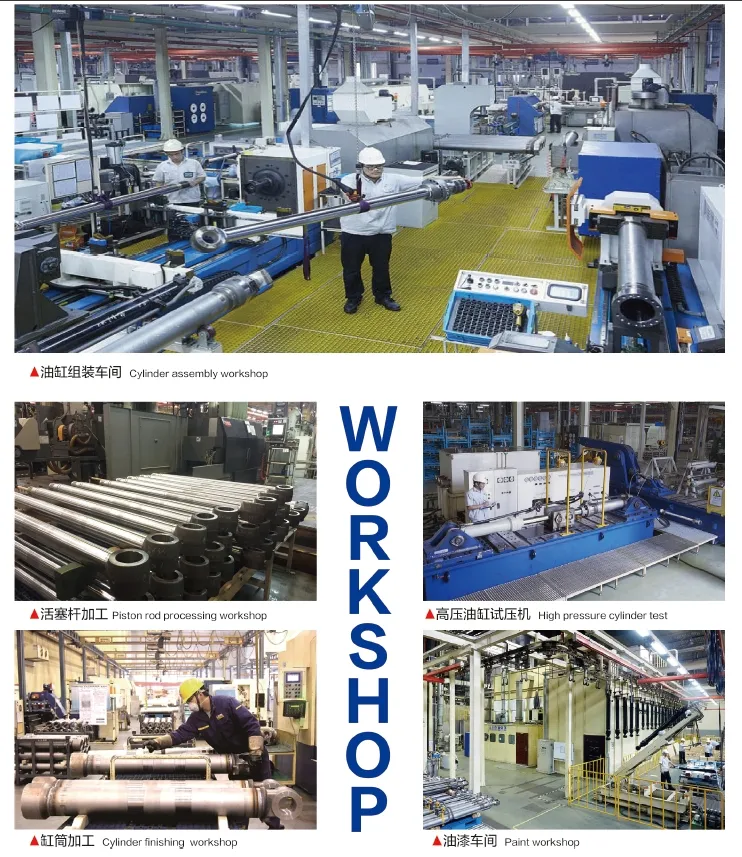
We are a professional manufacturer of replacement hydraulic cylinders, offering a wide range of products. We have become one of the leading manufacturers and wholesale distributors of hydraulic cylinders in domestic and international markets. We always uphold the principle of excellence in quality and continuously improve our technical expertise and production efficiency. By introducing advanced digital manufacturing equipment and professional testing systems, we optimize our manufacturing platform and enhance our product quality control process, demonstrating strong innovation capabilities. Our goal is to meet customer’s diversified needs with principles of high efficiency, accuracy, and high quality.
Cilindro hidráulico Aplicación:

 ES
ES  EN
EN  PT
PT  DE
DE  FR
FR  IT
IT  AR
AR  ZH
ZH  RU
RU  KO
KO  KA
KA  BG
BG  CS
CS  DA
DA  EL
EL  ET
ET  FI
FI  HU
HU  ID
ID  LT
LT  LV
LV  NB
NB  NL
NL  PL
PL  RO
RO  SK
SK  SL
SL  SV
SV  TR
TR  UK
UK