
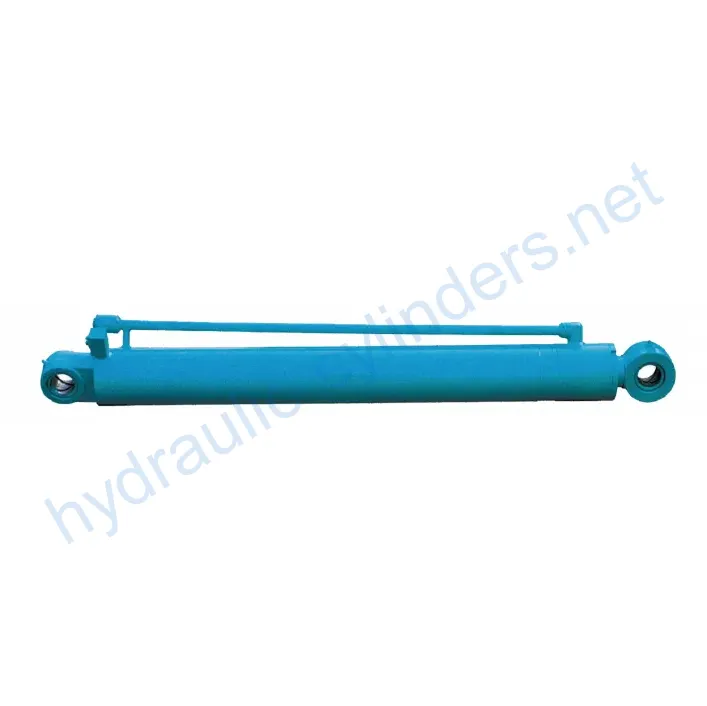
Arm CylinderFor Sany Middle Excavator SY215Q
Como cilindros hidráulicos uno de los fabricantes, los surtidores y los exportadores de productos mecánicos, ofrecemos cilindros hidráulicos y muchos otros productos.
Póngase en contacto con nosotros para más información.
Correo:sales@hydraulic-cylinders.net
Fabricante proveedor exportador de cilindros hidráulicos.
Arm Cylinder For Sany Middle Excavator SY215Q
Introducción
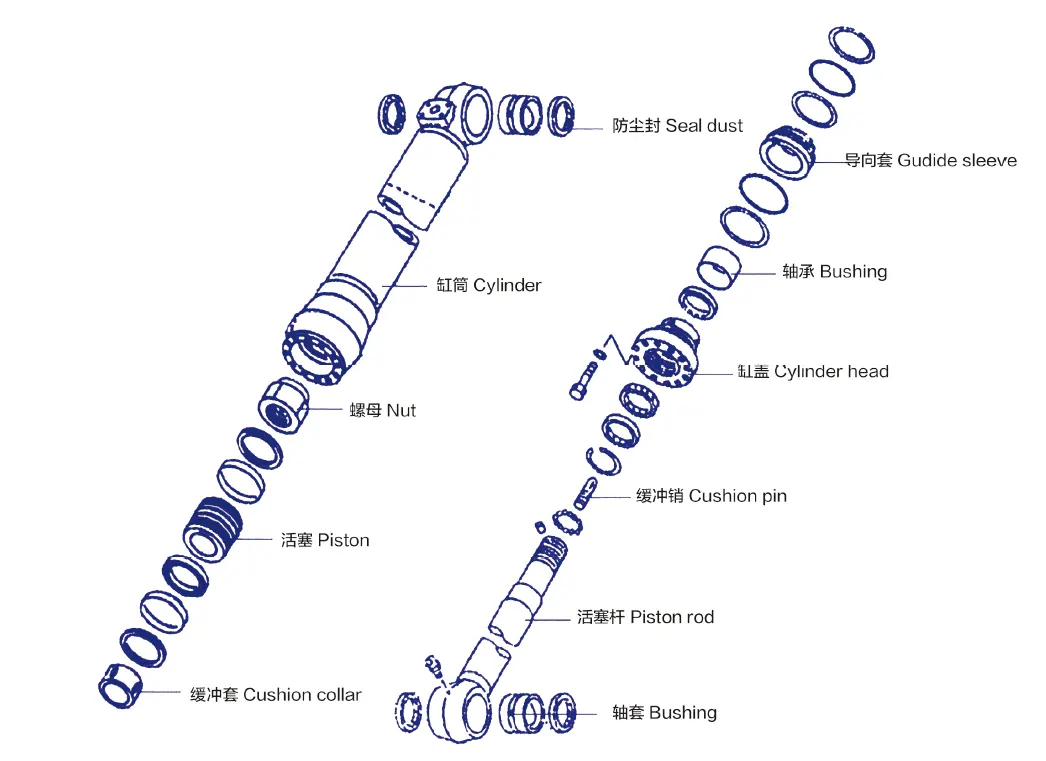
The arm cylinder is a specially designed hydraulic cylinder that is primarily used to provide linear motion and power to the arm of various machinery, such as excavators, cranes, and robotic arms. The arm cylinder plays a crucial role in hydraulic systems, enabling the efficient movement and control of additional tools or attachments. These cylinders not only achieve smooth motion but also withstand heavy loads, ensuring high efficiency and reliability of the machinery under various operating conditions.
Características
- Transmisión de alta eficiencia: El cilindro del brazo proporciona un potente movimiento lineal y fuerza, garantizando un alto rendimiento en diversas operaciones.
- Control preciso: A través del sistema hidráulico, el cilindro del brazo permite un control preciso del movimiento, haciendo que la operación de las herramientas acopladas sea más flexible y precisa.
- Durabilidad: Arm cylinders are typically made of high-strength materials with excellent wear and corrosion resistance, suitable for long-term use in harsh environments.
- Adaptabilidad multifunción: Estos cilindros se pueden aplicar ampliamente a diversas maquinarias, como excavadoras, grúas y brazos robóticos, adaptándose a diferentes requisitos de trabajo.
- Fácil mantenimiento: Designed for easy maintenance and replacement, arm cylinders facilitate regular inspections and maintenance, reducing equipment downtime.

Aplicaciones
El cilindro del brazo encuentra aplicaciones en diversas industrias:
- Ingeniería de la construcción: En excavadoras y grúas, el cilindro del brazo controla el movimiento de cucharones o plumas para movimientos de tierra, manipulación de materiales e instalación estructural.
- Fabricación: En las líneas de producción automatizadas, el cilindro del brazo se utiliza para el movimiento de los brazos robóticos en procesos como el ensamblaje, la soldadura y la manipulación de materiales, mejorando la eficiencia y la precisión de la producción.
- Maquinaria agrícola: En maquinaria agrícola, como cosechadoras y sembradoras, el cilindro del brazo controla el movimiento de los brazos operativos, realizando tareas como sembrar, fertilizar y cosechar.
- Minería: En los equipos de minería, el cilindro del brazo controla el movimiento del brazo de la maquinaria minera para la extracción y el transporte de mineral.
- Logística y Transporte: En las carretillas elevadoras y los robots de manipulación, el cilindro del brazo controla la elevación y el movimiento de las horquillas, lo que permite la manipulación y el apilamiento de materiales.
Consideraciones de diseño y criterios de selección
When it comes to the design of arm cylinders, several factors are crucial:
- Capacidad de carga: Arm cylinders should be designed to withstand the specified load requirements without failure.
- Caza de focas: Various sealing elements, such as piston seals and rod seals, should be used to ensure proper sealing. Durable materials like polyurethane and nitrile rubber are commonly employed for seals.
- Durabilidad: The cylinder body and threaded ends should undergo precise treatment to enhance wear resistance. Regular lubrication with suitable hydraulic oil is necessary to ensure smooth operation.
- Seguridad: Safety measures should be incorporated in the design to prevent accidents and ensure operator protection.
- Mantenimiento: Ease of maintenance and repair should be considered, allowing for convenient inspection and minimizing downtime.

Sellado y lubricación
To ensure proper sealing and lubrication, arm cylinders utilize various seals such as piston seals and rod seals. These seals are made of wear-resistant materials such as polyurethane and nitrile rubber. Additionally, the cylinder body and threaded ends undergo fine processing to improve wear resistance. Regular lubrication with the appropriate amount of hydraulic oil is necessary to ensure smooth operation.
Inspección regular y mantenimiento preventivo
To maintain the arm cylinder’s optimal performance, regular inspections and preventive maintenance are essential. The following measures should be taken:
- Inspect the cylinder for any signs of leakage, damage, or abnormal operation.
- Check and replace worn-out seals or damaged components promptly.
- Ensure proper lubrication by regularly adding the recommended amount of hydraulic oil.
- Tighten loose connections and fasteners as needed.
- Follow the manufacturer’s guidelines for maintenance and refer to the equipment’s manual for specific instructions.

Guía de instalación del producto
Proper installation is crucial for the effective performance of the arm cylinder. Follow these steps:
- Ensure all components are clean and free from dirt or debris.
- Apply a suitable thread sealant to the threaded ends of the cylinder.
- Align the cylinder with the mounting points on the machinery and secure it using the appropriate bolts or fasteners.
- Check the alignment and proper operation of the cylinder before final tightening.
- Refer to the machinery’s manual for any specific installation instructions.

Consideraciones de seguridad y factores ambientales
Considering safety measures when using arm cylinders is of utmost importance. Adhering to safety guidelines and regulations ensures the protection of operators and prevents accidents. Moreover, environmental factors should be taken into account, such as proper disposal of used hydraulic oil and adherence to environmental regulations in terms of material choices and manufacturing processes.
Solución de problemas y problemas comunes
A continuación se presentan algunos consejos y soluciones de resolución de problemas comunes para los cilindros del brazo:
- Asunto: Fuga del cilindro.
Solución: Inspect and replace the damaged seals or components causing the leakage. - Asunto: El cilindro no se extiende ni se retrae correctamente.
Solución: Check for any obstructions, damaged pistons, or inadequate hydraulic pressure. Adjust or replace components as necessary. - Asunto: Abnormal noise during cylinder operation.
Solución: Inspect for loose connections, damaged components, or inadequate lubrication. Address the issues accordingly.
Al seguir estos consejos y soluciones para la resolución de problemas, los lectores pueden diagnosticar y resolver problemas de manera eficaz, así como implementar medidas preventivas para minimizar posibles problemas.
Sobre nosotros
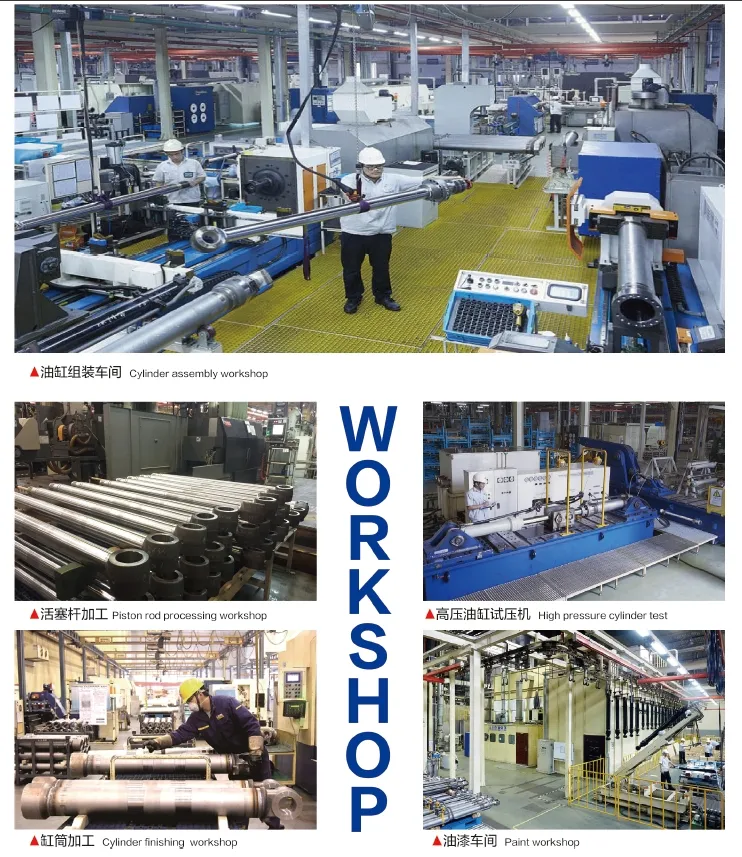
We are a professional manufacturer of replacement hydraulic cylinders, offering a wide range of products. As one of the leading hydraulic cylinder manufacturers and wholesale distributors in the domestic and international markets, we adhere to the principle of excellence in quality. We continuously improve our technical expertise and production efficiency through industrialized production management strategies in our sophisticated manufacturing workshop.
By introducing advanced digital manufacturing equipment and professional testing systems, we optimize our manufacturing platform and improve our product quality control processes. We possess strong innovation capabilities and aim to meet customers’ diverse requirements with high efficiency, accuracy, and high-quality products.
Cilindro hidráulico Aplicación:

 ES
ES  EN
EN  PT
PT  DE
DE  FR
FR  IT
IT  AR
AR  ZH
ZH  RU
RU  KO
KO  KA
KA  BG
BG  CS
CS  DA
DA  EL
EL  ET
ET  FI
FI  HU
HU  ID
ID  LT
LT  LV
LV  NB
NB  NL
NL  PL
PL  RO
RO  SK
SK  SL
SL  SV
SV  TR
TR  UK
UK