
Strategic Fluid Power Asset Management
Hydraulic Cylinder Repair Cost Guide: Should You Repair, Rebuild, or Replace?
An authoritative engineering and economic blueprint detailing lifecycle cost analysis, mechanical wear diagnostics, thermodynamic failure mitigation, and the ultimate decision matrix for heavy machinery fluid power actuators.

The Economic Paradox of Machinery Downtime
In the highly rigorous disciplines of commercial earthmoving, deep subterranean mining, automated industrial manufacturing, and massive scale agricultural operations, fluid power systems serve as the absolute core of mechanical productivity. Hydraulic cylinders act as the primary kinetic muscles, converting the immense hydrostatic pressure of synthetic fluids into perfectly controlled, unrelenting linear force. When these massive steel pressure vessels inevitably encounter mechanical wear, internal seal degradation, or catastrophic kinetic shock, fleet managers and engineers are immediately confronted with a high stakes financial and technical dilemma: Should the compromised component be repaired, completely rebuilt, or permanently replaced? To establish a baseline of elite manufacturing standards before making this decision, visiting our premium hydraulic cylinders platform is an essential prerequisite for procurement professionals.
Making the incorrect maintenance decision results in severe economic bleeding. Opting to completely replace a cylinder that only required a minor seal kit replacement represents a massive waste of operational capital. Conversely, attempting to execute a cheap, superficial repair on a cylinder that has suffered irreversible structural fatigue or Euler column buckling will guarantee a secondary, far more explosive failure. This secondary failure will trigger unplanned operational paralysis, halting entire logistics chains and incurring tens of thousands of dollars in lost production revenue per hour. Therefore, navigating the hydraulic cylinder repair cost landscape requires a profound understanding of metallurgy, fluid dynamics, and lifecycle economics.
Evaluated against stringent international ISO fluid power diagnostic standards, this comprehensive technical blueprint will systematically deconstruct the entire decision making matrix. We will meticulously unpack the specific diagnostic indicators that differentiate a simple repair from a total rebuild, analyze the mathematical threshold of the seventy percent replacement rule, explore the hidden costs of fluid loss and machine downtime, and provide you with the ultimate engineering framework to maximize the return on investment for your heavy machinery assets.
The Diagnostic Protocol: Identifying the Root Cause
Before allocating a single dollar toward maintenance, a senior technician must execute a rigorous diagnostic triage. Accurately identifying whether the failure is elastomeric, metallurgical, or systemic dictates the entire financial trajectory.
Internal Fluid Bypass and Seal Degradation
The most common failure mode is the thermal or abrasive degradation of the internal polyurethane and nitrile seals. When the primary piston seal fails, high pressure fluid silently bypasses the piston, moving from the high pressure chamber into the low pressure zone. This results in a loss of lifting power and dangerous load drift. If an operator raises an implement and it slowly sags downward without any external fluid weeping, an internal seal blowout is the definitive diagnosis. This scenario is highly common in continuous duty logistics equipment, such as Forklift Hydraulic Cylinders, where millions of repetitive stroke cycles simply wear away the polymer lips over time.
Metallurgical Scoring and Kinetic Impacts
If the cylinder is leaking fluid externally from the head gland, the technician must immediately inspect the chrome piston rod. If the rod features deep, longitudinal scratches, sharp burrs, or impact craters from kinetic rock strikes, the situation has escalated beyond a simple seal failure. A scored rod acts like a razor blade, instantly shredding any new seal installed against it. Furthermore, if the cylinder barrel itself has expanded like a balloon due to extreme hydrostatic pressure spikes, the internal topography is permanently ruined. Identifying structural deformation early prevents throwing money away on futile repair attempts.

Option 1: The Basic Repair Protocol (Resealing)
A basic repair is the least invasive and most cost effective maintenance intervention. It is strictly limited to replacing the elastomeric and polymeric components within the actuator while leaving the heavy steel structures intact.
The repair process typically involves safely extracting the cylinder from the machine framework, draining the residual hydraulic fluid, and utilizing specialized spanner wrenches to unthread the head gland. Once disassembled, technicians meticulously remove the degraded U cups, O rings, PTFE backup rings, and composite wear bands. The steel barrel bore and the chrome rod are thoroughly cleaned and subjected to a micrometer inspection. If the steel surfaces are found to be perfectly smooth and within Original Equipment Manufacturer tolerances, a brand new OEM specified seal kit is installed. The entire unit is then reassembled, torqued to precise mathematical specifications, and subjected to a rigorous hydrostatic pressure test to verify absolute zero leak performance before being returned to service.
The Economics of Resealing: A basic repair is incredibly economical. Depending on the bore diameter and the complexity of the sealing architecture, a high quality seal kit and the associated labor will generally cost between ten percent and twenty percent of the price of a brand new cylinder. For standard equipment operating in relatively clean environments, such as indoor manufacturing lines, routine resealing extends the lifespan of the actuator indefinitely. However, resealing is utterly futile if the underlying steel is damaged. Installing a fifty dollar seal kit over a deeply gouged rod is a guaranteed failure.

Option 2: The Comprehensive Rebuild Protocol
When the heavy steel components of the actuator have suffered physical trauma, advanced metallurgical intervention is required. A rebuild involves heavy machining, welding, and electroplating processes.
Machining and Replating the Rod
If the chrome rod is deeply scored, it must be removed and placed into a massive centerless grinding machine. The grinder strips away the damaged steel layer entirely. The rod is then submerged in a chemical bath for hard hexavalent chrome electroplating or HVOF thermal spraying to rebuild the protective armor. Finally, it is polished back to its exact original micrometer dimensions. If the internal barrel wall is scratched by contaminated fluid, it must be mounted on an industrial honing machine to smooth the interior topography, which often requires the CNC fabrication of a custom, slightly oversized piston to match the newly honed bore.
This level of structural restoration is frequently executed on massive, highly specialized equipment like Excavator Hydraulic Cylinders. Because these specific cylinders are custom engineered for unique machine kinematics, procuring a brand new replacement from the factory can take months. Rebuilding the existing steel structure in a specialized hydraulic shop bypassing global supply chain delays.
The Economics of Rebuilding
A comprehensive rebuild is a labor intensive, highly skilled process. It requires certified welders to replace worn mounting trunnions, machinists to cut new threads, and hydraulic technicians to integrate the final seal arrays. Consequently, the cost of a rebuild generally falls between forty percent and sixty percent of the cost of a brand new unit.
For large bore, long stroke actuators utilized in heavy industry, spending five thousand dollars to rebuild a cylinder that costs twelve thousand dollars new represents excellent economic strategy. Furthermore, a reputable hydraulic rebuild facility will return the cylinder with a performance warranty matching or exceeding the original factory guarantee, ensuring the restored asset delivers long term reliability.
Option 3: The Replacement Protocol (New Procurement)
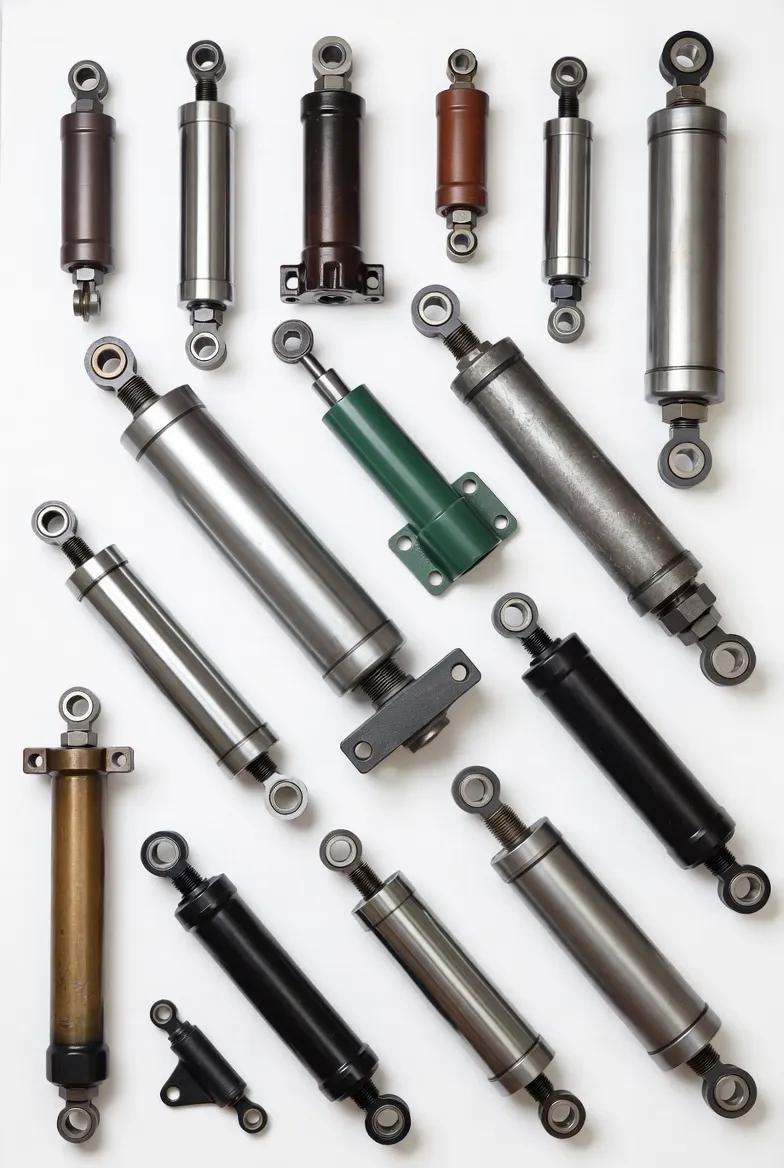
There is a definitive mathematical and physical threshold where attempting to save a damaged hydraulic cylinder becomes an exercise in futility. Recognizing this threshold is vital to preventing recurrent machine failure.
- ✔️
Catastrophic Structural Failure: If a cylinder rod has suffered from Euler column buckling—meaning the thick steel rod is physically bent outward due to extreme compressive overload—it cannot be safely straightened. Heating and bending the rod destroys its induction hardened crystalline structure, guaranteeing it will snap under load in the future. Similarly, if the main steel barrel has ballooned or ruptured due to hydrostatic shock spikes, the structural integrity is permanently compromised. These cylinders must be scrapped and replaced immediately. This is an absolute safety mandate for equipment like Aerial Work Vehicle Hydraulic Cylinders, where compromised steel could result in a fatal platform collapse.
- ✔️
The Seventy Percent Economic Rule: Industry standard economic modeling dictates the seventy percent rule. If the comprehensive quote for machining, plating, welding, and sealing a damaged cylinder exceeds seventy percent of the total procurement cost for a brand new OEM replacement, rebuilding is no longer financially viable. The margin is too narrow. Purchasing a new unit provides a pristine, factory tested asset with zero hidden fatigue variables.
- ✔️
Standardization and Mass Production: The economics of replacement lean heavily on the specific machine application. For smaller, mass produced equipment like compact tractors or basic log splitters, the replacement cylinders are manufactured by the thousands and stocked globally. The cost of a brand new, mass produced Agricultural Hydraulic Cylinder is often so low that attempting to pay a machinist’s hourly wage to rebuild it makes absolutely no financial sense. In these scenarios, immediate replacement is the only logical pathway.

The Hidden Costs: Fluid Loss and Collateral Damage
When evaluating repair versus replacement costs, organizations frequently make the fatal error of only calculating the hardware price. The true financial devastation of a failing cylinder is systemic.
Synthetic Fluid Hemorrhage
An external leak at the head gland does not fix itself; it accelerates. A cylinder weeping a few drops a minute will soon be pouring gallons of expensive synthetic hydraulic oil onto the ground per hour. High performance hydraulic fluid is a premium commodity. Allowing a machine to operate with a continuous leak requires constant, expensive fluid top offs. Over a single season, the cost of the wasted hydraulic oil can easily surpass the price of a brand new cylinder. Furthermore, dumping petroleum fluids onto job sites triggers massive environmental protection fines and mandates expensive hazmat soil remediation.
Systemic Pump Contamination
A compromised cylinder acts as an open gateway for environmental destruction. When a wiper seal fails, the retracting rod drags abrasive silica sand, water, and grit directly into the hydraulic circuit. This slurry bypasses the cylinder and travels straight to the primary hydraulic pump. The abrasive grit acts like liquid sandpaper, destroying the microscopic tolerances of the pump gears and precision control valves. Ignoring a leaking cylinder on a heavy Dump Truck Hydraulic Cylinder system will inevitably result in the catastrophic failure of the entire twenty thousand dollar pump infrastructure.
The Velocity of Downtime
Ultimately, the most expensive variable is time. When a primary machine is paralyzed by a blown cylinder, the labor force stands idle, production targets are missed, and downstream logistics are starved. If a custom rebuild will take four weeks due to machine shop backlogs, the business cannot afford to wait. In high velocity operations, the decision immediately shifts to procuring a brand new replacement, often via expedited air freight, because the cost of the new cylinder is dwarfed by the millions of dollars preserved by getting the factory line running again instantly.

Conclusion: Engineering the Optimal Financial Strategy
Managing the lifecycle of a hydraulic cylinder is a complex exercise in risk management and economic foresight. A failing fluid power actuator is not a problem that can be ignored; its destruction will compound geometrically until it paralyses your entire operation. By executing rigorous initial diagnostics, you can surgically apply the correct solution. Inexpensive reseal kits will preserve actuators suffering from standard polymer degradation. Comprehensive metallurgical rebuilds will resurrect massive, custom-engineered cylinders that have sustained physical trauma. However, when structural integrity is permanently compromised or when rebuild quotes breach the seventy percent threshold, swift procurement of a brand new, factory-certified replacement is the only mathematically sound defense. Never allow compromised hardware to threaten the safety of your personnel or the profitability of your fleet. If your organization requires expert diagnostic consultation, rapid access to premium seal architecture upgrades, or direct procurement of the most resilient, heavy-duty replacement cylinders on the global market, our elite technical engineering team stands ready to architect your ultimate fluid power solution.