
Strategic Procurement and Manufacturing Economics
How to Estimate Custom Hydraulic Cylinder Manufacturing Costs: An Engineer’s Breakdown
An authoritative financial and technical blueprint detailing metallurgical investments, precision CNC machining variables, advanced sealing architectures, and the non-recurring engineering costs that define the true price of bespoke fluid power actuators.

Deconstructing the Fluid Power Pricing Matrix
Procuring a standard, off-the-shelf fluid power component is a relatively straightforward transaction. However, when mechanical engineers and fleet directors require linear actuators that must survive unprecedented hydrostatic pressures, extreme metallurgical fatigue, or highly corrosive environments, standard catalog options become entirely obsolete. Transitioning from standardized components to custom hydraulic cylinder manufacturing introduces a highly complex, multi-variable pricing matrix. For procurement professionals tasked with budgeting for next-generation heavy machinery, understanding exactly how custom hydraulic cylinder manufacturing costs are calculated is an absolute necessity. To establish a baseline of elite fabrication standards before diving into the economics, visiting our premium hydraulic cylinders platform provides crucial engineering context.
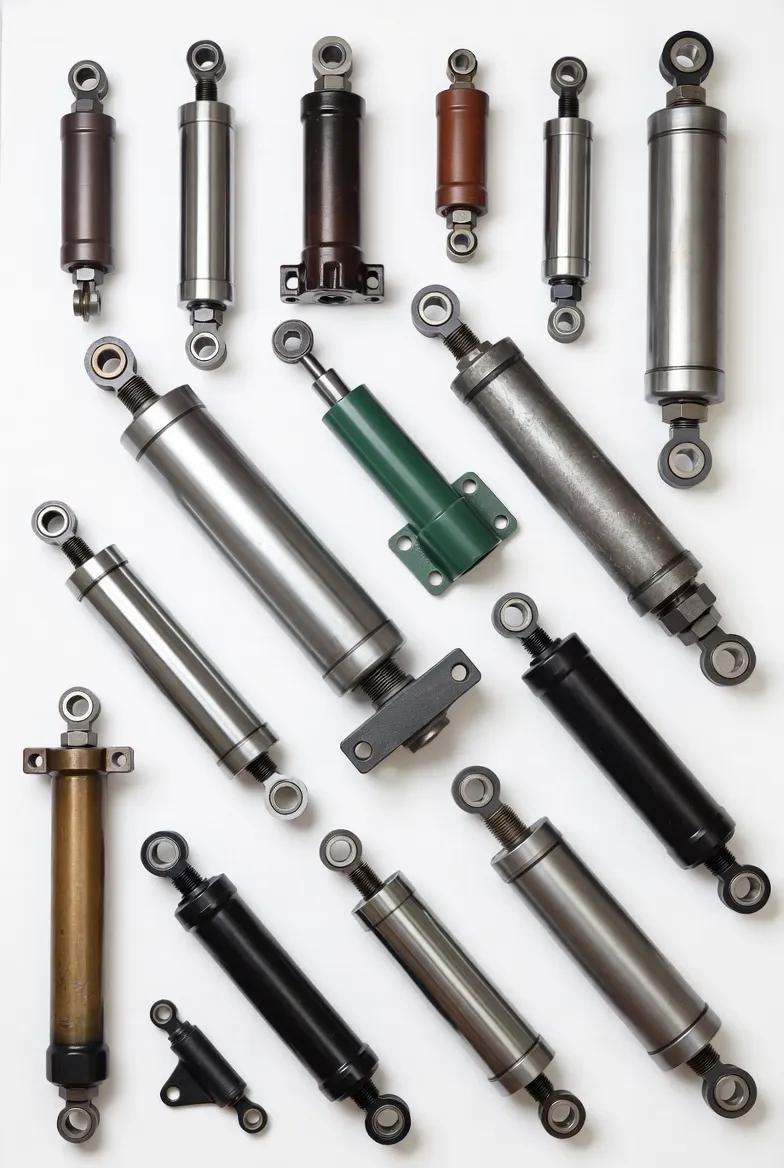
A bespoke hydraulic cylinder is not merely a collection of steel tubes and rubber seals; it is a highly calibrated thermodynamic pressure vessel. Every millimeter of stroke length, every micro-inch of surface finish topography, and every proprietary alloy selected directly impacts the final manufacturing invoice. In the high-stakes sectors of commercial earthmoving, offshore marine logistics, and automated manufacturing, under-budgeting for a critical actuator leads to compromised design blueprints. A compromised design inevitably results in catastrophic field failures, triggering massive operational downtime that dwarfs the initial savings. Therefore, accurate cost estimation requires a ruthless deconstruction of the engineering process.
Evaluated against stringent international ISO fluid power fabrication protocols, this comprehensive technical blueprint will serve as your ultimate cost estimation guide. We will meticulously unpack the financial weight of raw metallurgical selection, the mathematical impact of CNC machining tolerances, the integration of advanced fluoropolymer sealing architectures, and the often-overlooked Non-Recurring Engineering (NRE) costs. By mastering these variables, you will possess the engineering fluency required to negotiate effectively with manufacturers and architect a procurement strategy that delivers unrelenting kinetic force while fiercely protecting your operational capital.
Cost Factor 1: The Economics of Metallurgical Selection
The raw materials utilized to forge the cylinder barrel and the piston rod constitute a massive percentage of the total manufacturing cost. Upgrading from commercial carbon steel to advanced, high-yield alloys fundamentally alters the pricing baseline.
Standard High-Tensile Carbon Steel
For the vast majority of standard industrial applications, materials like ST52 or 1045 carbon steel provide an excellent balance of tensile strength and cost efficiency. These materials are readily available on the global commodity market and are relatively easy to machine and weld. When estimating costs for standard material handling equipment, such as robust Forklift Hydraulic Cylinders, the raw material cost remains predictable and highly scalable for volume production runs.
Advanced Chromoly and Stainless Alloys
When operating parameters enter the extreme spectrum, standard steel becomes a severe liability. If an actuator must lift fifty tons without bending, engineers must specify 4140 or 4340 chromoly steel to prevent Euler column buckling. If the cylinder operates in a highly corrosive marine or chemical environment, Super Duplex stainless steel is mandated. These exotic alloys are vastly more expensive per pound. Furthermore, they are significantly harder, which drastically increases the CNC machining time and accelerates the wear on expensive carbide cutting tools, compounding the final manufacturing price tag.

Cost Factor 2: Dimensional Scaling and Machining Complexity
The physical size of a custom hydraulic cylinder scales the manufacturing cost exponentially, not linearly. A cylinder that is twice as long does not simply cost twice as much; it introduces severe fabrication complexities.
Bore Diameter and Hoop Stress: The bore diameter determines the pushing force of the cylinder. As the bore increases, the total surface area subjected to internal hydrostatic pressure increases massively. To contain this pressure without the barrel exploding (hoop stress failure), the steel wall thickness must be significantly increased. Machining a massive, thick-walled steel forging requires colossal, specialized multi-axis CNC lathes that only top-tier manufacturers possess. This increased capital equipment overhead is directly reflected in the custom quote.
Stroke Length and Deep Hole Boring: The length of the stroke is perhaps the most critical cost multiplier. To create a flawless internal surface for the dynamic piston seals to glide against, the barrel must undergo deep-hole boring, skiving, and roller burnishing. Achieving a mirror-like Ra surface finish across a stroke length of ten or twenty feet requires phenomenal precision. A microscopic deviation in straightness over that distance will cause the piston to bind and shatter the internal seals. This extreme precision machining is heavily utilized in multi-stage telescopic architectures, such as Dump Truck Hydraulic Cylinders, where nested sleeves must interact perfectly over immense extended distances.

Cost Factor 3: Sealing Architectures and Thermal Survival
Standard catalog seals are cheap and plentiful. However, custom cylinders are designed precisely because standard seals fail under specific operational conditions. Upgrading the elastomeric architecture is a critical cost center.
Extreme Temperature Fluoropolymers
If an actuator operates in a steel foundry or near an industrial furnace, standard polyurethane seals will melt instantly. Engineers must specify advanced fluoropolymers, such as Viton (FKM) or PTFE (Teflon) energized seals. These materials maintain their elastic memory at temperatures exceeding four hundred degrees Fahrenheit. However, raw Viton is significantly more expensive than standard nitrile rubber. The precision required to machine the gland grooves to accept these less-forgiving materials further elevates the assembly cost.
Conversely, in deep winter operations, specialized Arctic-grade seals with low Glass Transition Temperatures are required to prevent shattering. The deployment of these advanced compounds is vital for equipment like Agricultural Hydraulic Cylinders working in extreme seasonal climate shifts.
Zero-Extrusion and Load Holding Defense
For cylinders tasked with holding immense, suspended loads—such as Aerial Work Vehicle Hydraulic Cylinders—internal fluid bypass is a lethal safety hazard. To prevent the seals from extruding through the microscopic clearance gaps under extreme pressure spikes, the design must incorporate rigid POM or bronze-filled PTFE backup rings. Additionally, the custom blueprint may require the welding of heavy-duty counterbalance lock valves directly to the cylinder barrel, adding both material cost and highly specialized robotic welding labor to the final quote.
Cost Factor 4: Advanced Surface Plating and Coatings
The piston rod is the only dynamic component exposed to the hostile outside world. Protecting this surface from kinetic rock strikes and caustic corrosion is a major budgetary consideration.
Induction Hardening
In aggressive earthmoving environments, a stray boulder striking the rod will cause a deep gouge that instantly shreds the wiper seal. To prevent this, the carbon steel rod is passed through high-frequency electrical coils. This induction hardening process superheats and alters the outer crystalline structure of the steel, making it incredibly resistant to physical denting while keeping the core ductile. This extra metallurgical step adds significant processing time to the manufacturing run.
HVOF Thermal Spray
Standard hard-chrome electroplating is sufficient for most applications, but marine and highly caustic environments demand more. High Velocity Oxygen Fuel (HVOF) coatings blast Tungsten Carbide powders onto the rod at supersonic speeds, creating a completely non-porous, impenetrable armor. Upgrading from standard chrome to HVOF represents a substantial cost increase but is absolutely mandatory for extending the lifespan of extreme-duty Excavator Hydraulic Cylinders working in coastal dredging operations.
Marine Epoxy Systems
The exterior barrel must also be protected. A basic coat of industrial enamel is inexpensive. However, if the cylinder requires compliance with NORSOK marine standards—involving abrasive blasting, zinc-rich primers, and multiple layers of aliphatic polyurethane—the painting process transforms into an advanced chemical application that significantly impacts the final bill.
Cost Factor 5: Non-Recurring Engineering (NRE) and QA Testing
When ordering a custom hydraulic cylinder, you are not just paying for steel; you are paying for the brainpower required to ensure that steel doesn’t explode. Non-Recurring Engineering (NRE) costs are a critical line item in the initial quote.
- ✔️
CAD Design and Finite Element Analysis (FEA): Before manufacturing begins, engineers must draft complex 3D models and subject them to simulated stress tests. FEA software mathematically proves that the custom trunnion mounts will not shear off under maximum load and that the barrel will not succumb to hoop stress. The engineering hours required to validate these models are factored into the initial prototype costs.
- ✔️
Non-Destructive Testing (NDT): High-pressure cylinders rely entirely on the integrity of their robotic orbital welds. To guarantee safety, manufacturers must deploy Ultrasonic Testing (UT) or Magnetic Particle Inspection (MPI) to scan the deep subsurface of the welds for microscopic fatigue cracks or slag inclusions. This specialized labor guarantees the safety of the vessel but adds to the final QA bill.
- ✔️
1.5x Hydrostatic Proof Testing: A custom cylinder is never shipped blindly. It must be mounted to a test bench and deadheaded at 1.5 times its maximum rated operating pressure. Sensors monitor for any internal fluid bypass or pressure decay. Only units that pass this brutal physical examination receive a factory certification.


Conclusion: Architecting the Ultimate Return on Investment
Estimating the cost of a custom hydraulic cylinder is a profound exercise in mechanical foresight and risk management. The initial price tag is not merely the cost of raw steel; it represents the collective engineering intelligence deployed to ensure that the actuator survives its intended environment. By understanding how high-yield metallurgical alloys defeat Euler buckling, how advanced fluoropolymers prevent catastrophic extrusion blowouts, and why rigorous hydrostatic testing is an absolute safety mandate, procurement engineers can effectively evaluate manufacturer quotes. Investing in heavy-duty structural design upfront is mathematically proven to eradicate unexpected machine paralysis, saving organizations exponentially in avoided downtime and fluid loss. When your project demands unyielding kinetic force, do not compromise on the engineering blueprint. If your organization requires highly customized, severe-duty fluid power solutions engineered and fabricated to the absolute highest international standards, our elite technical team stands ready to architect your ultimate mechanical advantage.