

Vérin de bras pour mini-pelle Doosan DX120
En tant que fabricant, fournisseur et exportateur de produits mécaniques, nous proposons des vérins hydrauliques et de nombreux autres produits.
N'hésitez pas à nous contacter pour plus de détails.
Courrier :sales@hydraulic-cylinders.net
Fabricant fournisseur exportateur de vérins hydrauliques.
Arm Cylinder for Doosan Small Excavator DX120
The arm cylinder is a specially designed hydraulic cylinder that is used to provide linear motion and power to the arm of various types of machinery, such as excavators, cranes, and robotic arms. The arm cylinder plays a crucial role in hydraulic systems, allowing for the effective movement and control of additional tools or attachments. These cylinders not only enable smooth motion but also have the ability to withstand heavy loads, ensuring efficient operation and reliability of the machinery under various working conditions.
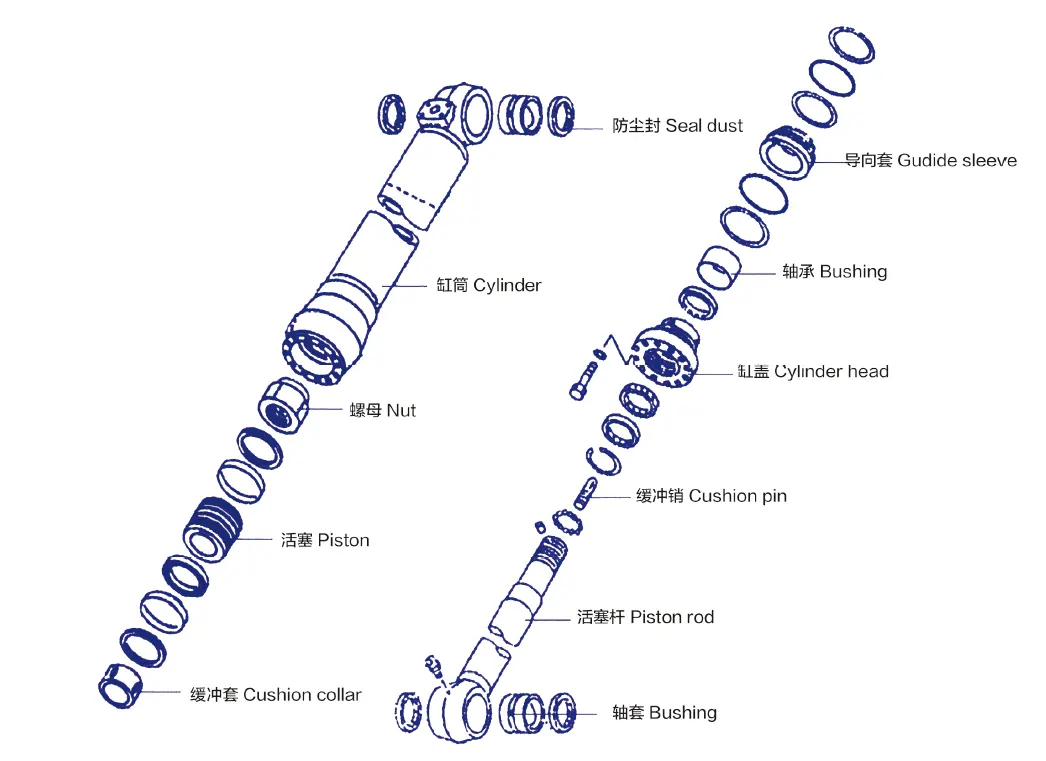
Caractéristiques du cylindre de bras :
- Transmission à haut rendement : Le vérin du bras fournit un mouvement linéaire et une force puissants, garantissant des capacités de haute performance pour le bras robotique dans diverses opérations.
- Contrôle précis : Grâce au système hydraulique, le vérin du bras permet un contrôle précis du mouvement, rendant le fonctionnement d'outils supplémentaires plus flexible et précis.
- Durabilité: Les vérins de bras sont généralement fabriqués à partir de matériaux à haute résistance, offrant une excellente résistance à l'usure et à la corrosion, ce qui les rend adaptés à une utilisation à long terme dans des environnements difficiles.
- Adaptabilité multifonctionnelle : Ces vérins peuvent être largement utilisés dans diverses machines, telles que les excavatrices, les grues et les bras robotisés, s'adaptant ainsi aux différentes exigences de travail.
- Entretien facile : Conçus pour faciliter l'entretien et le remplacement, les vérins de bras permettent des inspections et un entretien réguliers et pratiques, réduisant ainsi les temps d'arrêt des équipements.

Le vérin à bras trouve ses applications dans diverses industries :
- Construction: In excavators and cranes, the arm cylinder controls the movement of the bucket or boom for earthwork, material handling, and structural installation.
- Manufacturing: In automated production lines, the arm cylinder enables the motion of robotic arms for processes like assembly, welding, and material handling, increasing production efficiency and precision.
- Agricultural Machinery: In agricultural machinery such as harvesters and seeders, the arm cylinder controls the movement of operating arms for tasks like planting, fertilizing, and harvesting.
- Exploitation minière : Dans les équipements miniers, le vérin du bras contrôle le mouvement du bras pour l'extraction et le transport du minerai.
- Logistics and Transportation: In forklifts and handling robots, the arm cylinder controls the lifting and movement of forks, allowing for material handling and stacking.
Considérations de conception et critères de sélection :
When designing arm cylinders, several key factors are taken into consideration:
- Capacité de charge : Arm cylinders are designed to withstand specific loads, ensuring safe and efficient operation.
- Scellage: Various types of seals, such as piston seals and rod seals, are used to ensure effective sealing. These seals are made from wear-resistant materials like polyurethane and nitrile rubber.
- Durabilité: Cylinder bodies and threaded ends undergo precision treatments to enhance wear resistance.
- Sécurité: Safety features, such as pressure relief valves, are incorporated to prevent excessive pressure and ensure safe operation.
- Maintenabilité : Regular inspection and preventive maintenance measures are essential to extend the lifespan of the arm cylinder and minimize potential issues.

Proper sealing and lubrication are crucial for the performance and longevity of the arm cylinder:
- Various sealing elements, such as piston seals and rod seals, are used to prevent fluid leakage and maintain proper operation.
- The seals are made from durable materials like polyurethane and nitrile rubber, which have excellent wear resistance.
- Le corps du cylindre et les extrémités filetées subissent des traitements de surface méticuleux afin d'améliorer la résistance à l'usure.
- Regular lubrication with an appropriate amount of hydraulic oil is required to ensure smooth operation and reduce friction.
Inspection régulière et maintenance préventive :
To ensure the optimal performance and longevity of the arm cylinder, regular inspections and preventive maintenance measures should be implemented:
- Inspectez le cylindre pour détecter tout signe de fuite, de dommage ou d'usure.
- Vérifiez les joints et remplacez-les si nécessaire.
- Monitor the fluid levels and top up with hydraulic oil as needed.
- Examine the cylinder for any signs of contamination or corrosion.
- Resserrer les raccords ou connexions desserrés.
- Follow the manufacturer’s guidelines for specific inspection and maintenance procedures.

Guide d'installation :
Une installation correcte du vérin de bras est essentielle à son bon fonctionnement et à votre sécurité. Suivez ces étapes :
- Assurez-vous que l'équipement est correctement fixé et mis hors tension.
- Positionnez soigneusement le cylindre du bras en l'alignant avec les points de fixation.
- Securely fasten the cylinder to the equipment using appropriate bolts and fittings.
- Inspect all connections to ensure they are tightly secured and leak-free.
- Double-check the alignment and movement of the cylinder before operation.

Considérations relatives à la sécurité et facteurs environnementaux :
When working with arm cylinders, safety measures are of utmost importance. It is essential to prioritize the following:
- Follow proper operating procedures and guidelines provided by the equipment manufacturer.
- Ensure all operators are trained on the safe operation of the machinery.
- Use appropriate personal protective equipment (PPE), such as gloves and safety glasses.
- Regularly inspect and maintain the equipment to identify and address any potential safety hazards.
- Éliminer l'huile hydraulique usagée et les autres déchets conformément à la réglementation environnementale.
Dépannage et problèmes courants :
Arm cylinders may encounter certain faults or issues during operation. Here are some common ones:
- Fuite de liquide : Inspect seals and connections for signs of leakage. Replace worn or damaged seals.
- Mouvement lent ou irrégulier : Check the hydraulic system for any restrictions or insufficient fluid levels. Ensure proper lubrication.
- Bruit ou vibrations excessifs : Inspect the cylinder for any loose fittings or damaged components. Tighten or replace as necessary.
- Poor or Erratic Performance: Check the hydraulic system for any issues with pressure or flow. Clean or replace filters and monitor fluid levels.
For troubleshooting, consider the following tips and solutions to effectively diagnose and resolve problems:
- Refer to the equipment’s user manual or consult with technical support for specific troubleshooting steps.
- Inspect the hydraulic system for any signs of damage, contamination, or blockages.
- Check all connections and fittings for tightness and leaks.
- Analyze the system’s pressure and flow rates to identify any abnormalities.
- Follow preventive maintenance measures to minimize potential issues.
Auteur : lyl
À propos de notre entreprise :
We are a professional
Vérin hydraulique Application :

 FR
FR  EN
EN  PT
PT  ES
ES  DE
DE  IT
IT  AR
AR  ZH
ZH  RU
RU  KO
KO  KA
KA  BG
BG  CS
CS  DA
DA  EL
EL  ET
ET  FI
FI  HU
HU  ID
ID  LT
LT  LV
LV  NB
NB  NL
NL  PL
PL  RO
RO  SK
SK  SL
SL  SV
SV  TR
TR  UK
UK