

Arm CylinderFor Hitachi Wheel Excavator ZX170W-3
En tant que fabricant, fournisseur et exportateur de produits mécaniques, nous proposons des vérins hydrauliques et de nombreux autres produits.
N'hésitez pas à nous contacter pour plus de détails.
Courrier :sales@hydraulic-cylinders.net
Fabricant fournisseur exportateur de vérins hydrauliques.
Arm Cylinder for Hitachi Wheel Excavator ZX170W-3
Introduction
The Arm Cylinder for Hitachi Wheel Excavator ZX170W-3 is a specialized hydraulic cylinder designed to provide linear motion and power to the arm of various machinery such as excavators, cranes, and mechanical arms. The arm cylinder plays a crucial role in hydraulic systems, enabling the efficient movement and control of additional tools or attachments. These cylinders not only ensure smooth motion but also withstand heavy loads, ensuring high efficiency and reliability of the machinery in various operating conditions.
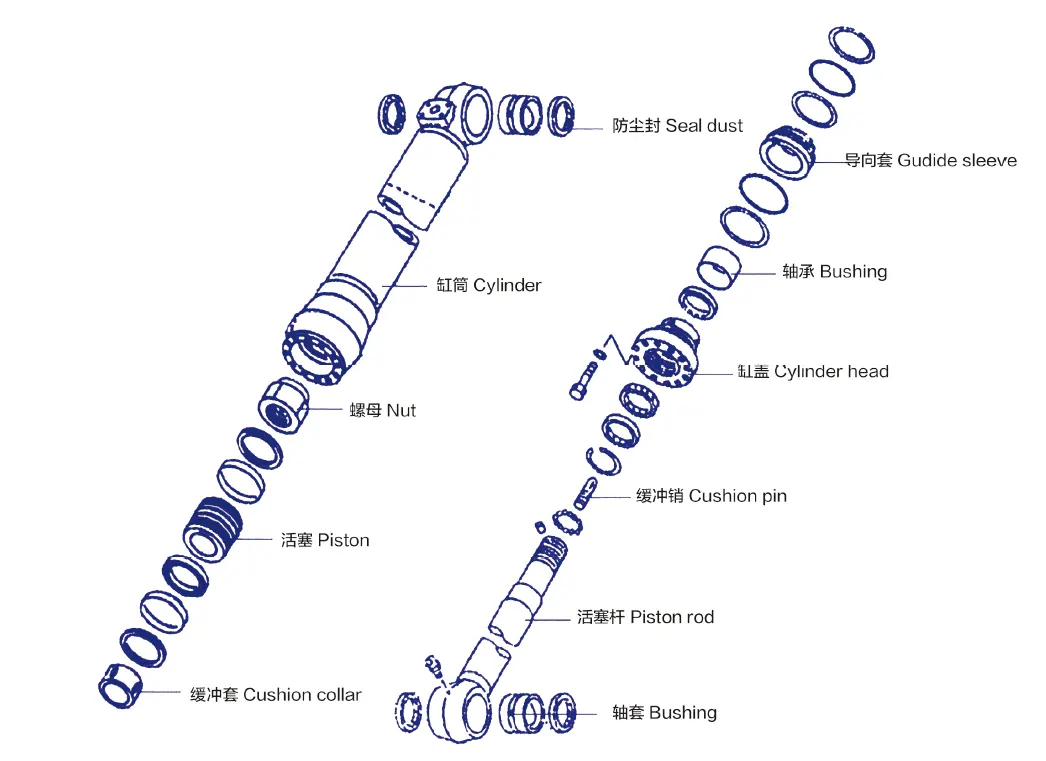
Caractéristiques
-
High-efficiency Transmission
Le vérin du bras assure un mouvement linéaire et une force puissants, garantissant ainsi des performances élevées du bras mécanique dans diverses opérations.
-
Contrôle précis
Through the hydraulic system, the arm cylinder enables accurate motion control, making the operation of additional tools more flexible and precise.
-
Durabilité
Le vérin du bras est généralement fabriqué à partir de matériaux à haute résistance, offrant une excellente résistance à l'usure et à la corrosion, ce qui le rend adapté à une utilisation à long terme dans des environnements difficiles.
-
Adaptabilité polyvalente
These cylinders can be widely applied to various machinery such as excavators, cranes, and mechanical arms, adapting to different work requirements.
-
Entretien facile
La conception prend en compte la facilité d'entretien et de remplacement, ce qui rend l'inspection et la maintenance régulières plus pratiques et réduit les temps d'arrêt des équipements.

Applications
1. Ingénierie de la construction
Dans les excavatrices et les grues, le vérin du bras contrôle le mouvement des godets ou des flèches pour les travaux de terrassement, la manutention de matériaux et les installations de structures.
2. Industrie manufacturière
In automated production lines, the arm cylinder is used for the motion of mechanical arms in processes such as assembly, welding, and handling, enhancing production efficiency and accuracy.
3. Machines agricoles
Dans les équipements agricoles tels que les moissonneuses-batteuses et les semoirs, le vérin du bras contrôle le mouvement des bras moteurs pour des tâches comme le semis, la fertilisation et la récolte.
4. Exploitation minière
Dans les équipements miniers, le vérin de bras contrôle le mouvement du bras des machines d'extraction et de transport du minerai.
5. Logistique et transport
Dans les chariots élévateurs et les robots de manutention, le vérin du bras contrôle le levage et le mouvement des fourches, permettant la manutention et l'empilage des matériaux.

Considérations de conception et critères de sélection
Lors de la conception de vérins de bras, plusieurs facteurs clés doivent être pris en compte :
-
Capacité de charge
Le vérin du bras doit être conçu pour résister aux charges et aux forces prévues afin de garantir un fonctionnement sûr et efficace.
-
Scellage
Various sealing components, such as piston seals and rod seals, should be used, preferably made of wear-resistant materials like polyurethane and nitrile rubber. The cylinder body and threaded ends should undergo precise treatment to enhance wear resistance. Regular lubrication with hydraulic oil is necessary for smooth operation.
-
Durabilité
The arm cylinder should be made of durable materials with excellent resistance to wear and corrosion to withstand harsh operating conditions.
-
Sécurité
Safety features should be incorporated into the design, such as pressure relief valves or overload protection mechanisms, to prevent accidents or damage to the machinery.
-
Maintenabilité
The design should consider ease of maintenance and repair, allowing for convenient inspections and minimizing downtime.

Inspection régulière et maintenance préventive
- Regularly inspect the arm cylinder for any signs of leaks, damage, or abnormal wear. Address any issues promptly to prevent further damage and ensure optimal performance.
- Check and replace worn or damaged seals and components regularly to maintain proper sealing and prevent fluid leakage.
- Ensure the arm cylinder is properly lubricated with the recommended hydraulic oil at the specified intervals to reduce friction and ensure smooth operation.
- Verify the tightness of all connections and fasteners to prevent potential leaks or loosening during operation.
- Follow the manufacturer’s guidelines for maintenance and conduct periodic inspections to identify any potential issues before they escalate.
Guide d'installation du produit
Follow these steps to properly install the arm cylinder:
- Assurez-vous que la machine est hors tension et que le système hydraulique est dépressurisé.
- Remove the old arm cylinder if necessary, carefully disconnecting any hydraulic lines or fittings.
- Inspect the mounting points and mating surfaces for any damage or debris. Clean and prepare them as needed.
- Position the new arm cylinder in place, aligning the mounting holes with the corresponding points on the machinery.
- Securely fasten the arm cylinder to the machinery using the appropriate bolts or pins, ensuring proper alignment.
- Reconnect any hydraulic lines or fittings, following the manufacturer’s specifications for torque and tightness.
- Test the arm cylinder’s functionality by gradually pressurizing the hydraulic system and checking for proper operation.
- Inspect for any leaks or abnormal behavior. Address any issues before putting the machinery back into service.

Considérations de sécurité et facteurs environnementaux
When working with arm cylinders, it is essential to prioritize safety measures:
- Follow all safety guidelines provided by the manufacturer for the specific machinery and hydraulic system.
- Use appropriate personal protective equipment (PPE) when working with hydraulic systems, including gloves, safety glasses, and protective clothing.
- Regularly inspect the arm cylinder and hydraulic system for any potential safety hazards, such as leaks or damaged components.
- Train operators and maintenance personnel on proper handling and operation of the machinery to minimize the risk of accidents or injuries.
- Dispose of used hydraulic fluids and components in accordance with local environmental regulations to prevent pollution and protect the environment.
Dépannage et problèmes courants
Les problèmes courants pouvant survenir avec les cylindres de bras comprennent :
- Leaking hydraulic fluid: Inspect and replace worn or damaged seals to ensure proper sealing and prevent fluid leakage.
- Abnormal noises during operation: Check for loose connections or worn components and address them promptly to avoid further damage.
- Inconsistent or loss of movement: Verify the hydraulic system pressure and flow, and inspect for any blockages or restrictions in the lines.
Pour le dépannage et la résolution de ces problèmes, tenez compte des éléments suivants :
- Refer to the manufacturer’s documentation for specific troubleshooting steps and recommended solutions.
- Consult with a qualified hydraulic technician or contact the manufacturer’s customer support for assistance.
- Regularly maintain and inspect the arm cylinder to identify
Vérin hydraulique Application :

 FR
FR  EN
EN  PT
PT  ES
ES  DE
DE  IT
IT  AR
AR  ZH
ZH  RU
RU  KO
KO  KA
KA  BG
BG  CS
CS  DA
DA  EL
EL  ET
ET  FI
FI  HU
HU  ID
ID  LT
LT  LV
LV  NB
NB  NL
NL  PL
PL  RO
RO  SK
SK  SL
SL  SV
SV  TR
TR  UK
UK