

Arm Cylinder For Jingong Crawler Excavator JCM924
In qualità di uno dei produttori, fornitori ed esportatori di prodotti meccanici, offriamo cilindri idraulici e molti altri prodotti.
Per maggiori dettagli, contattateci.
Posta:sales@hydraulic-cylinders.net
Produttore fornitore esportatore di cilindri idraulici.
Arm Cylinder For Jingong Crawler Excavator JCM924
Definizione e spiegazione
An arm cylinder is a specially designed hydraulic cylinder that provides linear motion and power to the arm of various machinery, such as excavators, cranes, and robotic arms. The arm cylinder plays a crucial role in hydraulic systems, allowing for the efficient movement and control of attachments or accessories. These cylinders not only enable smooth motion but also withstand heavy loads, ensuring high efficiency and reliability of the machinery in various operating conditions.
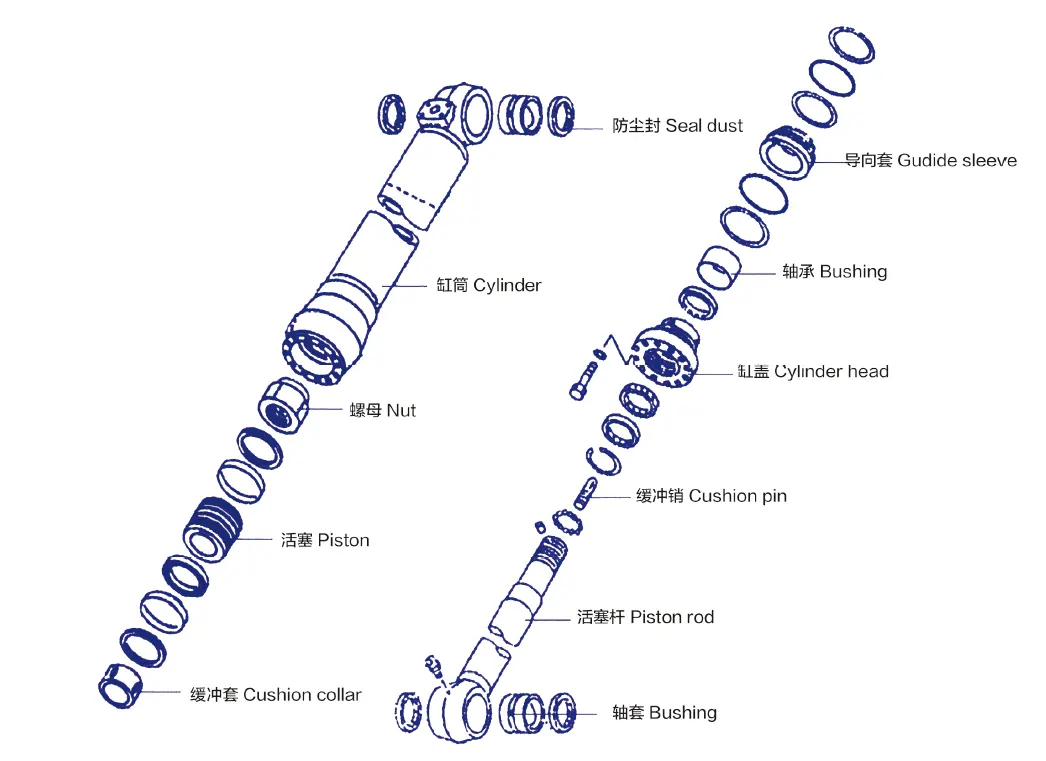
Caratteristiche del cilindro del braccio
- Trasmissione ad alta efficienza: Il cilindro del braccio fornisce un potente movimento lineare e una forza tale da garantire elevate prestazioni al braccio meccanico in varie operazioni.
- Controllo preciso: Grazie al sistema idraulico, il cilindro del braccio consente un controllo preciso del movimento, rendendo più flessibile e preciso il funzionamento degli utensili collegati.
- Durata: Arm cylinders are typically made with high-strength materials, offering excellent wear and corrosion resistance, suitable for long-term use in harsh environments.
- Adattabilità multifunzionale: These cylinders can be widely applied in various machinery, such as excavators, cranes, and robotic arms, adapting to different working requirements.
- Facile manutenzione: Designed with ease of maintenance and replacement in mind, regular inspections and servicing become more convenient, reducing equipment downtime.

Applicazioni del cilindro del braccio
Il cilindro del braccio trova applicazione in vari settori e industrie:
- Ingegneria edile: Used in excavators and cranes, the arm cylinder controls the movement of the bucket or boom for earthwork, material handling, and structural installation.
- Industria manifatturiera: In automated production lines, the arm cylinder facilitates the motion of robotic arms, performing tasks like assembly, welding, and material handling to improve production efficiency and accuracy.
- Macchine agricole: In agricultural machinery such as harvesters and seeders, the arm cylinder controls the movement of operating arms, executing tasks like seeding, fertilizing, and harvesting.
- Estrazione mineraria: In mining equipment, the arm cylinder controls the arm movement of mining machinery, enabling ore extraction and transportation.
- Logistica e Trasporti: Nei carrelli elevatori e nei robot di movimentazione, il cilindro del braccio controlla il sollevamento e il movimento delle forche, facilitando la movimentazione e l'impilamento dei materiali.
Considerazioni sulla progettazione e standard di selezione
When designing arm cylinders, several factors and selection standards are taken into account:
- Capacità di carico: The arm cylinder is designed to withstand the specific load requirements of the machinery it supports.
- Sigillatura: Various sealing components, such as piston seals and rod seals, are used. These seals are made of wear-resistant materials like polyurethane and nitrile rubber. The cylinder body and threaded ends undergo precise treatments to enhance wear resistance.
- Durata: Arm cylinders are manufactured using high-quality materials and undergo rigorous testing to ensure durability and long service life.
- Sicurezza: Safety considerations are integrated into the design, ensuring the safe operation of the machinery while using the arm cylinder.
- Manutenibilità: Easy maintenance and repairability are key factors in the design, enabling efficient inspection and reducing potential downtime.

Sigillatura e lubrificazione
The arm cylinder utilizes various sealing components, such as piston seals and rod seals, which are made of wear-resistant materials like polyurethane and nitrile rubber. The cylinder body and threaded ends are finely treated to improve wear resistance. Regular lubrication with the appropriate hydraulic oil is required to ensure smooth operation and longevity.
Misure di ispezione regolare e manutenzione preventiva
To maintain optimal performance and prevent potential issues, the following measures should be undertaken:
- Ispezionare regolarmente il cilindro del braccio per verificare la presenza di eventuali segni di usura, danni o perdite.
- Controllare e sostituire le guarnizioni o altri componenti secondo necessità.
- Assicurare la corretta lubrificazione del cilindro.
- Seguire i programmi di manutenzione consigliati dal produttore.
- Implement preventive maintenance measures to minimize potential problems.
Guida all'installazione del prodotto
Proper installation of the arm cylinder is essential for its optimal functioning. Follow these steps for correct installation:
- Prepare the mounting area and ensure it is clean and free of any debris.
- Posizionare il cilindro del braccio nella posizione di montaggio designata.
- Securely attach the cylinder using appropriate mounting brackets or fasteners.
- Connect the hydraulic lines according to the manufacturer’s specifications.
- Perform a thorough inspection to ensure proper installation before operation.

Considerazioni sulla sicurezza e fattori ambientali
When using arm cylinders, it is crucial to prioritize safety measures to prevent accidents and ensure the well-being of operators and the surrounding environment. Safe operation includes adhering to proper operating procedures, using personal protective equipment, and providing adequate training to personnel.
Risoluzione dei problemi e problemi comuni
Understanding potential faults and common problems can help in diagnosing and resolving issues. Some common issues associated with arm cylinders include:
- Perdita di fluido idraulico
- Irregular or jerky movement
- Rumore eccessivo durante il funzionamento
- Mancata estensione o retrazione
Per risolvere questi problemi, tieni presente i seguenti suggerimenti:
- Check for any damaged or worn seals and replace them if necessary.
- Inspect hydraulic lines for leaks or blockages.
- Verify proper hydraulic fluid levels and quality.
- Ensure all connections and fittings are secure and undamaged.
- Per problemi specifici, fare riferimento alla guida alla risoluzione dei problemi del produttore.

Organize the article logically, using subheadings for easy navigation. Incorporate relevant images or charts to enhance understanding. Ensure the content is clear, concise, and suitable for readers with varying levels of technical knowledge.
作者: lyl
Informazioni sulla nostra azienda
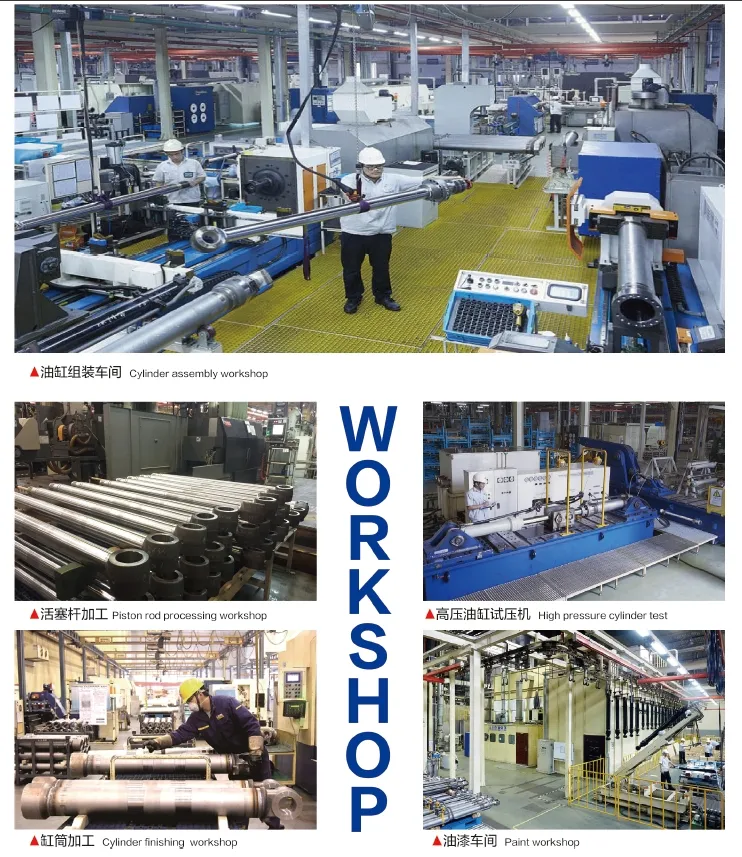
We are a professional manufacturer of replacement hydraulic cylinders, offering a wide range of products. We have become one of the leading manufacturers and wholesale distributors in the domestic and international markets. With a commitment to excellence, we rely on industrialized production management strategies in our refined manufacturing workshops to continuously improve our technical expertise and production efficiency.
By introducing high-end digital manufacturing equipment and professional testing systems, we optimize our manufacturing platform and enhance our product quality control processes, showcasing strong innovative capabilities. Our goal is to meet the diverse needs of customers with principles of efficiency, precision, and high quality.

Cilindro idraulico Applicazione:

 IT
IT  EN
EN  PT
PT  ES
ES  DE
DE  FR
FR  AR
AR  ZH
ZH  RU
RU  KO
KO  KA
KA  BG
BG  CS
CS  DA
DA  EL
EL  ET
ET  FI
FI  HU
HU  ID
ID  LT
LT  LV
LV  NB
NB  NL
NL  PL
PL  RO
RO  SK
SK  SL
SL  SV
SV  TR
TR  UK
UK