
Advanced Fluid Power Procurement
Custom Hydraulic Cylinder Buyer’s Guide: 7 Crucial Questions Engineers Must Ask Manufacturers Before Sign-off
An authoritative engineering blueprint detailing metallurgical validation, hydrostatic pressure thresholds, elastomeric sealing architectures, and the definitive vetting protocols required to procure bespoke linear actuators for heavy machinery.

The Critical Pivot from Off-the-Shelf to Custom Engineering
In the highly rigorous disciplines of commercial earthmoving, deep subterranean mining, large scale agricultural production, and advanced automated industrial manufacturing, standard catalog components frequently fall short of specific operational demands. When a mechanical engineer is tasked with designing a revolutionary piece of heavy machinery, forcing an off-the-shelf hydraulic cylinder to fit into a complex kinematic linkage is an engineering compromise that invariably leads to catastrophic mechanical failure. Extreme spatial constraints, unprecedented hydrostatic pressure requirements, and brutally hostile environmental operating conditions demand fluid power components that are architected from the ground up. Specifying a bespoke linear actuator is a complex, high-stakes procurement process. To establish a baseline of elite engineering standards for custom fluid power solutions, visiting our premium hydraulic cylinders platform is an absolute prerequisite.
Signing off on a custom hydraulic cylinder blueprint is not merely a purchasing decision; it is an assumption of massive engineering liability. A custom cylinder that is improperly sized or metallurgically deficient will not simply underperform—it will rupture under peak kinetic loads, instantly paralyze the machine, and create lethal safety hazards on the job site. Engineers must act as ruthless interrogators during the procurement phase. They must strip away marketing terminology and force the manufacturer to mathematically and physically validate every single design parameter before a single piece of steel is machined.
Evaluated against stringent international ISO fluid power manufacturing standards, this comprehensive technical buyer’s guide will arm you with the ultimate interrogation matrix. We will meticulously dissect the seven absolute, non-negotiable questions that every design engineer must ask their hydraulic cylinder manufacturer before granting final blueprint approval. By demanding empirical data regarding metallurgical yield strengths, elastomeric thermal limits, Euler buckling tolerances, and non-destructive hydrostatic testing protocols, you will guarantee that your custom actuator delivers unrelenting, flawless kinetic force for decades.
1. What Specific Metallurgical Alloys Will Be Utilized for the Barrel and Rod?
The structural integrity of a custom hydraulic cylinder begins at the atomic level. Vague specifications like “high-strength steel” are entirely unacceptable on a custom blueprint. You must demand the exact metallurgical composition.
Defeating Euler Column Buckling
When a custom cylinder is fully extended under a massive payload, the polished piston rod acts as a slender column subjected to immense compressive stress. If the manufacturer utilizes standard 1045 carbon steel for a long-stroke application, the rod will violently bow outward and snap—a catastrophic failure known as Euler column buckling. Engineers must mandate the use of high-yield 4140 or 4340 chromoly steel for the rod. Furthermore, inquire about induction hardening. Induction hardening alters the outer crystalline structure of the steel, making it vastly more resistant to kinetic rock strikes and abrasive damage, which is absolutely critical for Agricultural Hydraulic Cylinders operating in dense, rocky soil.
Chrome Plating Micro-Thickness
The chrome plating on the rod is the ultimate defense against rust and atmospheric corrosion. Ask the manufacturer to specify the exact micrometer thickness of the hard chrome plating. Standard commercial plating is often less than 0.0005 inches thick and highly porous, allowing saltwater to penetrate and rust the steel underneath. For custom actuators deployed in maritime or highly caustic industrial sectors, demand double-chrome or nickel-chrome plating measuring at least 0.001 to 0.002 inches in thickness to guarantee long-term environmental survivability.

2. How Is the Sealing Architecture Validated for Thermodynamic Extremes?
The most massive steel housing is entirely useless if the microscopic polymer seals inside fail. Seals are the true hydrostatic boundaries that make kinetic force mathematically possible.
Polymer Extrusion and Clearance Gaps
When extreme hydraulic pressure is applied, it physically tries to force the soft polyurethane or nitrile seal into the microscopic clearance gap between the steel piston and the barrel wall. Ask the manufacturer to provide the exact extrusion gap calculations and the durometer (hardness) rating of the specified seals. If the gap is too large or the seal is too soft, the polymer will extrude into the gap, get sheared off, and instantly fail. High-performance custom cylinders frequently utilize PTFE (Teflon) energized seals backed by rigid anti-extrusion rings to survive these extreme pressures.
Thermodynamic Operating Windows
Standard seals possess a Glass Transition Temperature (Tg) where they become brittle and shatter in the cold, and a maximum thermal limit where they melt and dissolve under extreme heat. You must explicitly state your machine’s ambient operating temperatures. If your equipment operates continuously in freezing winter environments, demand Arctic-grade elastomers. Conversely, if the cylinder operates near a furnace, specify Fluorocarbon (Viton) seals. In safety-critical applications like Aerial Work Vehicle Hydraulic Cylinders, seal failure means instantaneous loss of platform elevation, making advanced polymer selection an absolute life-safety requirement.
3. What Is the Actuator’s Tolerance for Lateral Side-Loading?
Hydraulic cylinders generate magnificent linear force, but they are incredibly fragile when subjected to perpendicular lateral forces. Side-loading will destroy an actuator in a matter of hours.
Wear Band Architecture
If the machine chassis twists under a heavy load, it forces the piston rod to extend at a slight angle. This angle drives the steel rod directly into the head gland. To combat this, manufacturers use composite wear bands (guide rings) to absorb the friction and keep the rod perfectly centered. Ask the manufacturer to quantify the exact surface area of the wear bands being deployed. Massive Excavator Hydraulic Cylinders experiencing severe asymmetric digging forces require extra-wide, bronze-filled PTFE wear bands to survive the aggressive lateral grinding.
Kinematic Mounting Solutions
The best way to eliminate side-loading is to isolate the cylinder from chassis flex entirely. Inquire if the manufacturer can integrate heavy-duty spherical bearings into the clevis or trunnion mounts. A spherical bearing allows the cylinder to pivot and rotate in multiple dimensions simultaneously, ensuring the force remains perfectly axially aligned with the rod, regardless of how badly the machine frame distorts over rough terrain.

4. Can You Provide the Thermodynamic Thresholds and Burst Pressure Ratings?
A custom cylinder’s continuous operating pressure rating is important, but its peak surge pressure and ultimate burst pressure ratings dictate its survivability in the real world.
Surviving Kinetic Shock Spikes
When a machine violently strikes an immovable object, the kinetic shockwave travels into the cylinder and causes an instantaneous, massive spike in hydrostatic pressure. Ask the manufacturer to provide the calculated hoop stress limits of the steel barrel. The cylinder must be engineered with an appropriate safety factor (typically 3:1 or 4:1) above the maximum operating pressure to ensure the barrel does not plastically deform or explode like a balloon under these surge conditions. This robust engineering is a non-negotiable requirement for high-impact equipment like Dump Truck Hydraulic Cylinders, which frequently encounter extreme bouncing and shifting payloads on rough haul roads.
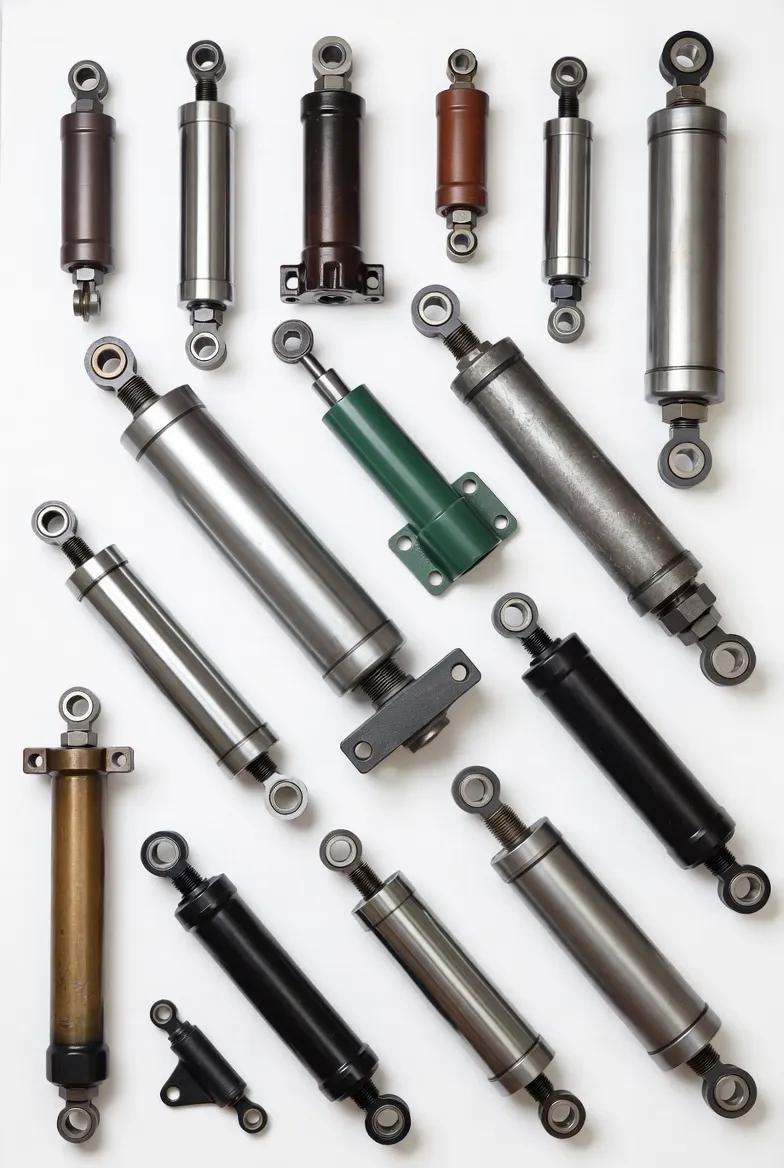
5. What NDT and Hydrostatic Diagnostic Protocols Are Performed Prior to Shipping?
Never accept a custom cylinder that has not been rigorously proven on a test bench. Theoretical CAD models do not guarantee physical performance; empirical testing does.
Non-Destructive Testing (NDT)
Welded body cylinders rely entirely on robotic orbital welds to hold the base cap to the barrel. Demand that the manufacturer performs Non-Destructive Testing (NDT) on these critical pressure-containing welds. Ultrasonic testing or dye penetrant inspections will reveal microscopic, sub-surface metallurgical stress fractures or porosities that would otherwise go unnoticed until the cylinder exploded in the field.
1.5x Hydrostatic Pressure Testing
Every custom cylinder must be mounted to a specialized testing manifold and subjected to a rigorous hydrostatic pressure test—typically at 1.5 times the maximum rated operating pressure. The cylinder is deadheaded, and sensors monitor for any internal fluid bypass across the piston seals, ensuring zero load drift. Furthermore, the test verifies absolute external seal integrity and ensures no fluid is aerated during high-velocity cycling.
6. How Does the Internal Geometry Account for End-of-Stroke Kinetic Shock?
When a massive, rapidly moving payload reaches the end of the cylinder stroke, it must not violently slam into the steel end caps. Ask the manufacturer to detail the custom cushioning architecture. Integrating precisely machined cushioning spears and adjustable needle valves allows the cylinder to trap exhaust fluid in the final inches of travel, creating a massive, localized hydrostatic backpressure. This gracefully decelerates the payload, preventing destructive metal-on-metal impacts and vastly extending the life of the machine chassis. Smooth deceleration is absolutely mandatory for materials handling equipment, ensuring Forklift Hydraulic Cylinders elevate fragile cargo without sudden, dangerous jerks.
7. What Is the Long-Term Traceability and Remanufacturing Support?
A custom cylinder will eventually require maintenance decades down the line. You must ask the manufacturer how the component’s DNA is stored. Demand that every cylinder receives a permanent, laser-etched serial number on the nameplate. Ensure the manufacturer guarantees long-term digital storage of the original CAD files and the exact Bill of Materials (BOM). When the custom seals eventually wear out, reciting this serial number allows the manufacturer to instantly pull the blueprints and machine a mathematically perfect replacement seal kit, eliminating catastrophic downtime and guesswork in the future.


Conclusion: Architecting Flawless Mechanical Power
Procuring a custom hydraulic cylinder is the ultimate test of a mechanical engineer’s foresight and technical rigor. By refusing to accept vague specifications and instead demanding precise mathematical data regarding metallurgical yield strengths, elastomeric extrusion limits, side-loading mitigation, and rigorous non-destructive diagnostic testing, you transform a risky purchase into a guaranteed kinematic success. These seven crucial questions form an impenetrable vetting matrix that separates elite fluid power manufacturers from mere fabricators. When you mandate this level of engineering accountability, you ensure that your custom machinery operates with unrelenting force, absolute positional precision, and decades of unbreakable reliability. If your organization is architecting a revolutionary new machine and requires highly customized, world-class fluid power components designed to survive the harshest industrial parameters, our specialized engineering team stands ready to deliver the ultimate mechanical advantage.