

Cilindro del braccio per escavatore di grandi dimensioni Kobelco SK350LC-8
In qualità di uno dei produttori, fornitori ed esportatori di prodotti meccanici, offriamo cilindri idraulici e molti altri prodotti.
Per maggiori dettagli, contattateci.
Posta:sales@hydraulic-cylinders.net
Produttore fornitore esportatore di cilindri idraulici.
Arm Cylinder For Kobelco Large Excavator SK350LC-8
Arm Cylinder is a specially designed hydraulic cylinder that provides linear motion and power for the arm of various machinery, such as excavators, cranes, and robotic arms. The arm cylinder plays a crucial role in hydraulic systems, enabling the effective movement and control of additional tools or attachments. These cylinders not only ensure smooth motion but also withstand heavy loads, ensuring efficient operation and reliability of the machinery under various working conditions.
Definizione e spiegazione
The arm cylinder is a hydraulic cylinder designed to provide linear motion and power to the arm of various machines. It allows for precise control and movement of attachments, such as buckets or lifting arms, in machinery like excavators, cranes, and robotic arms. The arm cylinder is a critical component in hydraulic systems, ensuring efficient operation and reliable performance.
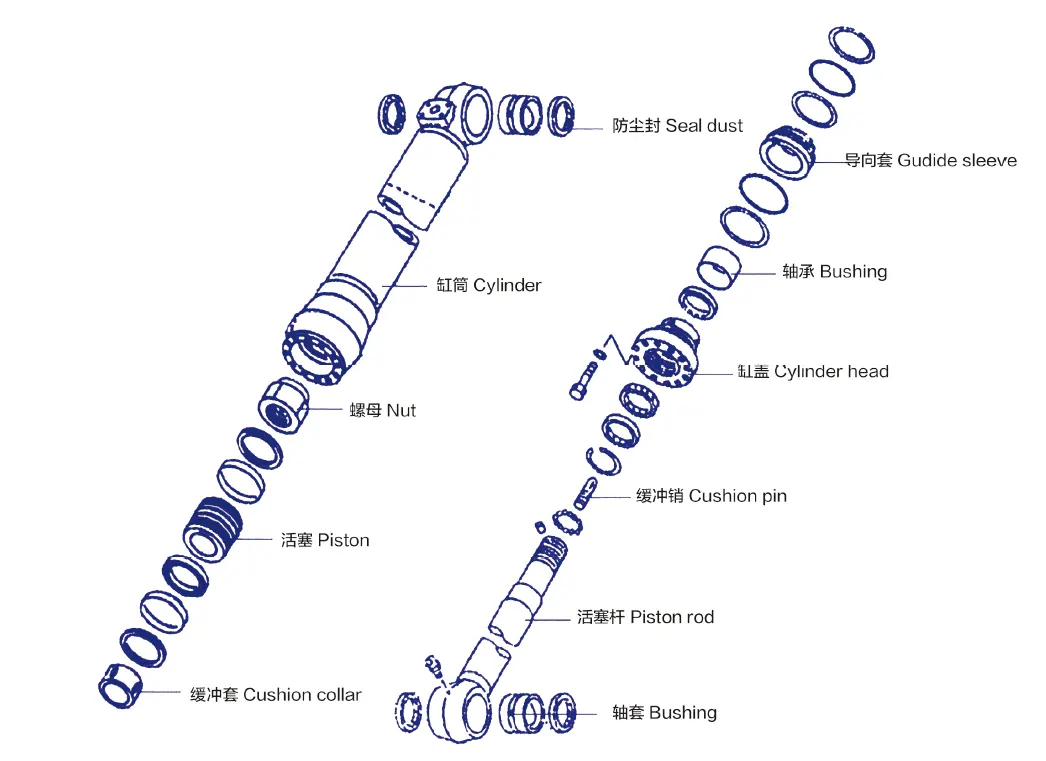
Caratteristiche del cilindro del braccio
- Trasmissione di potenza ad alta efficienza: The arm cylinder provides powerful linear motion and force, ensuring high-performance capabilities for the machinery arm.
- Controllo di precisione: Through the hydraulic system, the arm cylinder enables precise motion control, allowing for flexible and accurate operation of attached tools.
- Durata: Arm cylinders are typically made of high-strength materials, providing excellent wear and corrosion resistance, making them suitable for long-term use in harsh environments.
- Adattabilità multifunzionale: These cylinders have wide applications in various machinery, including excavators, cranes, and robotic arms, adapting to different working requirements.
- Facile manutenzione: Progettati per facilitare la manutenzione e la sostituzione, i cilindri del braccio facilitano le ispezioni e la manutenzione regolari, riducendo i tempi di fermo delle attrezzature.

Applicazioni del cilindro del braccio
I cilindri a braccio trovano applicazione in vari settori:
1. Ingegneria delle costruzioni
In excavators and cranes, the arm cylinder controls the movements of buckets or lifting arms for earthwork, material handling, and structural installation.
2. Industria manifatturiera
Nelle linee di produzione automatizzate, il cilindro del braccio consente il movimento dei bracci robotici per i processi di assemblaggio, saldatura e movimentazione dei materiali, migliorando l'efficienza e la precisione della produzione.
3. Macchine agricole
Nelle macchine agricole come mietitrici e seminatrici, il cilindro del braccio controlla il movimento dei bracci operativi per attività quali la semina, la fertilizzazione e la raccolta.
4. Estrazione mineraria
In mining equipment, the arm cylinder controls the movement of mining equipment arms for ore extraction and transportation.
5. Logistica e trasporti
Nei carrelli elevatori e nei robot di movimentazione, il cilindro del braccio controlla il sollevamento e il movimento delle forche, consentendo la movimentazione e l'impilamento dei materiali.

Considerazioni progettuali e criteri di selezione
In the design of arm cylinders, several factors are considered:
1. Capacità portante
The arm cylinder is designed to withstand the specific loads and forces required for the machinery’s arm movement.
2. Prestazioni di tenuta
Various sealing components, such as piston seals and rod seals, are used to ensure effective sealing of the cylinder, preventing leaks and maintaining operational efficiency.
3. Durata
Arm cylinders are manufactured using high-quality materials with excellent wear resistance and corrosion resistance, ensuring long-term performance in demanding environments.
4. Sicurezza
Safety features, such as pressure relief valves and safety locks, may be incorporated into the arm cylinder design to prevent accidents and ensure operator safety.
5. Manutenibilità
The design of arm cylinders considers ease of maintenance and repair, allowing for convenient inspection, lubrication, and replacement of components, minimizing downtime.

Sigillatura e lubrificazione
The arm cylinder utilizes various sealing components, such as piston seals and rod seals, made of wear-resistant materials like polyurethane and nitrile rubber. The cylinder body and threaded ends undergo precise surface treatment to enhance wear resistance. Regular lubrication with the appropriate amount of hydraulic oil is necessary to ensure smooth operation.
Ispezione regolare e manutenzione preventiva
Per garantire prestazioni ottimali e longevità, si consigliano ispezioni regolari e manutenzione preventiva:
- Inspect the arm cylinder for any signs of wear, leaks, or damage.
- Pulire e lubrificare regolarmente il cilindro.
- Check and replace worn-out seals or other components as needed.
- Seguire le istruzioni del produttore per la manutenzione e la lubrificazione.
Guida all'installazione corretta del prodotto
La corretta installazione del cilindro del braccio è fondamentale per prestazioni e sicurezza ottimali. Seguire questi passaggi:
- Assicurarsi che il macchinario sia spento e in una posizione stabile.
- Se necessario, rimuovere eventuali cilindri del braccio esistenti.
- Align the new arm cylinder with the mounting points on the machinery.
- Securely fasten the cylinder in place using appropriate bolts and hardware.
- Check and adjust the alignment of the cylinder, if necessary.
- Connect the hydraulic lines to the cylinder according to the machinery’s hydraulic system.
- Verificare il funzionamento del cilindro del braccio per garantirne la corretta funzionalità.

Considerazioni sulla sicurezza e fattori ambientali
When using arm cylinders, it is essential to prioritize safety measures to prevent accidents and ensure operator well-being. Adhering to safety protocols and providing proper training to operators is crucial to minimize risks.
Risoluzione dei problemi e problemi comuni
Arm cylinders may encounter certain faults or issues. Here are some common ones:
1. Perdita
Possible causes of leakage include damaged seals, loose fittings, or excessive pressure. Inspect and replace faulty seals or tighten fittings as necessary.
2. Movimento lento o inefficiente
This issue may arise due to low hydraulic pressure or inadequate lubrication. Check the hydraulic system’s pressure and ensure proper lubrication of the cylinder.
Suggerimenti e soluzioni per la risoluzione dei problemi
Per diagnosticare e risolvere efficacemente i problemi, tieni presente i seguenti suggerimenti:
- Refer to the manufacturer’s documentation for troubleshooting guidance.
- Inspect the arm cylinder for any visible signs of damage or wear.
- Check the hydraulic system for any issues that may affect the cylinder’s performance.
- Consult with a professional if necessary.
Informazioni sulla nostra azienda
We are a professional manufacturer of replacement hydraulic cylinders, offering a wide range of products. With our dedication to excellence, we have become one of the leading manufacturers and wholesale distributors of hydraulic cylinders in domestic and international markets. Our commitment to high-quality products is supported by our industrialized production management strategy and state-of-the-art manufacturing facilities. We continuously enhance our technical expertise and production efficiency by introducing advanced digital manufacturing equipment and professional testing systems. Our manufacturing platform is optimized, and our quality control processes are in place, ensuring strong innovation capabilities. Our goal is to meet the diverse needs of our customers with high efficiency, precision, and quality.
From our expertise and international certifications to
Cilindro idraulico Applicazione:

 IT
IT  EN
EN  PT
PT  ES
ES  DE
DE  FR
FR  AR
AR  ZH
ZH  RU
RU  KO
KO  KA
KA  BG
BG  CS
CS  DA
DA  EL
EL  ET
ET  FI
FI  HU
HU  ID
ID  LT
LT  LV
LV  NB
NB  NL
NL  PL
PL  RO
RO  SK
SK  SL
SL  SV
SV  TR
TR  UK
UK