
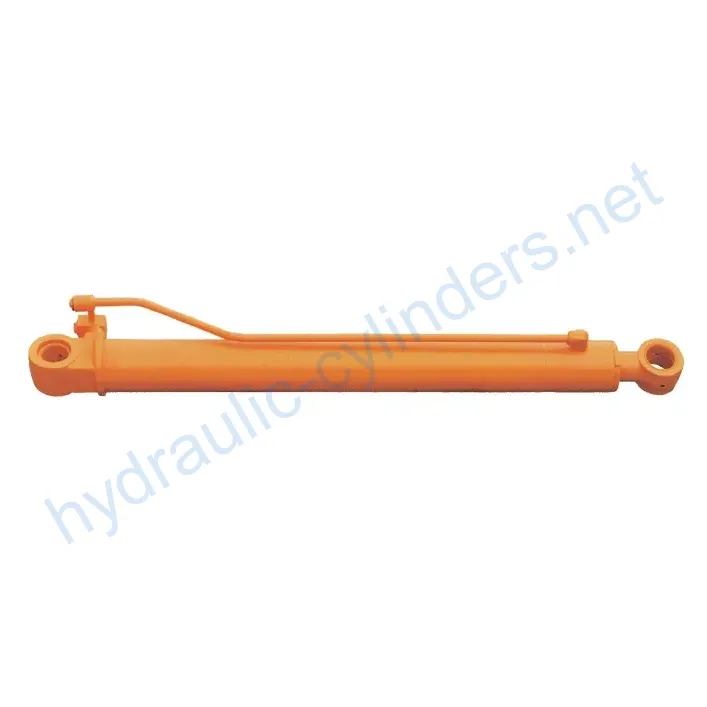
Cilindro del braccio per escavatore piccolo Sany SY155C-9
In qualità di uno dei produttori, fornitori ed esportatori di prodotti meccanici, offriamo cilindri idraulici e molti altri prodotti.
Per maggiori dettagli, contattateci.
Posta:sales@hydraulic-cylinders.net
Produttore fornitore esportatore di cilindri idraulici.
Arm Cylinder For Sany Small Excavator SY155C-9
Introduzione
The arm cylinder is a hydraulic cylinder specifically designed to provide linear motion and power to the arm of various types of machinery, such as excavators, cranes, and robotic arms. The arm cylinder plays a crucial role in hydraulic systems, enabling the efficient movement and control of additional tools or attachments. These cylinders not only ensure smooth motion but also withstand heavy loads, ensuring the efficient operation and reliability of the machinery under various working conditions.
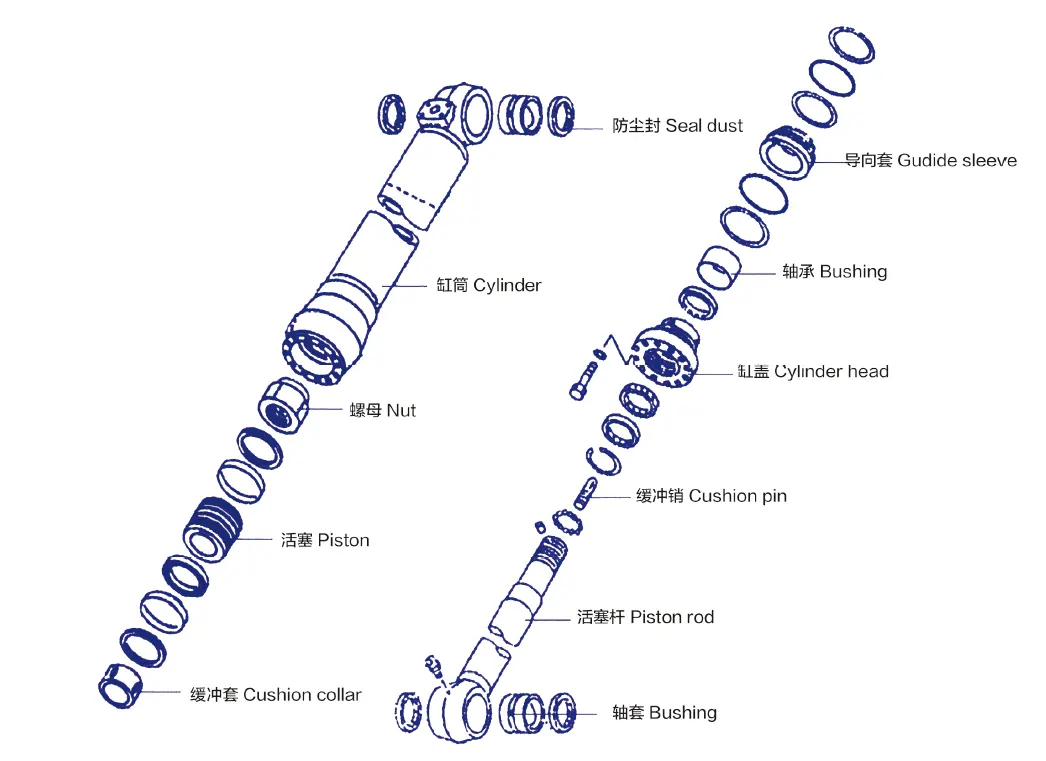
Caratteristiche
- Trasmissione ad alta efficienza: Il cilindro del braccio fornisce un potente movimento lineare e una forza tale da garantire il funzionamento ad alte prestazioni del braccio robotico in vari compiti.
- Controllo preciso: Grazie al sistema idraulico, il cilindro del braccio consente un controllo preciso del movimento, rendendo il funzionamento degli utensili collegati più flessibile e preciso.
- Durata: I cilindri dei bracci sono solitamente realizzati con materiali ad alta resistenza, che offrono un'eccellente resistenza all'usura e alla corrosione, rendendoli adatti all'uso a lungo termine in ambienti difficili.
- Adattabilità multifunzionale: Questi cilindri possono essere ampiamente applicati a vari macchinari, come escavatori, gru e bracci robotici, adattandosi a diverse esigenze di lavoro.
- Facile manutenzione: Progettato pensando alla facilità di manutenzione e sostituzione, il cilindro del braccio facilita i controlli periodici e la manutenzione, riducendo i tempi di fermo delle apparecchiature.

Applicazioni
- Ingegneria edile: Negli escavatori e nelle gru, il cilindro del braccio controlla il movimento della benna o del braccio, facilitando i movimenti terra, la movimentazione dei materiali e l'installazione strutturale.
- Industria manifatturiera: Nelle linee di produzione automatizzate, il cilindro del braccio viene utilizzato per il movimento dei bracci robotici, consentendo processi quali l'assemblaggio, la saldatura e la movimentazione dei materiali, migliorando così l'efficienza e la precisione della produzione.
- Macchine agricole: In agricultural equipment such as harvesters and seeders, the arm cylinder controls the movement of operating arms, executing tasks such as seeding, fertilizing, and harvesting.
- Estrazione mineraria: In mining equipment, the arm cylinder is used to control the movement of the mining equipment arm, facilitating ore extraction and transportation.
- Logistica e Trasporti: Nei carrelli elevatori e nei robot di movimentazione, il cilindro del braccio controlla il sollevamento e il movimento delle forche, consentendo la movimentazione e l'impilamento dei materiali.
Considerazioni sulla progettazione e standard di selezione
- Capacità di carico: Discussing the arm cylinder’s ability to bear loads.
- Sigillatura: Discussing the use of various sealing components, such as piston seals and rod seals, made of wear-resistant materials like polyurethane and nitrile rubber. Mentioning the fine surface treatment of the cylinder body and threaded ends to enhance wear resistance. Emphasizing the need for regular lubrication with hydraulic oil.
- Durata: Discussing the importance of selecting materials and manufacturing processes that ensure the arm cylinder’s durability and longevity.
- Sicurezza: Discussing the safety measures implemented in the design of the arm cylinder to prevent accidents and ensure operator safety.
- Manutenzione: Discussing the importance of regular inspections and preventive maintenance measures to keep the arm cylinder in optimal condition and prevent potential issues.

Sigillatura e lubrificazione
The arm cylinder utilizes various sealing components, such as piston seals and rod seals, which are made of wear-resistant materials like polyurethane and nitrile rubber. The cylinder body and threaded ends undergo fine surface treatment to enhance wear resistance. Regular lubrication with an appropriate amount of hydraulic oil is necessary to ensure smooth operation and reduce friction.
Ispezione regolare e manutenzione preventiva
- Regularly check for leaks in the hydraulic system and inspect the condition of the seals.
- Monitor the performance of the arm cylinder and ensure it operates smoothly without abnormal vibrations or noises.
- Inspect and clean the cylinder body and piston rod regularly to remove any accumulated dirt or debris.
- Verify the hydraulic oil level and quality, replenishing or replacing it as necessary.
- Follow the manufacturer’s guidelines for the recommended maintenance schedule and procedures.
Guida all'installazione del prodotto
Follow the steps below for proper installation of the arm cylinder:
- Assicurarsi che l'apparecchiatura sia spenta e in una posizione stabile.
- Identify the correct mounting position for the arm cylinder.
- Securely attach the cylinder to the equipment, aligning the mounting holes.
- Tighten the bolts or fasteners according to the specified torque values.
- Collegare i tubi idraulici alle porte appropriate, assicurandosi che siano ben sigillati.
- Check for any leaks or abnormalities before operating the equipment.

Considerazioni sulla sicurezza e fattori ambientali
When using the arm cylinder, it is important to follow proper safety measures to prevent accidents and ensure a safe working environment. Safety precautions should include:
- Proper training and certification for operators handling equipment with arm cylinders.
- Using appropriate safety devices and protective equipment.
- Regular inspections and maintenance to identify and address any safety hazards.
- Adhering to environmental regulations and responsible waste management practices.
Diagnosi dei guasti e problemi comuni
When encountering issues with the arm cylinder, it is essential to diagnose the faults correctly. Common problems and their potential solutions include:
- Perdita: Check the seals and connections for any damage or looseness. Replace or reseal as necessary.
- Scarsa prestazione: Inspect the hydraulic system for any blockages or low fluid levels. Clean or replenish as needed.
- Rumore o vibrazione: Check for loose mounting bolts or damaged components. Tighten or replace as necessary.
- Sticking or Jerky Movement: Inspect the cylinder body and rod for any dirt or debris. Clean and lubricate accordingly.

Ricordatevi di organizzare l'articolo in modo logico, di utilizzare sottotitoli per facilitare la navigazione, di incorporare immagini o grafici pertinenti per migliorare la comprensione e di assicurarvi che il contenuto sia chiaro, conciso e adatto a lettori con diversi livelli di conoscenza tecnica.
Chi siamo
We are a professional manufacturer of replacement hydraulic cylinders, offering a wide range of products. We have become one of the leading hydraulic cylinder manufacturers and wholesale distributors in both domestic and international markets. We uphold the principle of excellence in quality and continually improve our technical capabilities and production efficiency through industrialized production management strategies in our advanced manufacturing workshop. By introducing high-end digital manufacturing equipment and professional testing systems, we optimize our manufacturing platform and improve product quality control processes, showcasing strong innovation capabilities. Our goal is to meet diverse customer needs with efficiency, precision, and high-quality products.

Cilindro idraulico Applicazione:

 IT
IT  EN
EN  PT
PT  ES
ES  DE
DE  FR
FR  AR
AR  ZH
ZH  RU
RU  KO
KO  KA
KA  BG
BG  CS
CS  DA
DA  EL
EL  ET
ET  FI
FI  HU
HU  ID
ID  LT
LT  LV
LV  NB
NB  NL
NL  PL
PL  RO
RO  SK
SK  SL
SL  SV
SV  TR
TR  UK
UK