
Advanced Fluid Power Anatomy
Inside a Hydraulic Cylinder: An Illustrated Guide to Pistons, Barrels, and Seals
An authoritative engineering blueprint detailing the metallurgical structures, advanced polymer sealing architectures, and the complex thermodynamic physics operating within the core of modern fluid power actuators.

Deconstructing the Engine of Linear Motion
In the highly rigorous disciplines of commercial construction, advanced industrial automation, marine engineering, and massive scale agricultural harvesting, fluid power systems represent the undisputed foundation of mechanical force. At the very heart of these immense machines lies the hydraulic cylinder. This remarkable component is the precise instrument responsible for converting the intense hydrostatic pressure of synthetic fluid into perfectly controlled linear kinetic energy. While they appear as simple, robust steel tubes on the exterior, diving inside a hydraulic cylinder reveals a world of sub-millimeter tolerances, advanced material science, and complex thermodynamic interactions. Understanding the intricate anatomy of these actuators is the absolute prerequisite for effective machine design and predictive maintenance. To explore the highest industry standards for fluid power components, visiting our premium hydraulic cylinders platform provides an essential technical baseline.
A hydraulic cylinder is not a singular block of metal; it is a highly calibrated pressure vessel housing a meticulously assembled ecosystem of moving parts. Every individual component the barrel, the piston, the rod, the end caps, and the elastomeric seals must work in perfect, harmonious synchronization. A microscopic failure in any one of these elements will cascade through the system, resulting in sudden fluid bypass, catastrophic structural buckling, or lethal external hemorrhaging of highly pressurized oil. The operational environment dictates the architectural design. An actuator powering a delicate automated factory press requires a vastly different internal geometry than one thrusting the massive steel arm of a mining excavator into solid granite.
From an authoritative engineering perspective evaluated against stringent international ISO manufacturing criteria, mastering the internal components of a fluid power actuator is essential for both procurement engineers and field technicians. This comprehensive, illustrated technical guide will meticulously dissect the internal anatomy of a hydraulic cylinder. We will explore the metallurgical properties of the barrel, the critical load bearing physics of the piston and rod assembly, and conduct a deep dive into the polymer science that defines modern high pressure sealing architectures.
The Cylinder Barrel: The Unyielding Pressure Vessel
The cylinder barrel is the main body of the actuator. It serves a dual purpose: it must contain astronomical internal hydrostatic pressures without ballooning, and it must provide a perfectly smooth, frictionless pathway for the piston to travel.
Metallurgical Integrity
Barrels are predominantly manufactured from cold drawn seamless carbon steel tubing, such as ST52 or 1026 grade steel. This seamless construction is vital. If a barrel possessed a welded longitudinal seam, the continuous fluctuation of high pressure fluid (often spiking above 5,000 PSI) would rapidly fatigue the weldment, causing a catastrophic longitudinal rupture. The wall thickness of the barrel is calculated based on the maximum operating pressure and the required safety factor. For immense lifting applications like Excavator Hydraulic Cylinders, heavy walled tubing is deployed to prevent plastic deformation or radial ballooning during violent kinetic shock loads.
Skiving and Roller Burnishing
The interior surface of the barrel is an engineering masterpiece. It cannot simply be smooth; it must possess a specific micro geometry. Manufacturers utilize a process called skiving and roller burnishing (or honing) to prepare the inside wall. This process cuts away surface imperfections and then crushes the steel with hardened rollers, increasing surface hardness and leaving a precise cross hatch pattern. This microscopic cross hatching is essential it holds a tiny, vital film of hydraulic oil that lubricates the polyurethane piston seals as they rapidly slide back and forth. If the barrel is too smooth, the seals will run dry, overheat, and shred into pieces.

The Kinetic Core: Piston and Piston Rod Assembly
The piston and its attached rod are the dynamic heart of the cylinder. The piston separates the internal pressure zones, while the rod physically transfers that accumulated force to the external machine environment.
The Piston: Dividing the Pressure
The piston is a solid disc of machined steel or aluminum attached firmly to the base of the piston rod. Its primary function is to divide the cylinder barrel into two separate pressure chambers: the blind end and the rod end. The outer circumference of the piston is heavily machined with complex grooves. These grooves house the primary elastomeric seals that prevent high pressure fluid from bypassing from one chamber to the other. Additionally, the piston holds composite wear bands (guide rings) that prevent the metallic piston from directly grinding against the metallic barrel wall. A flawless piston seal is what gives Aerial Work Vehicle Hydraulic Cylinders the ability to lock and suspend heavy platforms rigidly in mid air without drifting.
The Piston Rod: Surviving Column Buckling
The piston rod extends outward through the cylinder head gland. It is uniquely vulnerable because it repeatedly transitions between the lubricated, sterile environment inside the cylinder and the abrasive, corrosive environment of the outside world. When the cylinder extends to push a massive payload, the rod acts as a slender column subjected to immense compressive stress. To prevent Euler column buckling—a catastrophic failure where the rod bows outward and snaps—manufacturers forge rods from high-yield 4140 chromoly steel. The surface is then induction hardened and heavily electroplated with hard chrome to provide extreme resistance to kinetic rock strikes, abrasive silica sand, and atmospheric rust. This extreme surface defense is absolutely vital for Agricultural Hydraulic Cylinders operating in deep mud and caustic fertilizers.

Sealing the Ends: The Base Cap and Head Gland
The massive steel tube must be securely closed at both ends to create the pressurized hydrostatic chambers. The architecture of these end caps defines the serviceability of the actuator.
The Blind End (Base Cap)
The base cap encloses the rear of the cylinder barrel. In mobile hydraulic applications, such as heavy earthmovers, this cap is almost always permanently fused to the barrel using automated robotic orbital welding. This creates a monolithic, incredibly strong structure that will not leak under extreme shock loads. The base cap frequently houses the primary mounting clevis or trunnion, transferring the massive pushing force directly into the machine chassis. It also contains the fluid port that feeds high pressure oil into the extension chamber.
The Head Gland (Rod End Cap)
The head gland is the most heavily fortified and complex stationary component of the cylinder. It encloses the front of the barrel but features a central bore allowing the piston rod to extend through it. Because the rod moves, the head gland cannot be permanently welded shut; it must be threaded or bolted into the barrel to allow for future maintenance and seal replacement. The gland houses an intricate array of static and dynamic seals. If the heavy gland threads suffer from metallurgical fatigue and fail, the entire gland will violently launch off the barrel under high pressure, turning the rod into a lethal projectile.
Tie-Rod Construction
In industrial factory environments, the welding process is often bypassed in favor of tie-rod construction. Four or more massive threaded steel rods run along the outside of the barrel, clamping thick, square cast iron head and base caps tightly against the ends of the tube. This allows for incredibly rapid disassembly and seal replacement directly on the factory floor, a critical feature for minimizing expensive downtime on continuous-duty injection molding lines or automated presses.
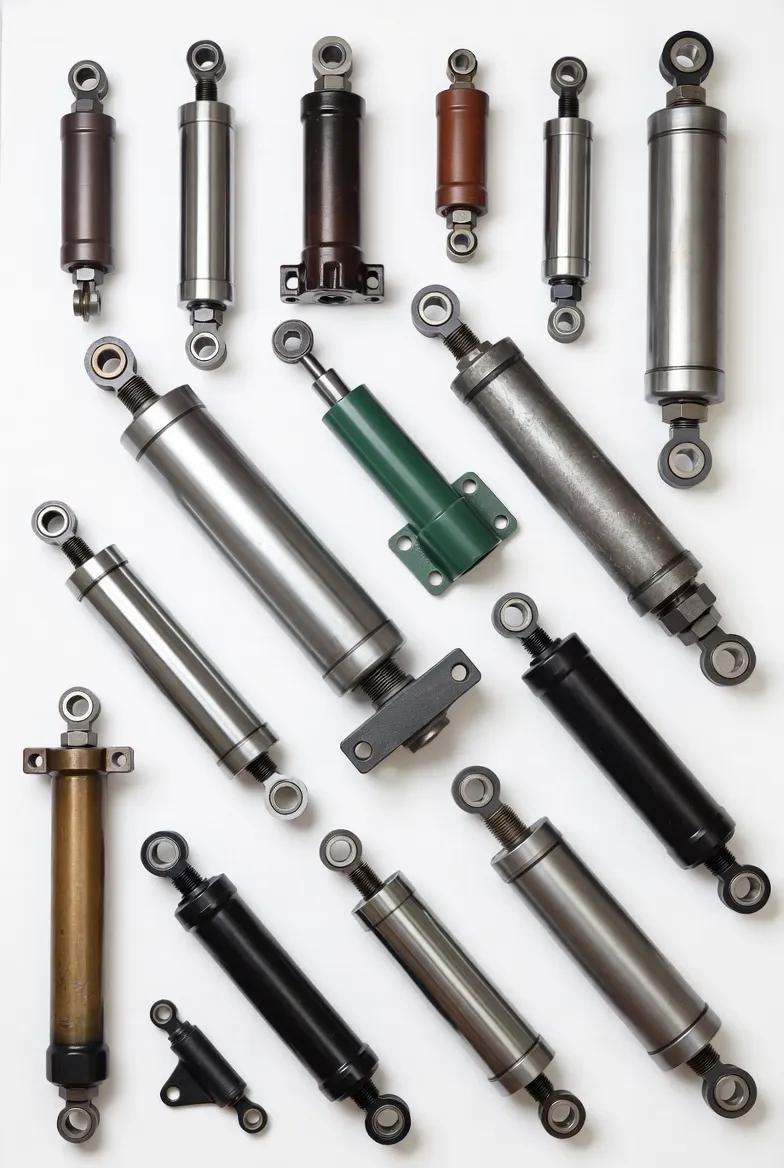
The Unsung Heroes: Advanced Sealing Architecture
The magnificent forged steel of the cylinder provides the structural skeleton, but the elastomeric polymers provide the absolute hydrostatic barrier that makes kinetic force mathematically possible. Without flawless seals, high-pressure fluid simply bypasses the piston, rendering the entire massive machine utterly paralyzed.
- ✔️
The Piston Seals (Dynamic): Located on the outer diameter of the piston, these heavy duty polyurethane or PTFE composite rings prevent fluid from crossing between the high-pressure and low-pressure chambers of the barrel. They must withstand constant abrasive sliding and extreme thermodynamic friction. If a piston seal degrades, the cylinder will lose its lifting power and slowly drift downward under a load.
- ✔️
The Rod Seals (Dynamic): Seated deep within the head gland, the rod seal (often a U-cup design) is the final boundary preventing pressurized oil from leaking out of the cylinder into the environment. Because it seals against the constantly moving chrome rod, it is highly susceptible to wear from embedded dirt or microscopic scratches on the rod surface.
- ✔️
The Wiper / Scraper Seal: Positioned at the very outer edge of the head gland, the wiper seal faces the external environment. Its sole purpose is to aggressively shear off hardened mud, abrasive silica sand, and corrosive chemical residue from the retracting rod before the dirt can penetrate the pressure vessel. In extreme dirt environments, heavy duty machinery like Dump Truck Hydraulic Cylinders rely on metallic brass scraper rings for ultimate defense.
- ✔️
Wear Bands (Guide Rings): These are not technically seals, but rather sacrificial composite or bronze bands located on the piston and inside the gland. They act as mechanical bearings, absorbing lateral side-loading and preventing the steel piston from grinding directly against the steel barrel. When wear bands erode, metal-on-metal scoring occurs, destroying the actuator. High-reach precision equipment like Forklift Hydraulic Cylinders utilize premium wear bands to ensure absolutely smooth, vibration-free mast elevation.


Conclusion: Mastering the Architecture of Force
Peering inside a hydraulic cylinder reveals that these massive instruments of power are, in reality, delicate symphonies of precision engineering. A fluid power actuator relies on the flawless cooperation of high-yield metallurgical steel fighting off Euler buckling, micro-honed barrel surfaces holding microscopic films of lubricating oil, and advanced polymer seals establishing impenetrable hydrostatic boundaries. By thoroughly understanding the distinct functions of the piston, the rod, the head gland, and the intricate sealing architecture, design engineers and maintenance professionals can diagnose failures accurately and specify components tailored perfectly to their hostile operational environments. Whether you are outfitting a high-speed automated factory or designing rugged off-road earthmoving equipment, the quality of these internal components dictates the ultimate reliability of your machinery. If your organization requires custom-engineered, world-class fluid power solutions built to exacting internal tolerances, our elite technical team stands ready to architect your success.