

Arm Cylinder For Zhenyu Small Excavator ZY330
Como um dos fabricantes, fornecedores e exportadores de produtos mecânicos de cilindros hidráulicos, oferecemos cilindros hidráulicos e muitos outros produtos.
Entre em contato conosco para obter detalhes.
Correio eletrônico:sales@hydraulic-cylinders.net
Fabricante, fornecedor e exportador de cilindros hidráulicos.
Arm Cylinder For Zhenyu Small Excavator ZY330
Introdução
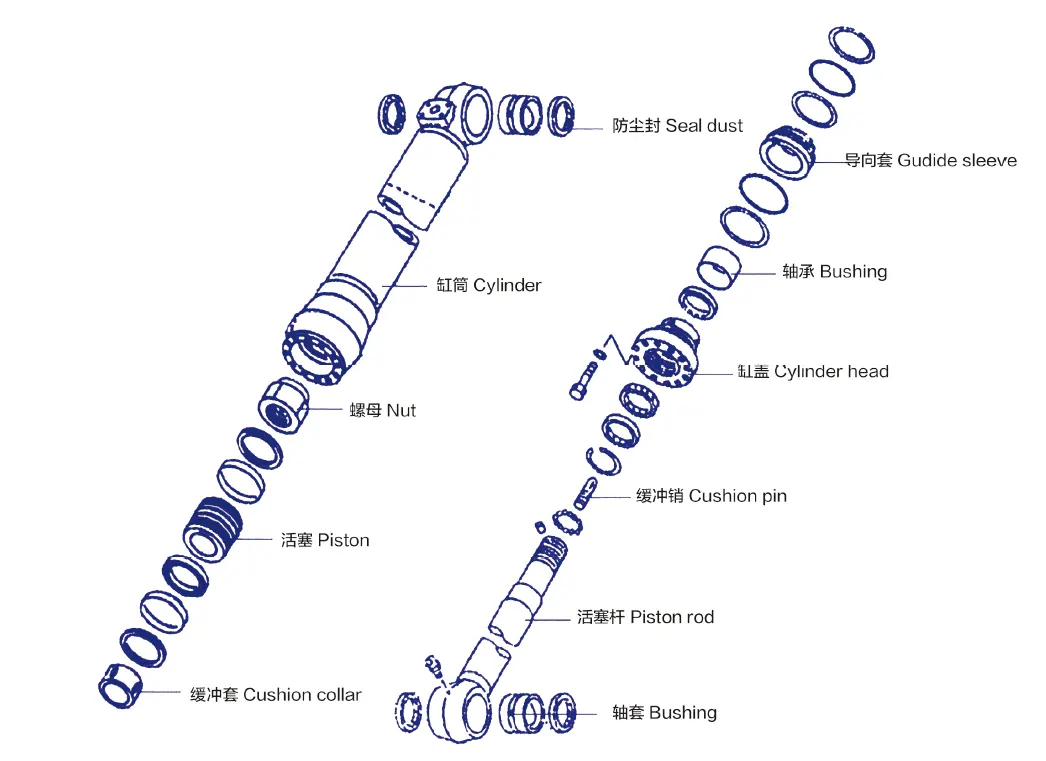
The arm cylinder is a specially designed hydraulic cylinder that provides linear movement and power to the arm of various machinery such as excavators, cranes, and robotic arms. It plays a crucial role in hydraulic systems, enabling the efficient movement and control of additional tools or attachments. These cylinders not only ensure smooth motion but also withstand heavy loads, ensuring the efficient operation and reliability of the machinery under various working conditions.
Definição e Explicação
The arm cylinder is a hydraulic cylinder that is specifically designed to provide linear motion and power to the arm of various machinery. It allows for the effective movement and control of additional tools or attachments, such as buckets, booms, or arms, in machines like excavators, cranes, and robotic arms. These cylinders are essential components in hydraulic systems, enabling the smooth and precise operation of the machinery.
Características
- Transmissão de alta eficiência: O cilindro do braço proporciona um movimento linear potente e muita força, garantindo o alto desempenho e a eficiência do braço da máquina em diversas operações.
- Controle preciso: Por meio do sistema hidráulico, o cilindro do braço permite um controle preciso do movimento, tornando a operação das ferramentas acopladas mais flexível e precisa.
- Durabilidade: Arm cylinders are typically made of high-strength materials and have excellent wear and corrosion resistance, making them suitable for long-term use in harsh environments.
- Adaptabilidade multifuncional: Esses cilindros podem ser amplamente aplicados em diversos tipos de máquinas, como escavadeiras, guindastes e braços robóticos, adaptando-se a diferentes requisitos de trabalho.
- Fácil manutenção: O projeto do cilindro do braço leva em consideração a facilidade de manutenção e substituição, tornando a inspeção e a manutenção regulares mais convenientes e reduzindo o tempo de inatividade do equipamento.

Aplicações
The arm cylinder finds application in various industries and sectors:
1. Engenharia de Construção
In excavators and cranes, the arm cylinder is used to control the movement of buckets or booms, facilitating earthmoving, material handling, and structural installation.
2. Fabricação
Em linhas de produção automatizadas, o cilindro do braço é utilizado para movimentar os braços robóticos, possibilitando processos de montagem, soldagem e manuseio de materiais, melhorando a eficiência e a precisão da produção.
3. Máquinas agrícolas
Em máquinas agrícolas como colheitadeiras e semeadoras, o cilindro do braço controla o movimento dos braços operacionais, realizando tarefas como semeadura, fertilização e colheita.
4. Mineração
Em equipamentos de mineração, o cilindro do braço é usado para controlar o movimento do braço da máquina de mineração, facilitando a extração e o transporte do minério.
5. Logística e Transporte
Em empilhadeiras e robôs de movimentação, o cilindro do braço controla a elevação e o movimento dos garfos, permitindo o manuseio e o empilhamento de materiais.

Considerações de design e critérios de seleção
- Capacidade de suporte: The arm cylinder is designed to withstand the specific load requirements of the machinery it will be used in.
- Selagem: São utilizados diversos componentes de vedação, como vedações de pistão e vedações de haste, normalmente feitos de materiais resistentes ao desgaste, como poliuretano e borracha nitrílica.
- Durabilidade: The cylinder body and threaded end surfaces undergo fine treatment to enhance wear resistance and prolong the service life.
- Segurança: Safety considerations include the use of high-quality materials, precise engineering, and adherence to safety standards to prevent accidents or failures.
- Manutenibilidade: The design of the arm cylinder takes into account ease of maintenance and replacement, ensuring easy access for regular inspections and reducing downtime for repairs.

Vedação e Lubrificação
The arm cylinder utilizes various sealing components, such as piston seals and rod seals, made from wear-resistant materials like polyurethane and nitrile rubber. The cylinder body and threaded end surfaces are finely treated to improve wear resistance. Regular lubrication with appropriate hydraulic oil is necessary for smooth operation and longevity of the cylinder.
Inspeção regular e manutenção preventiva
- Inspect the arm cylinder regularly for any signs of wear, leakage, or damage to the seals and components.
- Check the hydraulic oil level and quality, and replace or replenish as necessary.
- Ensure all connections and fittings are secure and properly tightened.
- Clean the cylinder and surrounding areas to remove dirt and debris that may affect its performance.
- Follow the manufacturer’s guidelines for preventive maintenance, including lubrication and replacement of components at recommended intervals.
Guia de instalação do produto
Proper installation of the arm cylinder is essential for its optimal performance and longevity. Follow these steps for installation:
- Ensure the machinery is safely positioned and powered off.
- Remove any old or damaged cylinder by loosening the mounting bolts and disconnecting the hydraulic hoses.
- Inspect the new arm cylinder for any signs of damage or defects.
- Apply a thin layer of hydraulic oil or grease to the cylinder’s mounting surface.
- Align the cylinder with the mounting bracket and secure it in place using the appropriate bolts and nuts.
- Connect the hydraulic hoses, ensuring proper routing and tight connections.
- Test the cylinder’s operation by slowly activating the hydraulic system and checking for any abnormalities or leaks.

Considerações de segurança e fatores ambientais
When using the arm cylinder, it is important to follow safety measures to prevent accidents and ensure operator safety. Some key safety precautions include:
- Adhere to all safety guidelines and regulations provided by the machinery manufacturer.
- Equip operators with necessary personal protective equipment (PPE) such as gloves and safety goggles.
- Regularly inspect the arm cylinder and hydraulic system for any signs of wear, damage, or leaks.
- Ensure proper lubrication and maintenance of the cylinder to avoid unexpected failures.
- Dispose of any used hydraulic oil or waste materials in accordance with local environmental regulations.
Solução de problemas e problemas comuns
Here are some common issues that may arise with the arm cylinder and possible troubleshooting tips:
- Vazamento: Check for loose connections or damaged seals. Replace any faulty components and ensure proper tightening of fittings.
- Ruído anormal: Inspect the cylinder for any loose parts or contaminants. Clean or replace components as necessary.
- Desempenho ruim: Check the hydraulic system for low fluid levels or dirty oil. Clean or replace filters and replenish the hydraulic oil as needed.
By following these troubleshooting tips, readers will be able to diagnose and resolve common issues effectively. Additionally, implementing preventive measures will help minimize potential problems.
Cilindro hidráulico Aplicação:

 PT
PT  EN
EN  ES
ES  DE
DE  FR
FR  IT
IT  AR
AR  ZH
ZH  RU
RU  KO
KO  KA
KA  BG
BG  CS
CS  DA
DA  EL
EL  ET
ET  FI
FI  HU
HU  ID
ID  LT
LT  LV
LV  NB
NB  NL
NL  PL
PL  RO
RO  SK
SK  SL
SL  SV
SV  TR
TR  UK
UK