
Advanced Fluid Power Maintenance
How to Bleed Air from a Hydraulic Cylinder: A Step-by-Step Safe Procedure
An authoritative engineering blueprint detailing thermodynamic safety protocols, kinematic stabilization, fluid purging methodologies, and the definitive procedures to eliminate trapped aeration in heavy machinery actuators.

The Invisible Enemy of Fluid Power Systems
In the rigorous disciplines of heavy commercial construction, deep subterranean mining, automated industrial manufacturing, and massive scale agricultural operations, fluid power systems rely on one absolute physical law: liquids are incompressible. This fundamental principle allows hydraulic cylinders to convert the intense hydrostatic pressure of synthetic fluids into perfectly controlled, unrelenting linear kinetic energy. However, when atmospheric air breaches the closed loop circuit, this principle is shattered. Air is highly compressible. Trapped air inside a cylinder transforms a rigid mechanical actuator into a dangerous, elastic, bouncing hazard. To explore the absolute highest industry standards for precision engineered components designed to mitigate aeration, visiting our premium hydraulic cylinders platform is an essential technical baseline for maintenance professionals.
Air can infiltrate a hydraulic network during initial factory assembly, after a routine seal replacement, or through a microscopic leak in a suction line. Regardless of how it enters, the consequences are universally destructive. Beyond causing spongy and erratic kinematic movements, trapped air subjected to high pressure undergoes adiabatic compression. This rapid compression superheats the air bubbles to over two thousand degrees Fahrenheit, igniting the surrounding oil mist in a localized explosion known as micro-dieseling. This extreme thermal event instantly chars the internal polyurethane seals, completely destroying the hydrostatic boundary of the actuator.
Evaluated against stringent international ISO fluid power maintenance protocols, this comprehensive technical blueprint will systematically deconstruct the exact procedure required to safely bleed air from a hydraulic cylinder. We will meticulously analyze the diagnostic symptoms of aeration, the mandatory mechanical safety preparations, the precise execution of the bleeding sequence, and the post-purge fluid health verifications necessary to restore your heavy machinery to absolute kinetic dominance.
Diagnostic Indicators: How to Recognize Aeration
Before initiating a maintenance protocol, operators must accurately diagnose the presence of trapped air. The symptoms are both physical and auditory, projecting clear signals of fluid instability.
Spongy and Jerky Actuation
A healthy cylinder extends and retracts with absolute, smooth precision. If the actuator stutters, hesitates, or visibly bounces when coming to a halt, the fluid column is compromised by compressible gas. This spongy behavior is an immense safety hazard in precision lifting equipment, such as Forklift Hydraulic Cylinders, where sudden bouncing can dislodge heavy pallets high in the air, creating a lethal drop zone.
Acoustic Knocking and Whining
Air bubbles passing through high-pressure control valves or cylinder ports undergo rapid expansion and collapse. This thermodynamic turbulence generates distinct auditory signatures. If the machine emits a loud knocking, hammering, or high-pitched whining sound during cylinder extension, it is a definitive sign of severe aeration. Ignoring these acoustic warnings will inevitably lead to total seal failure and internal scoring.
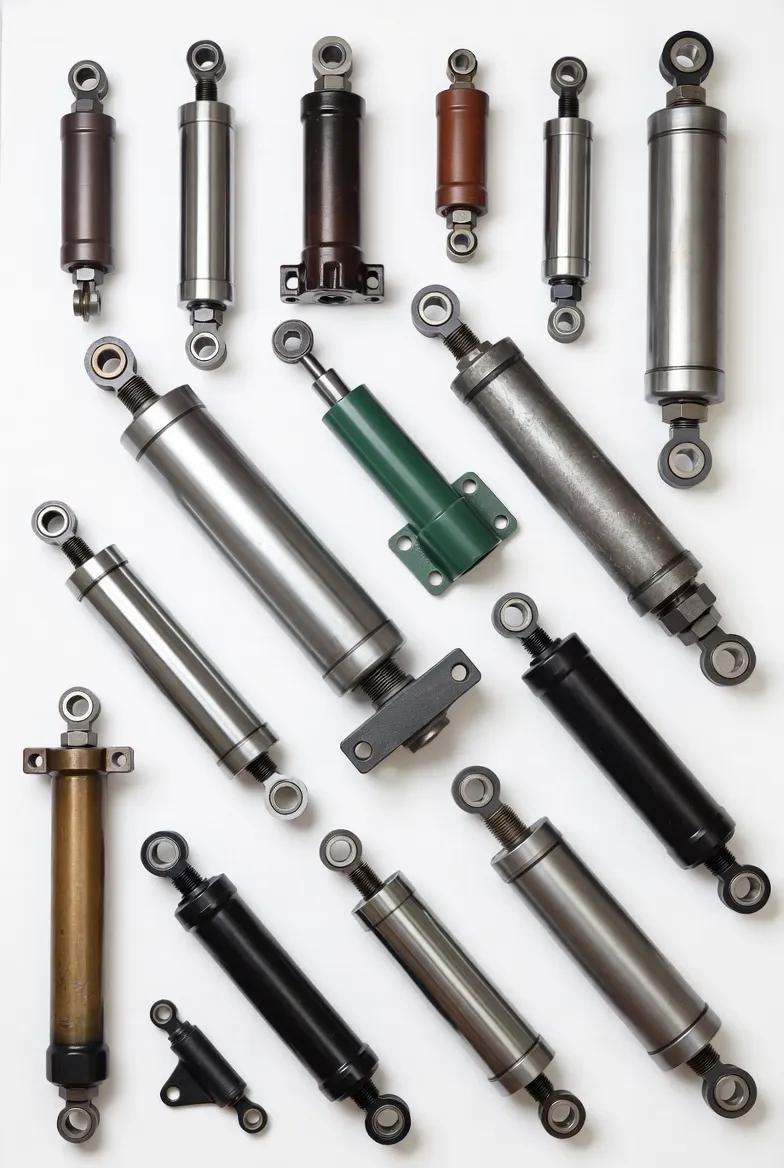
Safety and Preparation: Securing the Kinematic Environment
Attempting to bleed a hydraulic system without proper mechanical stabilization is a recipe for severe injury. When fluid is purged, the cylinder will lose pressure, causing any unsupported load to collapse instantly.
Lockout/Tagout and Load Blocking
Before loosening any fittings, lower all implements to the ground. If the cylinder must be bled while extended, the load must be supported by massive physical steel blocking or specialized jack stands. Never rely on the hydraulic system to hold the weight during a bleeding procedure. For heavy machinery like Dump Truck Hydraulic Cylinders, the massive dump bed must be secured with rigid safety struts before any technician approaches the actuator.
System Pressure Reduction
Turn off the main machine engine or electric motor to stop the primary hydraulic pump. Cycle the directional control valves back and forth several times to relieve any trapped residual pressure in the lines. Bleeding should be done at minimal pressure. Opening a fitting under 3,000 PSI of operational pressure will result in a violent, atomized spray of hydraulic fluid capable of piercing skin and causing lethal fluid injection injuries. Always wear heavy-duty safety goggles and impermeable gloves.

The Step-by-Step Bleeding Execution
With the machine secured, the mechanical process of purging the air can commence. Precision and patience are paramount to ensure the hydrostatic boundary is completely restored.
Position the Cylinder
Because air is lighter than hydraulic fluid, bubbles will naturally rise to the highest possible point in the system. To effectively purge the gas, the cylinder should ideally be positioned so that the fluid ports or the dedicated bleed valves are pointing upward. If the cylinder is mounted horizontally with ports facing down, the air will remain trapped against the upper barrel wall, making bleeding mathematically impossible without repositioning.
Locate and Open Valves
Many premium industrial cylinders feature dedicated bleeder screws near the top of the end caps. Place a catch pan underneath and wrap a shop rag around the valve to prevent splashing. Slowly crack the bleed valve open using the appropriate wrench. If your cylinder does not possess dedicated bleeder screws, you must carefully loosen the primary hydraulic hose connection at the cylinder port. Do not remove the fitting completely; loosen it just enough to allow fluid to weep.
Cycle and Purge
With the valve slightly open, have an operator start the machine and run the pump at the lowest possible RPM. Slowly engage the directional control to push fluid into the cylinder. You will observe a sputtering, foamy mixture of air and oil escaping from the loosened fitting. Continue to slowly push fluid until the sputtering ceases and a solid, clear, bubble-free stream of hydraulic fluid flows out. Immediately tighten the bleed valve or hose fitting to lock the sterile fluid column in place.

Application Context: Adapting the Protocol
The geometry and function of the machine will heavily dictate how the bleeding protocol is executed. Double-acting cylinders require purging from both the extension and retraction ports.
- ✔️
Heavy Earthmoving Equipment: When servicing Excavator Hydraulic Cylinders, the sheer volume of fluid means significant air can be trapped in the long hose runs traversing the boom. Mechanics often stroke the cylinder fully out and fully in multiple times at low pressure before cracking the fittings, allowing the air to aggregate at the highest point.
- ✔️
Agricultural Implements: For wide planting booms utilizing Agricultural Hydraulic Cylinders, the equipment must be parked on perfectly level ground. Many modern agricultural cylinders operate in series (master-slave configurations). Bleeding a series circuit requires starting at the master cylinder and systematically working down the chain to the final slave cylinder to ensure the entire multi-stage network is synchronized and sterile.
- ✔️
Life-Safety and Aerial Lifts: Bleeding Aerial Work Vehicle Hydraulic Cylinders demands the highest level of precaution. These cylinders frequently contain counterbalance lock valves mounted directly to the barrel. The air must be bled from the port between the lock valve and the cylinder body. Bleeding upstream of the lock valve will not purge the cylinder itself.


Conclusion: Restoring Absolute Hydrostatic Integrity
Trapped air is a virulent disease within a fluid power network. If ignored, the violent, elastic bouncing and intense thermodynamic heat generated by micro-dieseling will swiftly destroy the internal sealing architecture, transforming a simple maintenance task into a catastrophic mechanical failure. By strictly adhering to the bleeding protocols outlined above—securing the machine, lowering system pressure, positioning the ports vertically, and systematically purging the aerated foam—maintenance engineers can instantly restore the unyielding, incompressible force that heavy machinery requires. After bleeding, always re-check the main reservoir to ensure fluid levels have been topped off, as the void left by the escaping air must be replaced with pristine hydraulic oil. If your heavy equipment is suffering from chronic aeration, blown seals, or you require expert diagnostic consultation and world-class replacement actuators engineered to the highest global standards, our elite technical engineering team stands ready to architect your ultimate fluid power solution.